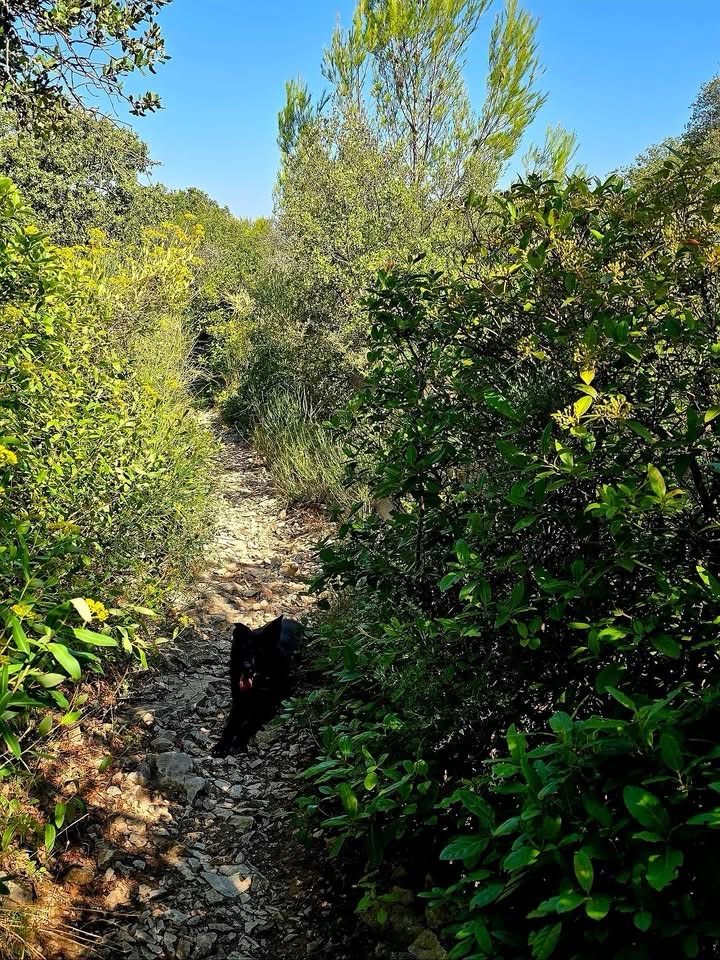
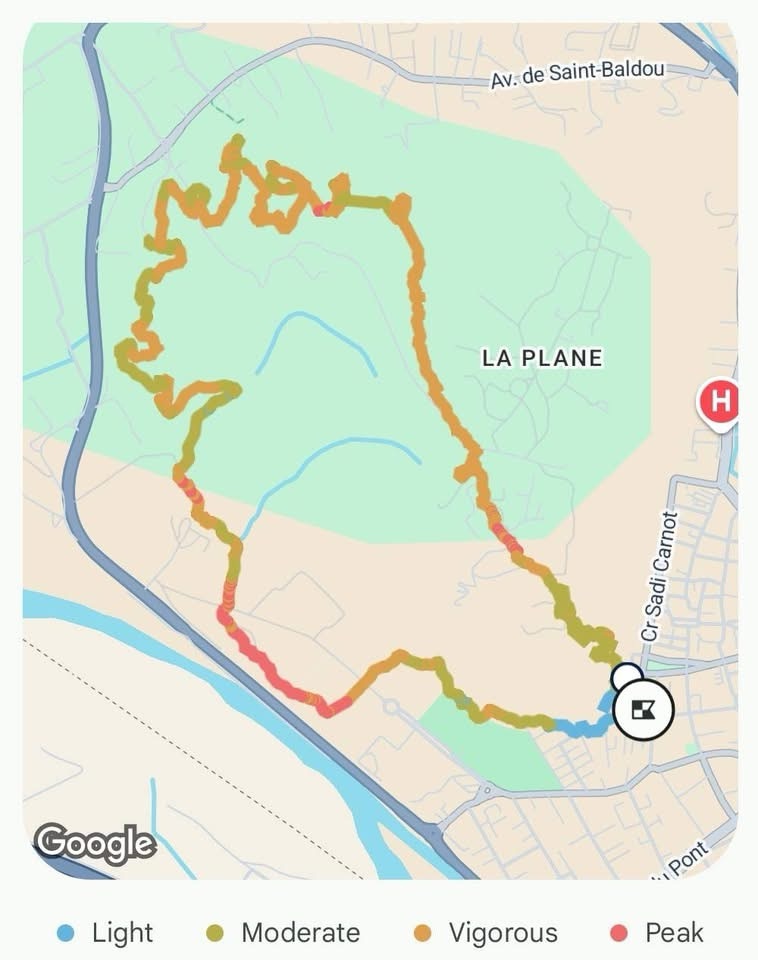
Sometimes the best way to silence the newsfeed, the static, the murk of thought, is to lace up your shoes and head for higher ground. This morning, I did just that – setting off early with my indefatigable four-legged companion, Glo, for a fast 9.6 km hike through the garrigue behind the Colline Saint-Jacques in Cavaillon.
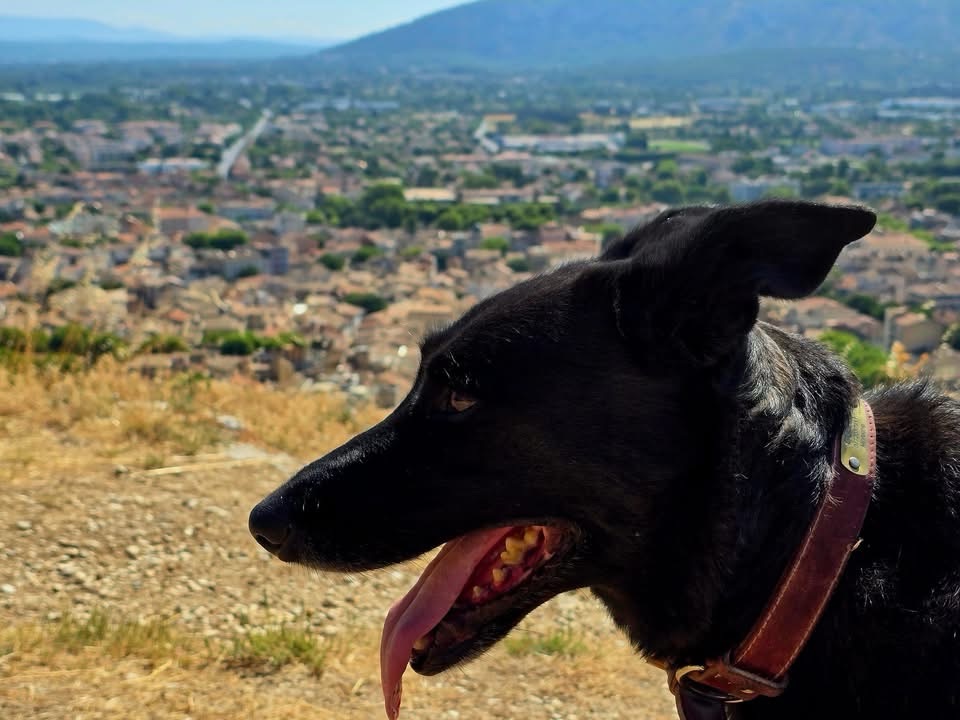
Glo is a rescue – of entirely indecipherable ancestry and unbothered by the mystery. When I adopted her in September 2019, she was five months old, skin clinging to bone, with a look in her eyes that spoke of beatings and bites and a life already too full of fear. She had been chewed – quite literally – by other dogs, and the world, understandably, made no sense to her. It has taken years, but much of that fear has gone. She still startles at sudden movement or unexpected noise, but in open spaces, on winding trails, nose twitching and eyes scanning the horizon, she is transformed. Steady, alert, and inseparable. What remains of her past now follows behind us – at a good distance.
The route itself was anything but tame. Twisting rocky paths, sudden inclines, a few scrambles, and more than a few sections tipping into “peak exertion” – according to the tracker, at least. But the physical effort was laced with something deeper. A sense of continuity, of walking quite literally in the footsteps of thousands who passed this way before.
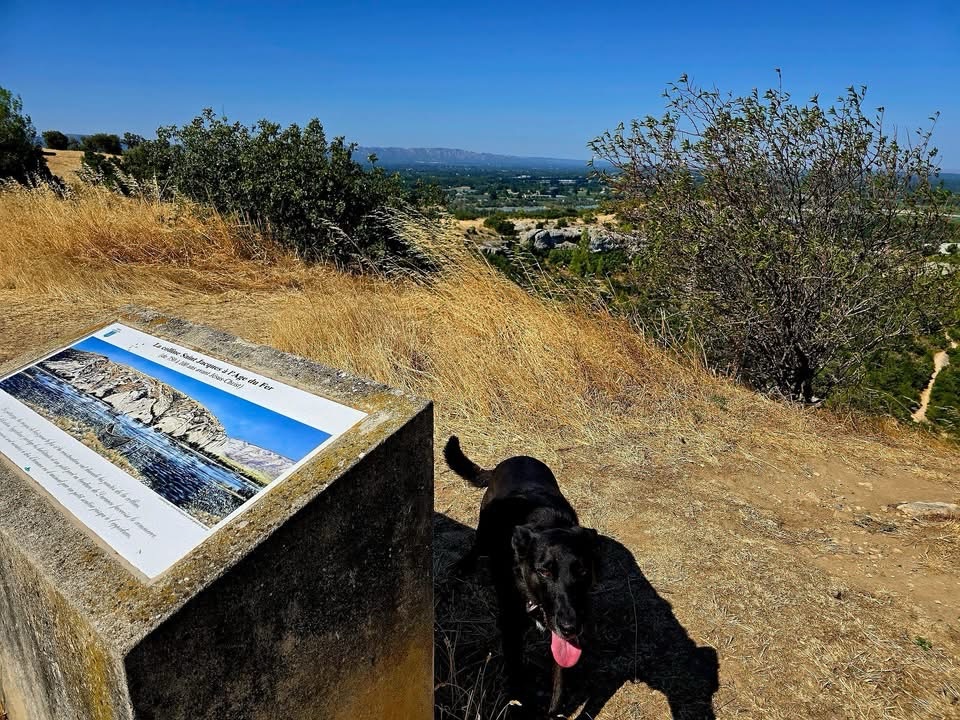
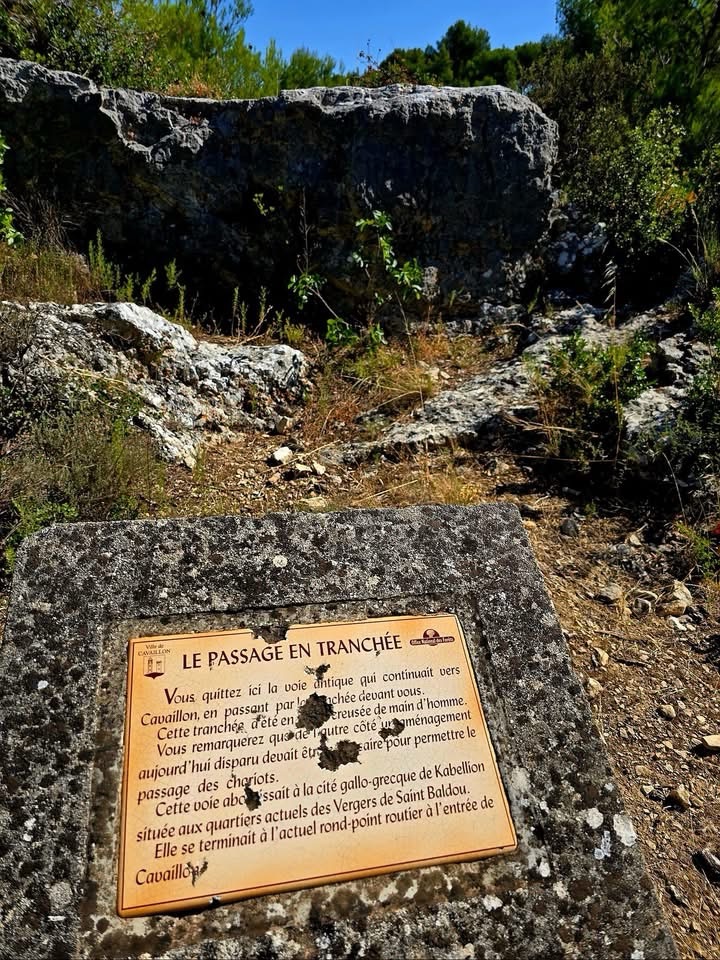
Saint-Jacques has been occupied since the Neolithic. At La Grande Baume, a cave still sheltering in the limestone, our ancestors left flints and arrowheads – but no trace of themselves beyond that. Romans later carved their passage through the rock at Le Passage en Tranchée, their carts biting ruts deep into the stone. Quarrymen followed in later centuries, chiselling into the hillsides at Les Carrières, leaving behind the ghost grid of their labour. The paths loops through it all, past dry gorges, shaded ravines, low holm (evergreen) oaks and sun-shattered cliffs. Glo, wiser than me, took the steeper stretches at her own unhurried pace, pausing to sprawl in the shade with the confidence of a creature who knows the heat will always outlast us.
After nearly ten kilometres and a fair bit of sweat, we descended into town – dusty, satisfied, and ready for something restorative. I dropped Glo off at home for a well-earned nap in a cool corner, then made my way solo to Bistrot Ô Méryl, tucked under the plane trees by the Hôtel de Ville.

L’Assiette ô Meryl arrived like a love letter to Provence on a plate. First, a half of chilled Cavaillon melon, served plain but dusted elegantly with piment d’Espelette – sweet, cool, with just the faintest warmth on the tongue. Then the main affair: a generous salad of local greens dressed in light vinaigrette, overlaid with folds of cured ham, thick shavings of aged cheese, confit tomatoes bursting with intensity, and thin grilled slices of aubergine just kissed by the flame. Anchoring the whole dish were two slices of courgette terrine – a savoury loaf packed with slices of summer squash, bound in herbed egg, baked to just the right balance of soft and firm.
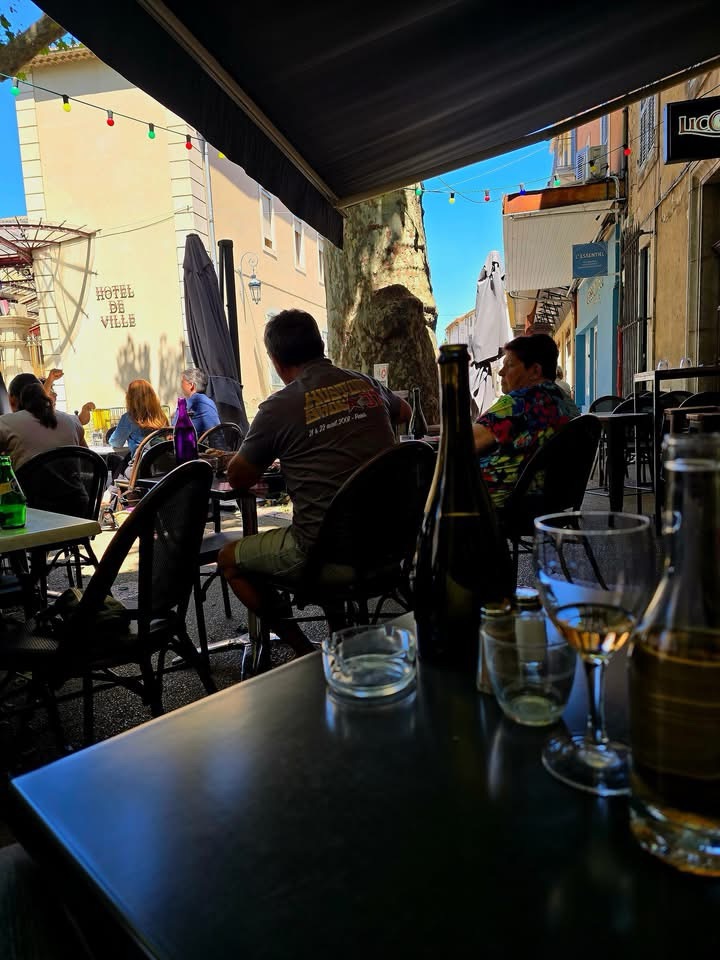
It was rustic without being rough. Thoughtful without being precious. Paired with the rosé maison – pale, dry, and properly cold – it did not so much rejuvenate as reassure: yes, some things still make sense.
To finish, I wandered across to Café-s-Hop Cavaillon, my favourite little torrefaction spot in town. Glo stayed home, sleeping off the morning’s adventure. Inside, framed hessian coffee sacks and shelves of beans and paperbacks lined the walls. Tourists and a few locals lingered over laptops or shared low conversation, the whole place running on the unspoken agreement that time could afford to move slowly, just for a while.
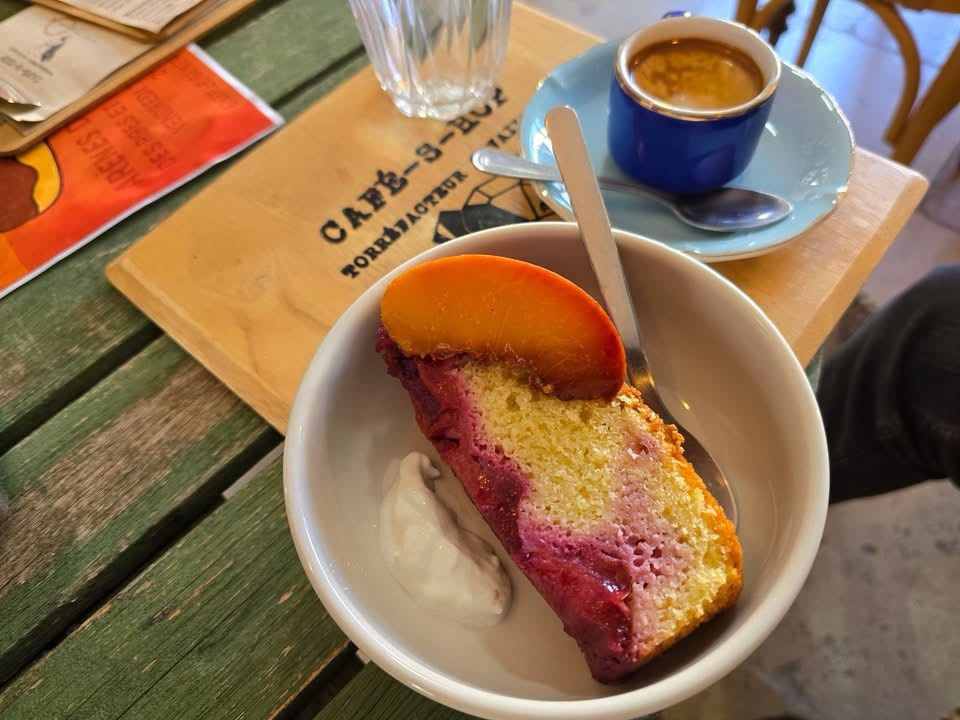
An espresso – no embellishments, no sugar, just beans and heat and clarity – was the final punctuation mark. Well, nearly.
There was cake. Of course there was cake. A rustic slice – peach and red fruit folded into a golden sponge, gently sweet, served with a curl of ripe peach and a spoonful of crème fraîche just tart enough to restore perspective. Simple, and perfect.
 No Sacred Cows