Once, this was a living coral – a complex city of polyps, feeding and breathing in warm tropical waters.
Now it lies bleached and brittle on a Chumphon shoreline, carved by time and tide into a relic of itself.
A single Asian weaver ant explores the labyrinth where an ocean colony once thrived.
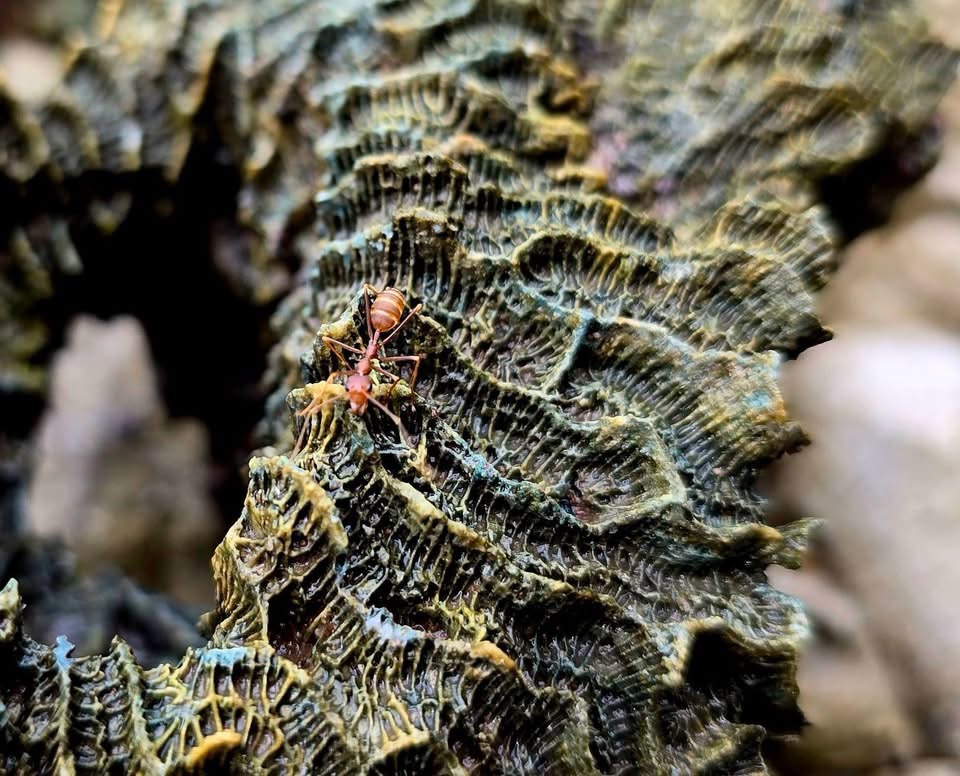
Brain coral, long dead, now carried ashore – an ant tracing the outline of a vanished ecosystem.
Life continues, but on a smaller scale – as it always does when the great systems fail.
Along much of Thailand’s coast, pieces like this have been washing up more often. The Gulf has warmed sharply over recent years, and surveys across both the Gulf and the Andaman show widespread bleaching – in some shallow zones as high as 80–90 per cent. Even protected marine parks have reported repeated stress events, the kind reefs cannot fully recover from.
The coral in my hand is just one fragment, but it speaks to a wider pattern: systems under pressure, ecosystems thinning out, and the quiet arrival of signs most people only notice when they are already too late.
Sometimes the tide brings in more than shells.
Fossilised brain coral (family Faviidae), Chumphon, Thailand.
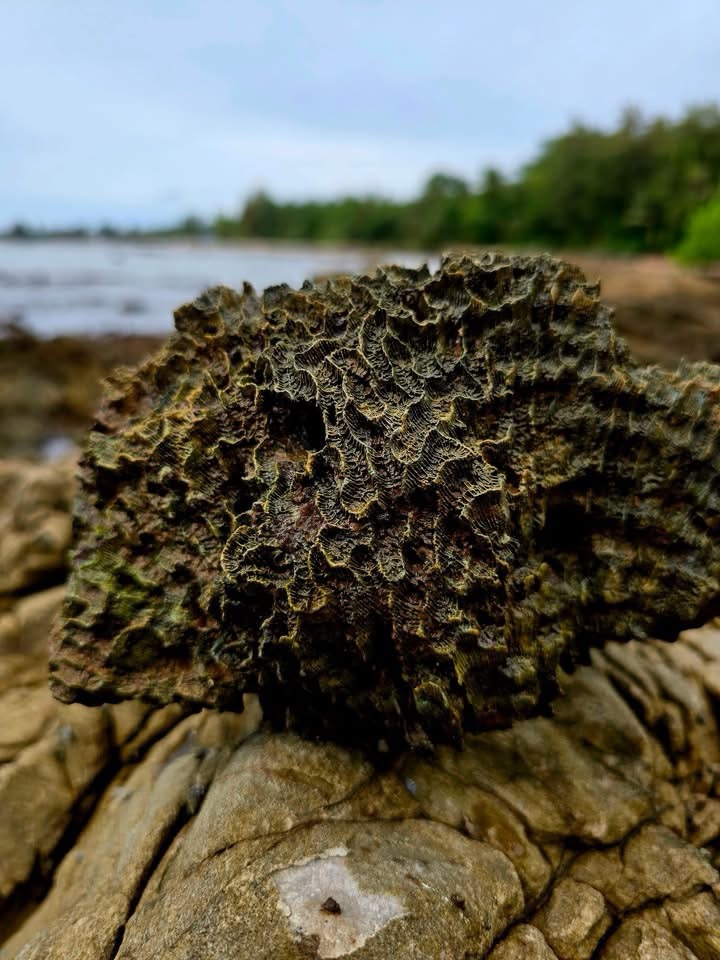
Coral fragments along the Chumphon shoreline, each a small reminder of what the Gulf has been losing.
 No Sacred Cows