Message In A Bottle We Refuse To Read

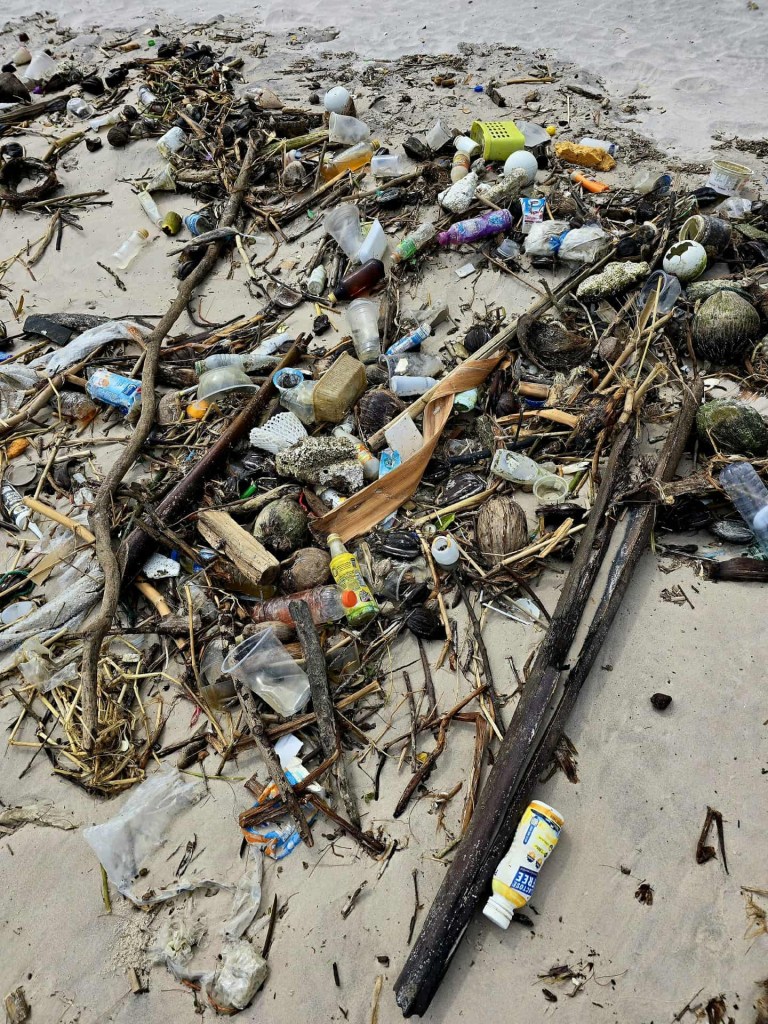
Plastic and fishing debris washed onto a beach in Thailand

From Innocence to Decay

As a child in the 1960s, I remember British beaches in a way that now feels almost unreal. Bridlington, Walton-on-the-Naze, Leigh-on-Sea… long stretches of sand and shingle where the most exotic intrusion was the occasional washed-up jellyfish or a stray wrapper blowing in from someone’s picnic. The shoreline was a place of innocence; you ran towards the sea, never pausing to wonder what was floating in it. Even in towns with busy estuaries, the worst you might step on was a shard of old bottle glass worn smooth by years of erosion, or a length of frayed rope.

A Tide of Poison

Half a century later, you would struggle to find a coastline anywhere that still resembles that memory. Storms, monsoon swells and shifting currents have become conveyor belts for the artefacts of our excess. Every tide reveals what we have been discarding for decades: plastic bottles, drink cartons, fishing line, food packaging, polystyrene, abandoned nets, and microplastics embedded in the sand like malignant grains. Billions of fragments – light enough to drift for years, toxic enough to outlive us all – spreading across the planet like a tide of poison that never recedes.

Storm tide plastic pollution

A Dystopian Message In A Bottle

What would once have shocked now barely registers. Children move through the debris as if it belongs. Tourists step over the washed-up rubbish as if it were driftwood. Local authorities rake the top layer of sand to preserve the illusion of order. We have adapted to filth without realising how completely it has colonised the edges of our lives. Even the seabirds pick through the same debris now, not mistaking it for food but simply finding it everywhere they turn. What should be sand and sea has been replaced by this new, synthetic terrain.

“Water and air, the two essential fluids on which all life depends, have become global garbage cansJacques Cousteau

Scientists estimate that up to fourteen million tonnes of plastic enter the oceans each year. Microplastics now fall in Arctic snow, sit in the sediment of the Mariana Trench, and circulate inside human bloodstreams. They have colonised the biosphere more thoroughly than we ever colonised continents. It is not a metaphor. It is the world as it is.

Back then the tide brought shells and seaweed. Now it returns our rubbish like a message in a bottle, though one we still refuse to read.
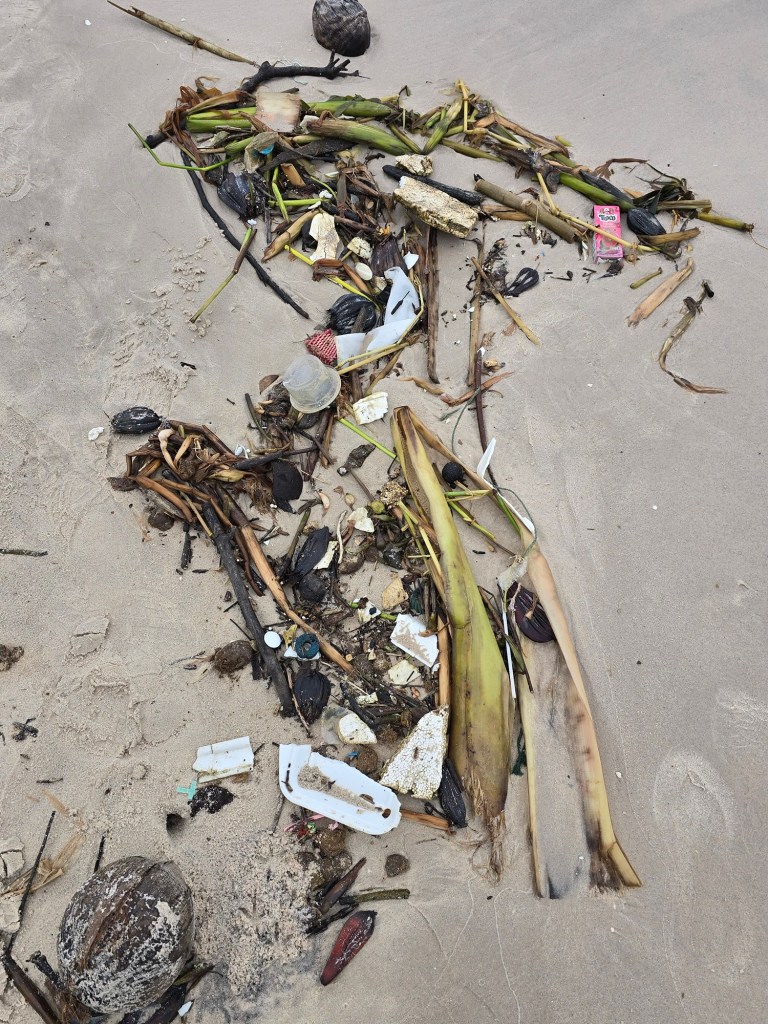
tangled plastic at the waterline

Slow Decline

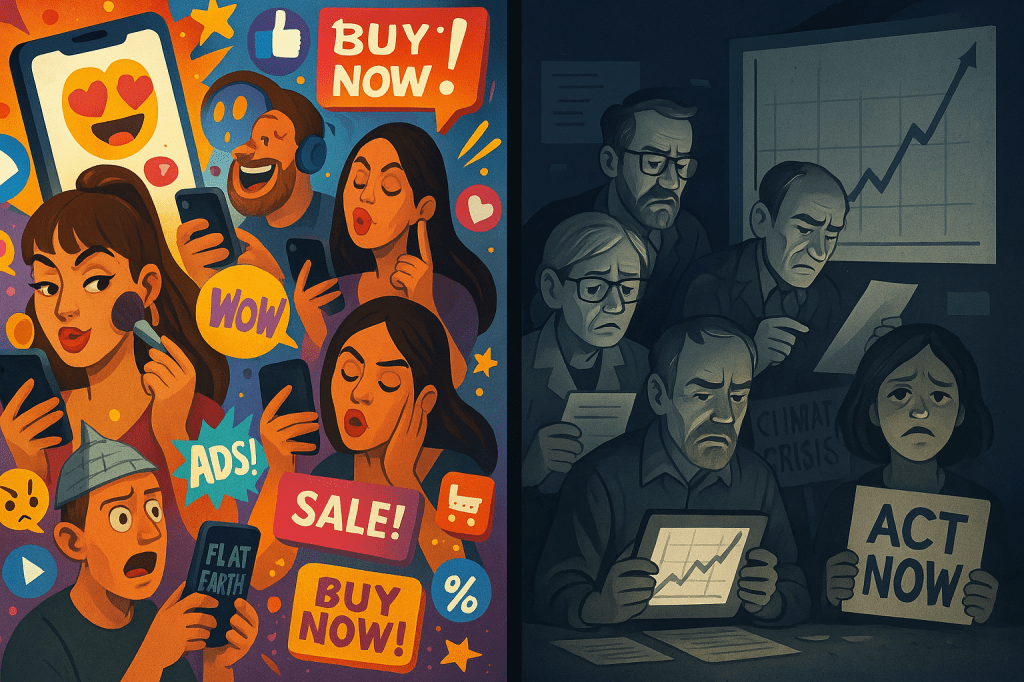
Because this is what collapse looks like. Not sirens, not riots, not dramatic tipping-points. Just a slow, grinding acceptance of ugliness. A civilisation adjusting to decay in real time, as long as the Wi-Fi still works.

Nature attempts to compost what it can: palm debris, rotting vegetation, the brittle remains of coconuts. But mixed through it all is the stuff it cannot break down. A permanent record of our carelessness, washed ashore with every tide.

The dystopia is not in the future. It is already here. It arrived quietly, wave by wave, bottle by bottle, shrug by shrug.

“But man is a part of nature, and his war against nature is inevitably a war against himself” – Rachel Carson

Civilisations rarely fall in a single dramatic moment. More often they dissolve under the combined weight of their own ignorance, pride and, in the 21st century, detritus. We have microplastics in our seas, soils, skies and blood. We build floating garbage islands large enough to be seen from satellites. Our children weave between discarded drink cartons, broken flip-flops and syringes.

“The ocean is the heart of the planet. If the oceans die, so do we” – David Attenborough

One less plastic bag on the beach, billions to go

Sisyphus, Beach Version

And then there is the scene on the beach in the photos: one lone man, bent over like an aging Sisyphus, stuffing rubbish into an old dog-food sack. Earnest, futile, resigned – an act of defiance against a world that long ago stopped listening. Even caring. A tiny gesture in a collapsing system. Not enough to change anything, but just enough to show that someone, somewhere, is still paying attention.

A small protest against indifference, against entropy, against the slow drowning of a species in its own debris.

UPDATE – latest news, 24/11/2025
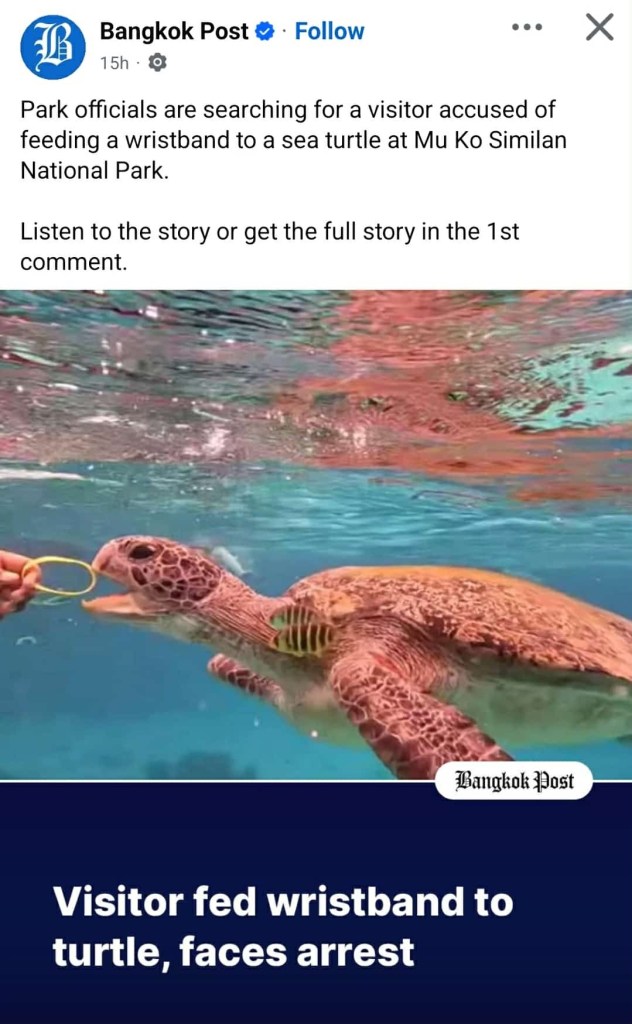
A 100 million year old survivor, tricked by a tourist wristband. Welcome to the Anthropocene.

Another day, another tourist offering the local wildlife a taste of our civilisation. Plastic, brightly coloured, and guaranteed to outlive the turtle by several centuries.

How to Tell If You’re Caught in the Dunning-Kruger Trap

(and why we all are, sometimes)

What is the Dunning-Kruger effect?

“The trouble with the world is that the stupid are cocksure and the intelligent are full of doubt” (Bertrand Russell)

We like to imagine stupidity as something that happens to other people – the loud ones, the red-faced pub ranters, the ones convinced that climate change is a hoax and that immigrants are personally responsible for NHS waiting times. But the uncomfortable truth is that the Dunning–Kruger effect isn’t a political problem or a class problem. It’s a human one.

It’s what happens when confidence outpaces competence – when ignorance dresses up as certainty and decides expertise is just elitism by another name. And, inconveniently, we’re all prone to it. Every last one of us.

Signs you might be stuck in the trap

“Ignorance more frequently begets confidence than does knowledge” (Charles Darwin, The Descent of Man, 1871)

The trap is simple: the less you know about a subject, the less aware you are of what you don’t know. The gaps in your understanding are invisible from the inside, so you feel informed, even expert. Meanwhile, genuine expertise often breeds caution and hesitation, because the more you learn, the more complexity you see. Knowledge expands your horizon; ignorance shrinks it until you think you’ve reached the edge of the world.

So how do you spot when you’ve wandered into Dunning–Kruger territory yourself?

Start with the inner monologue. When you find yourself absolutely certain about something you’ve never studied, never tested, and never risked being wrong about – pause and reflect. Because that’s the faint hum of Dunning–Kruger in the wiring.

Then listen for reinforcement. Are you seeking information that challenges you, or just nods in your direction? Do you read people who know more than you, or only those who confirm that you’re already right? Certainty without challenge isn’t wisdom. It’s insulation.

How to escape the trap

“It ain’t what you don’t know that gets you into trouble. It’s what you know for sure that just ain’t so” (Mark Twain)

There are a few ways out of the trap, though none especially comfortable:

– Seek friction. Talk to people who disagree intelligently. It’s the intellectual equivalent of stretching.

– Read and study. Stay curious. Because curiosity and humility share a root system. Starve one and the other dies.

– Revisit your opinions. If something you said a year ago doesn’t embarrass you at least a little, you probably haven’t learned much since.

Why it matters in today’s world

“Doubt is not a pleasant condition, but certainty is absurd” (Voltaire)

Most of us oscillate between knowing too little and thinking we know too much. It’s the human condition. But the moment we start to believe we’re immune – that the fools are always someone else – we’ve ourselves fallen into the trap.

And of course, even humility has its own vanity. We can end up boasting about our doubt, congratulating ourselves for being sceptical while quietly admiring the reflection. Uncertainty isn’t the destination – it’s the method. The moment we worship it, we’ve stopped practising it.

Humility isn’t weakness. It’s intellectual hygiene – the daily hand-washing of the mind.

“Real knowledge is to know the extent of one’s ignorance” (Confucius)

Not knowing – and being at peace with it

Authors note:

Originally published on NoSacredCows.blog – where certainty goes to die.

Expat Exodus? Not So Fast…

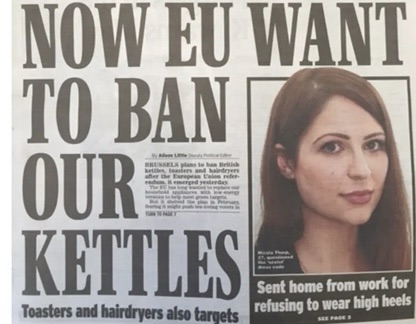
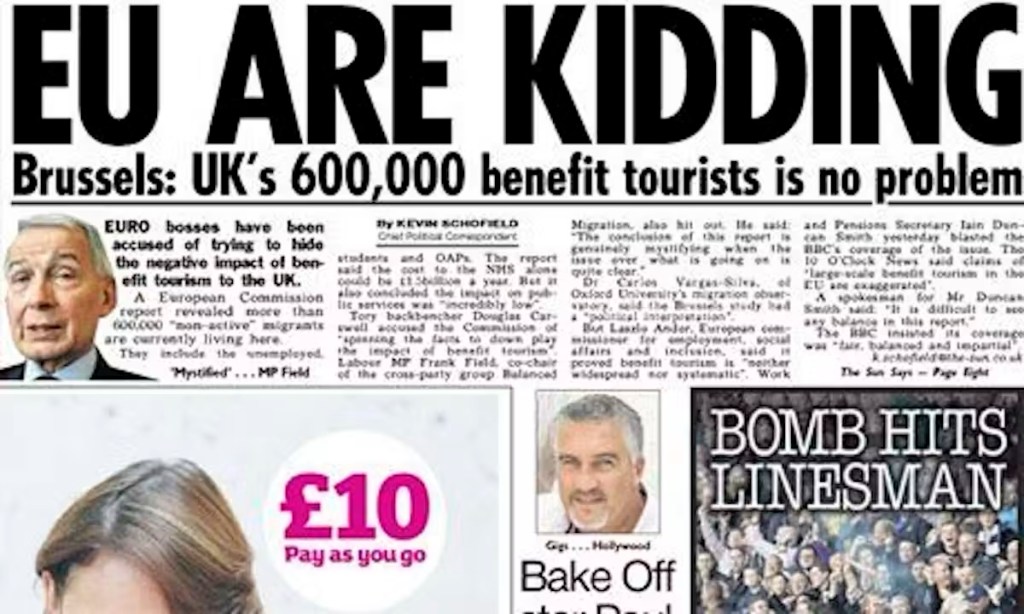
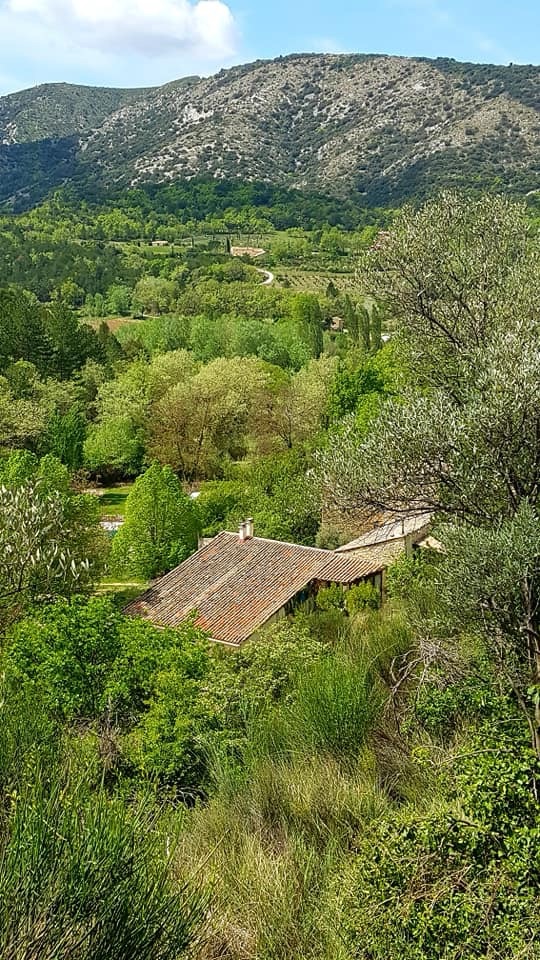
Back in 2008 – well before Brexit, Trumpism, and the subsequent parade of geopolitical absurdities – the British press was already having a mild panic about the supposed “collapse” of the expat dream. The pound had taken a tumble against the euro, the property bubble was deflating, and journalists were circling like vultures over the lavender fields of Provence and the golf courses of Andalucía.

Tabloids and broadsheets alike ran lurid stories of “broke Brits fleeing France and Spain in droves,” driven back to Blighty by collapsing exchange rates, failed gîte ventures, and sterling-linked mortgages gone sour. The underlying tone was unmistakable: serves them right for getting ideas above their station.

Nothing new under the Sun…

But was there really an exodus? Or just the usual attrition – a few dreamers heading home, chastened, while the more resilient quietly carried on?

The truth, as ever, was less dramatic. The global financial crisis had rattled everyone, and many small-scale British ventures in rural France were vulnerable. But for most long-term residents – myself included – it wasn’t the end of anything. We tightened belts, mended roofs, took on extra work, or simply adjusted our expectations. The ones who left had often come chasing a fantasy. Those who stayed had usually come looking for something more substantial: sanity.

I remember a call from Bill Coles, an Old Etonian tabloid hack writing for the Daily Express, who was doing a piece on this supposed “mass migration back to the UK”. I tried to inject a little balance: yes, some expats were struggling – but a stampede home? Hardly. Unsurprisingly, none of that nuance made it into print. The Express had already written its conclusion before the phone rang. The story needed villains and victims, not perspective.

In truth, most of us hadn’t come for the cheaper wine or larger gardens. We’d left Britain because something fundamental had begun to feel unliveable: the pace, the noise, the corrosive work culture, the unrelenting worship of growth. France, for all its bureaucracy and provincial quirks, still offered a sense that life outside work mattered. There was a slower rhythm, a stronger attachment to family and community, and an enduring respect for the art of simply being – qualities that Britain, by the early 2000s, seemed to have sold off along with its railways.

That said, even France was shifting. By 2008, the cracks were visible: rising costs, eroding public services, and rural depopulation beginning to hollow out the villages. Still, compared with the UK’s tabloid-fuelled hysteria and market-driven politics, it felt civilised – human, even.

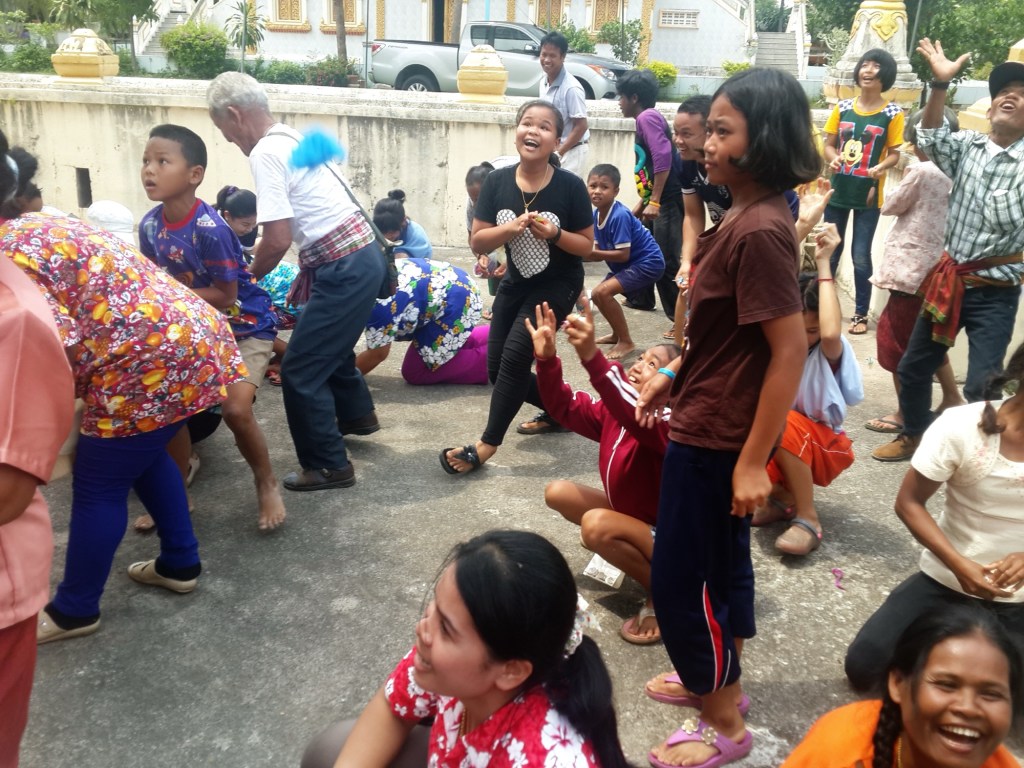
When I later began dividing my time between France and Thailand, the contrasts sharpened further. Thailand, for all its contradictions, possessed something I’d long stopped seeing in Western societies: composure. A certain patience with life’s imperfections. A detachment from the frantic, performative misery that had infected much of the West. Thailand wasn’t paradise – far from it – but it offered perspective. It reminded me that comfort and contentment aren’t the same thing, and that dignity can exist without affluence.

So was there an exodus back around 2008? Perhaps – of those who’d come seeking an idyll, or who’d mistaken the dream for the work required to sustain it. But for many of us, the balance sheet still came out in favour of staying. The gains – time, peace, perspective – outweighed the losses.

We hadn’t emigrated for the weather, the rosé, or the romance of rural life. We’d come to breathe more slowly, to feel a little more human. And however turbulent the world became – from sub-prime crashes to Brexit psychodramas – that still seemed a bargain worth keeping. 

As for returning to Britain in 2025 – where neo-fascists lead the polls and history is being rewritten in real time – you’d have to manacle me to the rear end of the Eurostar and drag me through the Channel Tunnel backwards. And even then, I’d be kicking, screaming, and plotting my escape the moment we surfaced in Kent.

Tattooed Eyebrows, Vegan Dogs, and the Heat Death of Thought

Looking through my crystal ball…

Democracies will erode under the weight of attention spans shorter than a hamster’s. The planet will heat, then hiccup, then wheeze, then expire, because the best we can do is redesign shampoo bottles to save the turtles. And we will still waste time arguing over the colour.

Eventually, we might upload what’s left of our culture into a badly managed cloud server that’ll crash during an El Niño-induced power surge. And the backup? Stored on magnetic tape in a warehouse that will evaporate during the first major global nuclear conflict.

The cockroaches, meanwhile, will continue their quiet, effective rule. At least, until the sun becomes a red dwarf and Earth is burnt to a crisp.

Humanity has outdone itself in finding ways to shout into the void with astonishing vigour and almost no meaningful return. Social media is bombarded with 700 comment threads debating whether tattooed eyebrows are empowering or oppressive, while glaciers the size of Luxembourg quietly detach and drift out to sea. Thousands of hours of YouTube videos and Reddit threads are devoted to explaining why airplanes don’t fly off the edge, while actual scientists weep into their test tubes. Deeply philosophical Instagram reels on “authenticity” are delivered from ‘influencers’ in their hot tubs in Dubai, followed by an affiliate link for discounted collagen powder. On X the exchanges are getting heated… should dogs be vegan? Raging factions. Faked studies. Emotional appeals. Meanwhile, the dog is in the corner eating a sock.

On a Facebook group, a terrified mother wonders “is my baby’s aura too orange?” More and more mums reply, posting photos of their children’s expressions and asking strangers to interpret their energetic vibrational field. The baby just wants mashed banana. Meanwhile, people are dramatically posting that they’re quitting social media… on social media… every three months… while checking the comments for validation.

It goes on, and on. Depressingly. I’m sure you won’t believe me (or at least I hope not, perhaps you are a follower?) … but there really are YouTube tutorials on “How to Manifest Wealth Using Lemon Water”. Because – apparently – the path to financial stability lies not in economic policy or labour rights, but in citrus and positive vibes. Elaborating a little – because I hope at least some of you still find this impossible – it really has racked up millions of views on TikTok and YouTube. Here’s the basic (ludicrous) idea…

You write your financial desires or affirmations on a piece of paper, eg “I am a magnet for success and wealth”). You then place it under a glass of lemon-infused water. You speak your intentions to the water (yes, really) … “Money flows easily to me” kind of thing. Finally, you drink the water, absorbing the “high vibrational frequency” of your words. If you want to ensure success, don’t forget to stir the lemon water clockwise to “activate manifestation”, to add cinnamon (for “even greater wealth”), and use crystal glassware to “amplify energetic resonance”…

Meanwhile, I’ve just spent 90 minutes compiling this contribution, which next to no one will bother reading through to the end. Oh, the irony ….