# Postscript: Bill Wedderburn, Robert and the return to Inveresk
There is a final part of Bill Wedderburn’s story that deserves to stand separately from the account of his remarkable legal and political career.
When I met Bill at the House of Lords in 2001, he already knew of Robert Wedderburn as a historical figure. What he did not know – he had no inkling of it – was that Robert was his own direct ancestor.
His initial response to my claim was somewhat cynical. It was an extraordinary story, and Bill was a lawyer accustomed to testing evidence rather than accepting an attractive family tradition at face value. As I took him through the detailed genealogical and documentary evidence, however, his scepticism rapidly gave way to excitement. Once convinced, he embraced the discovery wholeheartedly and began his own enthusiastic exploration of Robert and the wider family history.
A later newspaper article rather compressed this sequence, suggesting that Bill had discovered the connection himself after reading about Robert. In fact, I first presented him with evidence of the direct family relationship at our meeting in 2001. It was only after these discussions that Bill arranged a follow-up meeting for us at the House of Lords with the Earl of Dundee, Lord Scrymgeour-Wedderburn – our more remote, but equally direct, “blue-blooded” cousin.
It is easy to understand why Robert spoke to Bill so powerfully. Robert was born in Jamaica in 1762, the mixed-race son of Rosanna, an enslaved African woman, and James Wedderburn, a Scotsman whose family’s restored prosperity was built upon Jamaican slavery. Although Robert was legally free from birth, his freedom offered little protection from poverty, racial prejudice or paternal rejection. Robert later described the contradiction in his own characteristically defiant language:
“I am the offspring of a slave, it is true; but I am a man of free thought and opinion … imprisonment has but confirmed me that I was right.”
He eventually made his way to London, where he became a sailor, tailor, preacher, pamphleteer and radical. He opposed slavery, religious oppression and the exclusion of working people from political power. Most strikingly, he saw that the suffering of enslaved people in the colonies and the exploitation of the poor in Britain were not separate moral questions. Both arose when power was concentrated in the hands of people who could not easily be held to account.
While imprisoned in Dorchester Gaol, Robert received a visit from William Wilberforce. In the dedication to The Horrors of Slavery, he recalled that Wilberforce had given him “advice” and “two books beautifully bound in calf”. Wilberforce appears to have hoped that Robert would redirect his considerable talents away from domestic radicalism and towards the parliamentary antislavery campaign.
Robert subsequently devoted more of his writing to colonial slavery, but he did not accept the political boundary that Wilberforce’s intervention implied. For Robert, the oppression of enslaved Black people in the colonies and the misery of working people in Britain belonged to the same struggle. He consequently welcomed Henry Brougham’s declaration at a later antislavery meeting that it would be “grossly inconsistent” for abolitionists to “neglect the misery that was near their own door, while they were holding out a helping hand to the wretchedness that was beyond the Atlantic”. As the historian Ryan Hanley observes, this accorded with the vision of transatlantic solidarity that Robert had always cherished.
Wilberforce hoped to redirect an unruly domestic radical into respectable abolitionism. He succeeded only partially. Robert brought his own experience of colonial slavery more fully into his writing, but he would not remove the British poor from his politics.
Bill had spent his own life addressing that same imbalance in a very different world and by very different means. Robert spoke in radical chapels and published incendiary pamphlets; Bill taught, wrote, practised law and spoke in Parliament. The family discovery did not create Bill’s convictions. By 2001, those convictions had guided him for more than half a century. What the discovery gave him was an unexpected companion from the past.
Robert became, in Bill’s words, a kind of moral test. Interviewed by Cassandra Jardine for The Daily Telegraph in 2007, Bill explained:
“One constantly comes across appalling oppression. Knowing about his work, I ask myself: ‘What would Robert think about this?’”
That is perhaps the most revealing thing he said about the relationship. Bill did not treat Robert as an interesting addition to the family tree or as a name through which to claim borrowed distinction. He treated him as a continuing challenge.
By then, Bill had begun to identify himself publicly as “the descendant of a slave”. He used that inheritance to illuminate present questions: trafficking in women and children, female genital mutilation, corporate manslaughter and the erosion of human rights through anti-terror legislation. He chose to identify not with the prosperous white Wedderburns who had benefited from slavery, but with Rosanna and with the son whom that branch of the family had refused to acknowledge. Robert himself had proudly claimed precisely that maternal inheritance. Answering a relative who attributed Rosanna’s sale to her “violent temper,” he declared:
“Yes, and I glory in her rebellious disposition, and which I have inherited from her.”
There is something quietly radical in that choice. Robert, once the unwanted and supposedly disreputable member of the family, had become the ancestor in whom Bill took pride.
Solidarity without reward
One idea in particular mattered greatly to Bill when he reflected on the abolition of the slave trade. Ordinary working people in Britain had supported abolition even though they stood to receive no immediate material advantage from it.
For Bill, that mattered because it demonstrated the possibility of solidarity across race, nationality and circumstance. People could recognise an injustice inflicted on others and demand that it end, although ending it offered them no direct personal profit.
The history of slavery is necessarily a history of cruelty, exploitation and inherited privilege. But Bill found within the history of abolition a countercurrent: collective action undertaken for somebody else’s freedom.
That fitted naturally with his understanding of trade unionism and democratic politics. Solidarity could never mean merely defending one’s own narrow interest. At its best, it meant standing against injustice even when another person was its immediate victim. Robert had expressed almost exactly this principle two centuries earlier:
“I am a West Indian, a lover of liberty, and would dishonour human nature if I did not shew myself a friend to the liberty of others.”
There is an important historical qualification. The Act that received royal assent on 25 March 1807 abolished the British slave trade; it did not free the people already enslaved in Britain’s colonies. Emancipation came only in the 1830s. The bicentenary was nevertheless an occasion to remember a great mobilisation of public conscience – and also to recognise how much remained unfinished after 1807.
Walking in Robert’s footsteps
The Telegraph article appeared on 22 March 2007, as Britain prepared to mark the two-hundredth anniversary of the Act. It described Bill and his wife, Frances, preparing to take part in a commemorative walk from Musselburgh to Inveresk. Around 300 people ultimately joined it.
The route had a very particular meaning. In 1795, Robert had travelled to Scotland in search of his father. He walked from Musselburgh to Inveresk House, hoping that James Wedderburn would acknowledge him or offer him some assistance. James rejected him.
Robert had crossed an ocean and come to his father’s country, only to be turned away. The white Scottish family had recovered its wealth and position through Jamaican slavery, yet had no place for the mixed-race son of an enslaved woman. More than two centuries later, Bill followed Robert’s route.
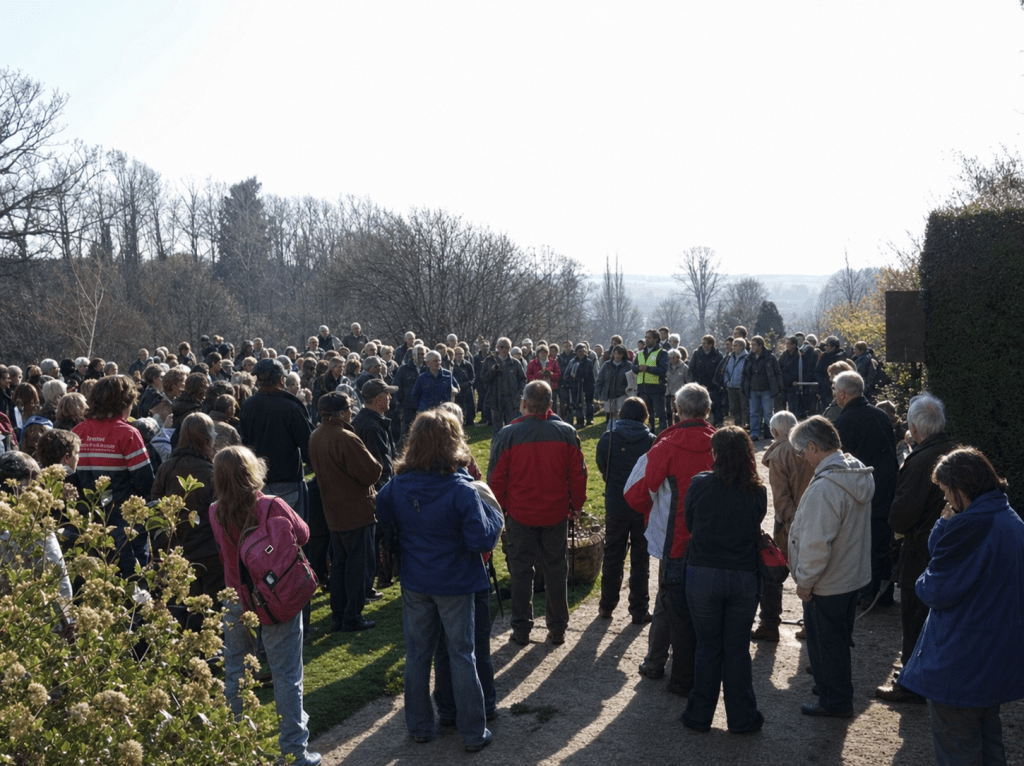
The bicentenary walk from Musselburgh to Inveresk in March 2007, retracing Robert Wedderburn’s journey to seek recognition from his Scottish father.
The symbolism is almost too perfect, but it was real. Bill stood where Robert had stood. Robert had arrived as an unacknowledged son and had been rejected in private. Bill returned publicly as Robert’s proud descendant – a distinguished lawyer, parliamentarian and defender of human rights – with his wife beside him and hundreds of people taking part in the act of remembrance.
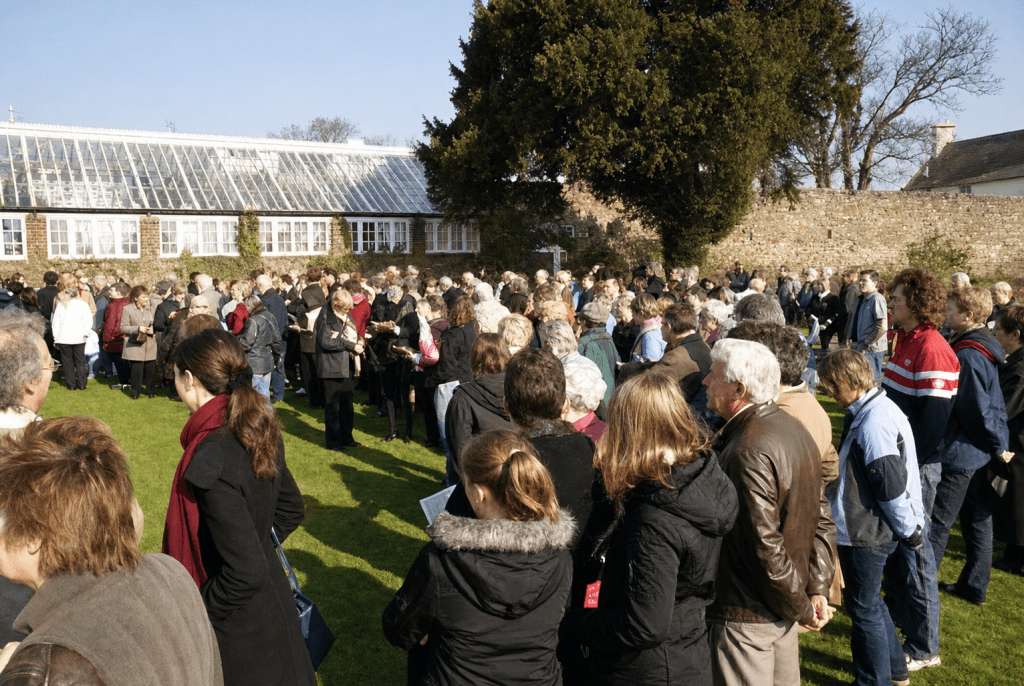
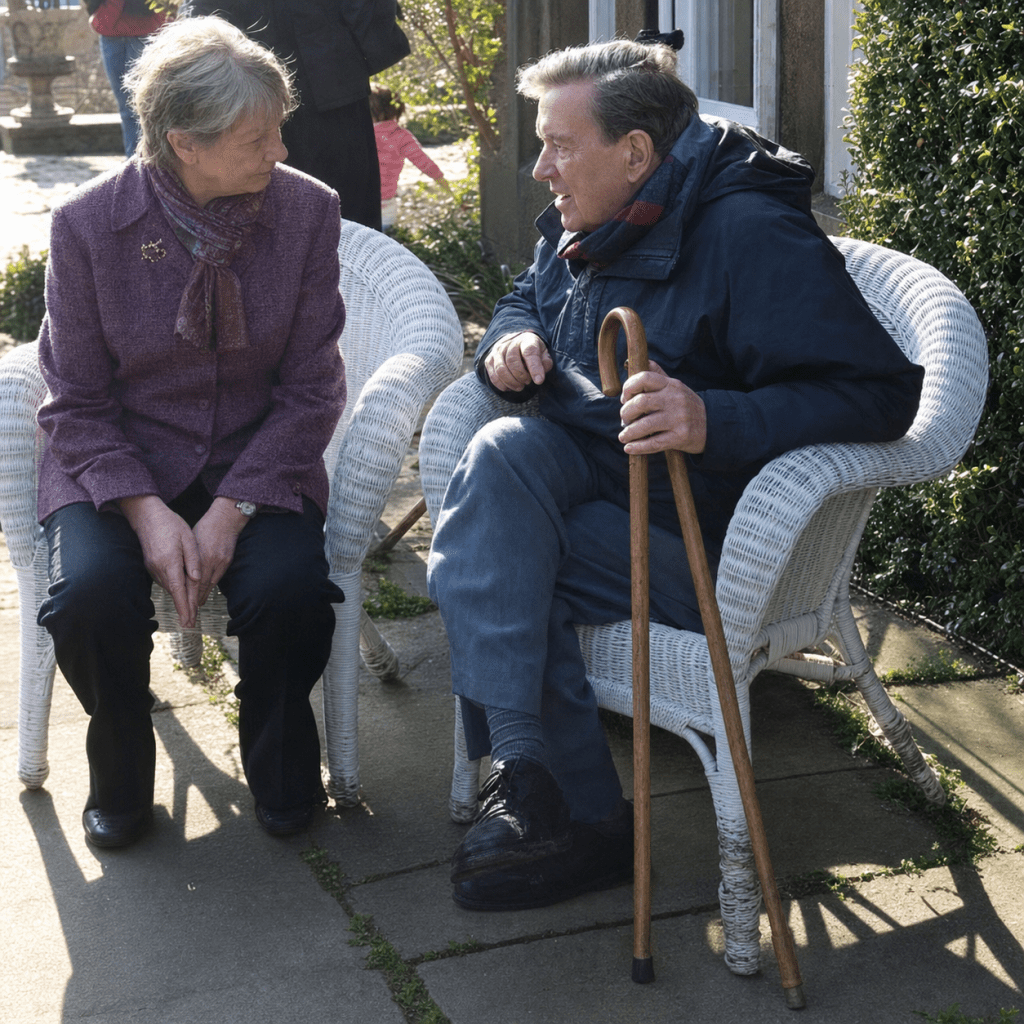
Bill and Frances Wedderburn were present at the 2007 commemoration, six years after Bill learned of his direct descent from Robert. Arrival at Inveresk Lodge
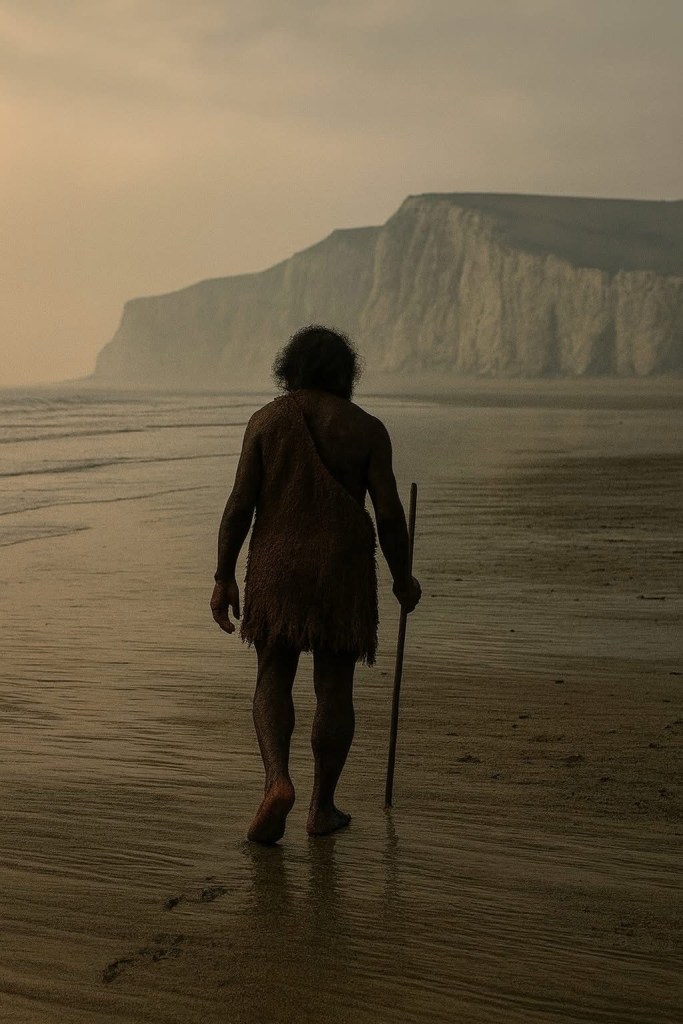
Nothing done in 2007 could repair what happened to Robert in 1795. Nor could a commemorative walk settle the much greater historical account of slavery, exploitation and the wealth drawn from it. Its importance lay elsewhere. A journey once marked by abandonment was being made again in recognition and solidarity. Robert was no longer walking alone.
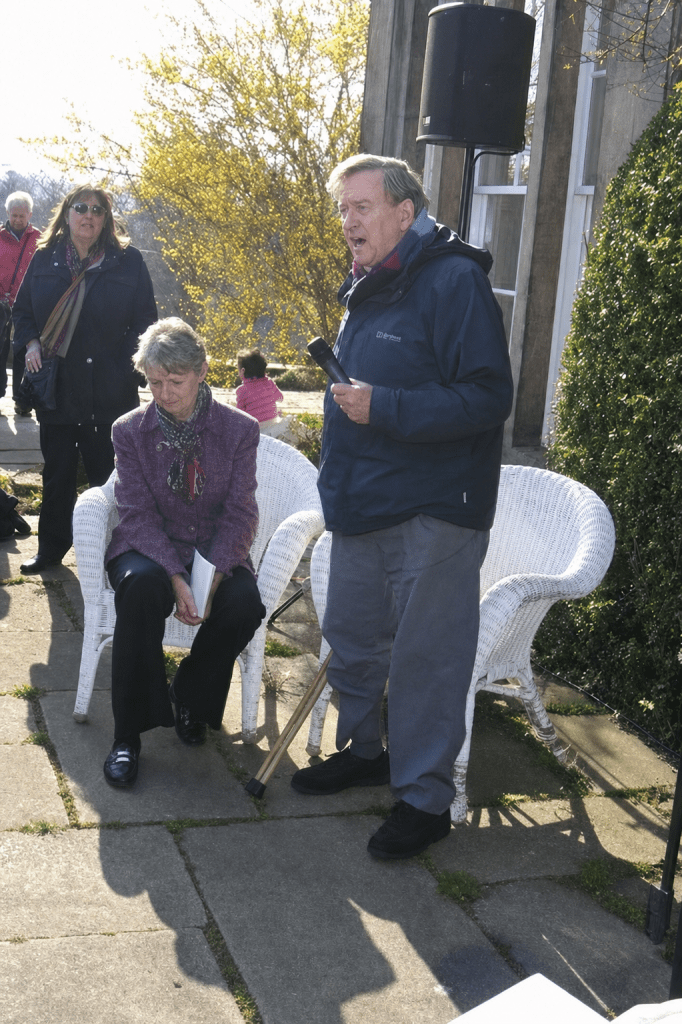
At Inveresk, more than two centuries after Robert Wedderburn came seeking acknowledgement and was turned away. The rejected son had returned, symbolically, through a descendant who honoured him.
For me, that is the most moving image in the whole story. The morally important Wedderburn was no longer the wealthy plantation owner who had rejected his son. It was Robert: the son of Rosanna, the outsider, the religious dissenter and troublesome radical who insisted that slavery abroad and oppression at home belonged to the same struggle. Bill’s presence at Inveresk reversed the old rejection – not legally or literally, but publicly and morally.
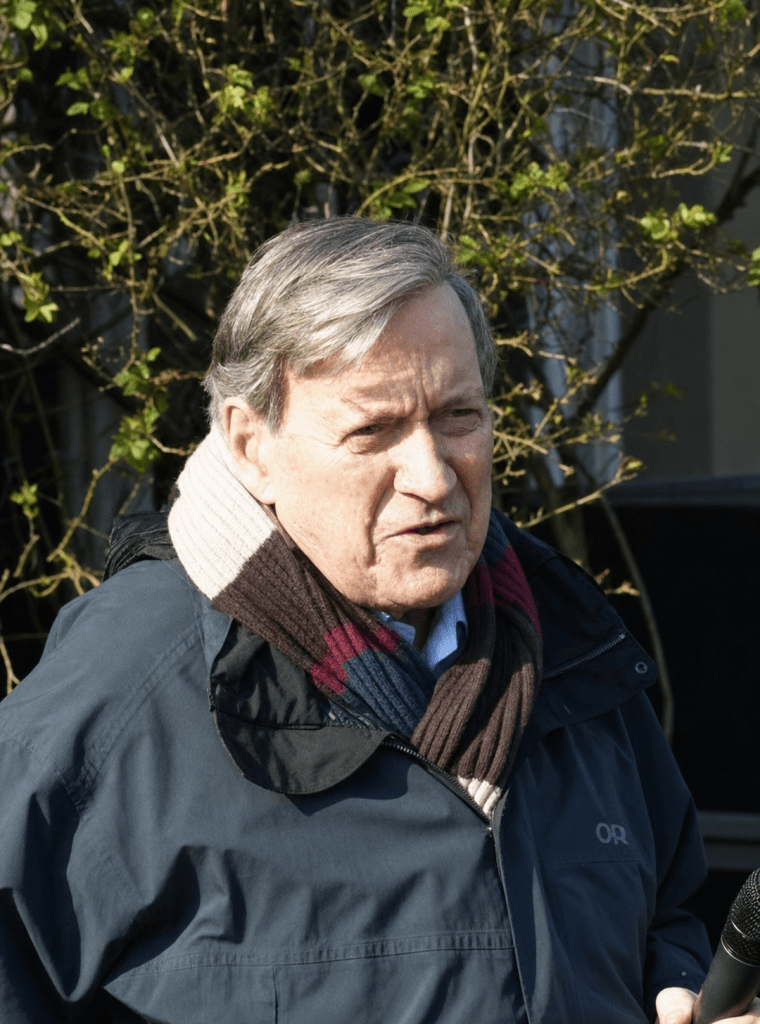
The connection between the two men should not be made mystical. Political principles are not carried automatically in the blood, and Bill had formed his long before he knew that Robert was his ancestor. That is precisely what makes the discovery so remarkable. Bill was not imitating Robert after learning of their relationship. He recognised, late in life, that another member of his family had confronted many of the same fundamental questions two centuries before him.
What is freedom worth when a person has no power to exercise it? What obligations do we have towards people whose suffering brings us no personal loss? What should be done when established institutions protect privilege rather than justice?
Robert answered as a radical preacher and pamphleteer. Bill answered as a lawyer, scholar and parliamentarian. Their language and circumstances were very different, but the argument running through both lives was recognisably the same.
The Telegraph called its article “Still fighting for freedom”. It is an apt title because it applies equally to the ancestor and the descendant. Robert’s fight concerned slavery, poverty, political exclusion and religious authority. Bill’s concerned workers’ rights, collective organisation, equality, freedom of belief and the protection of people exposed to institutional power.
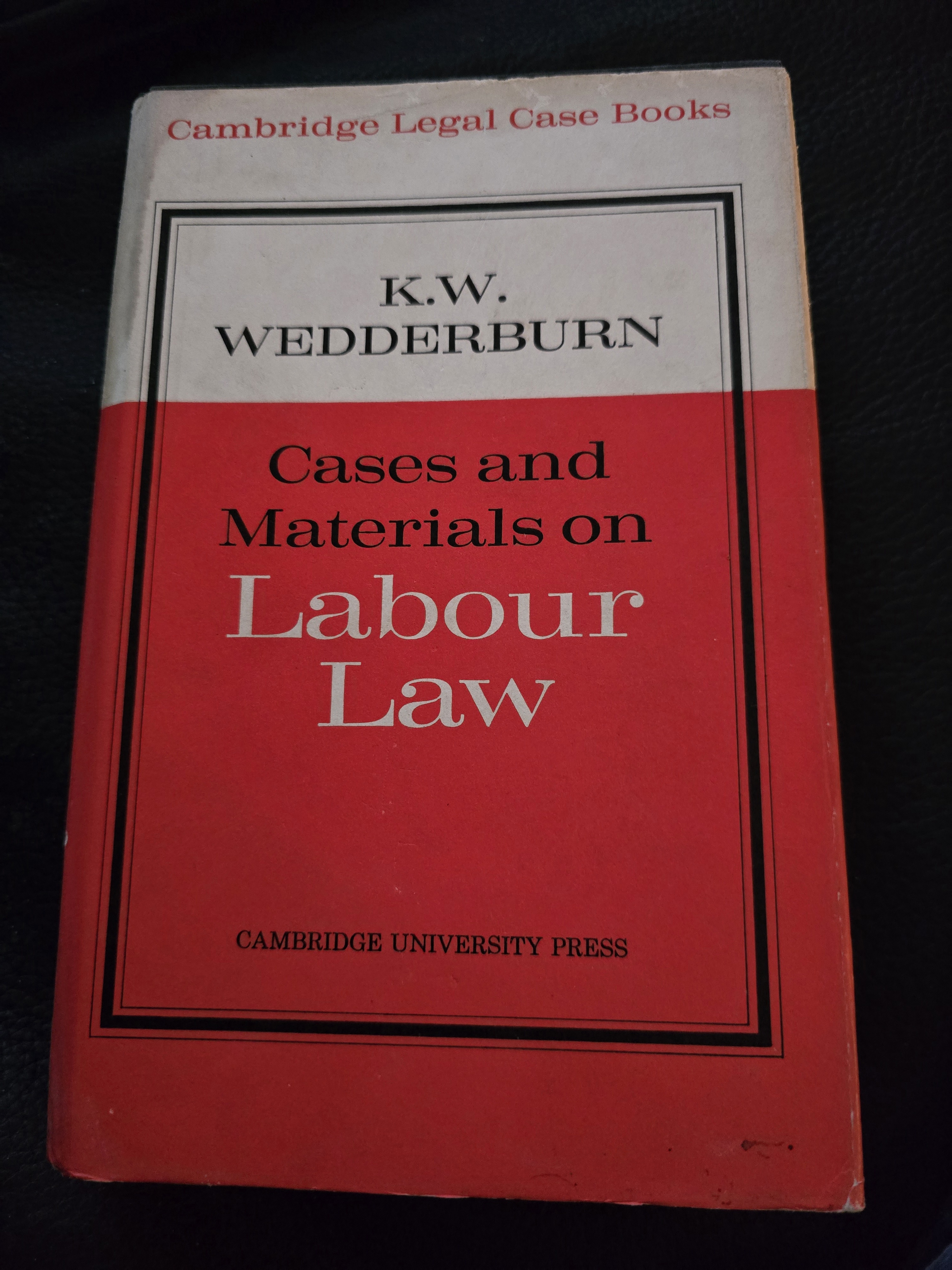
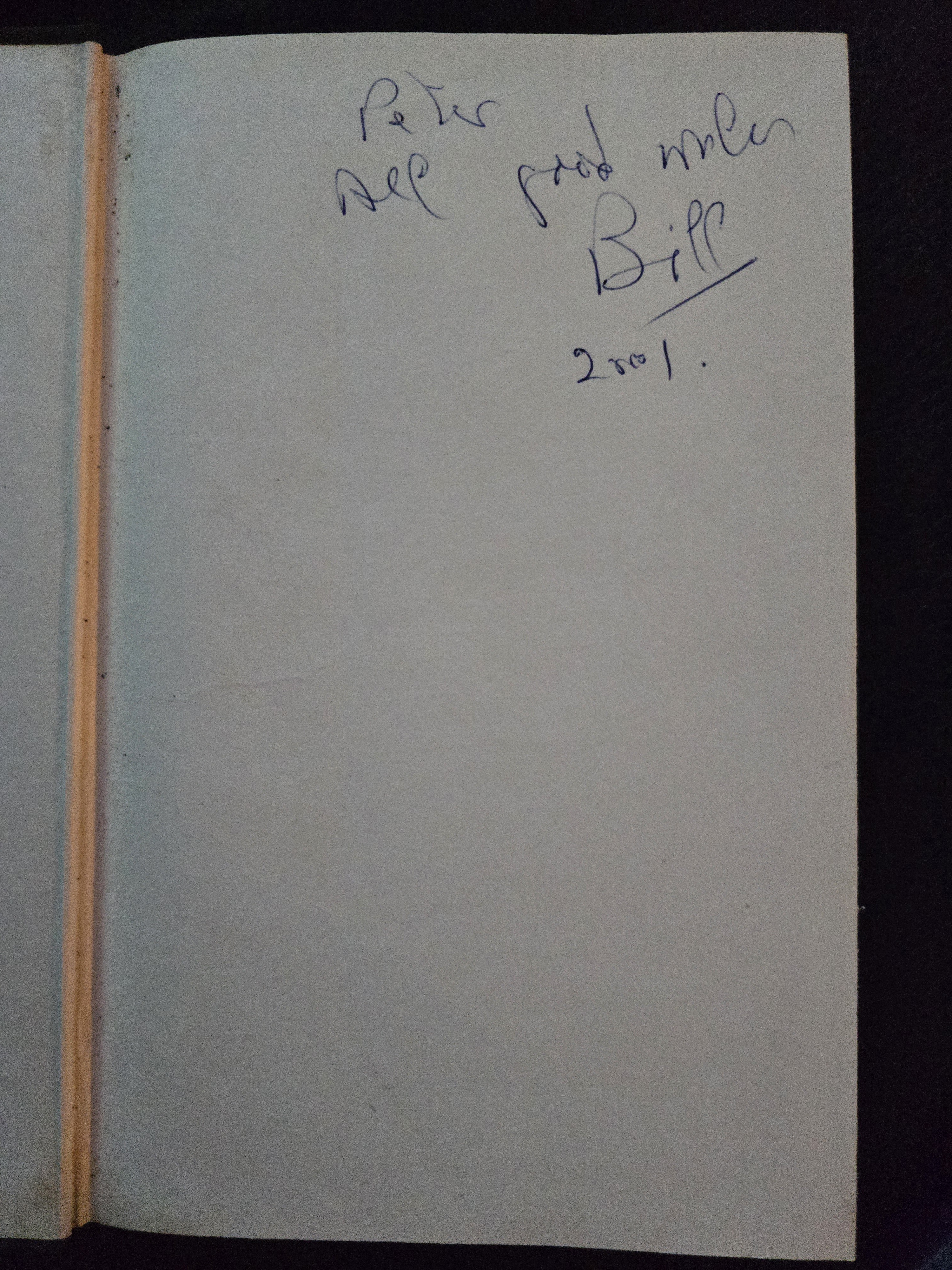
And so the signed copy of Cases and Materials on Labour Law has a significance beyond its academic contents. Bill signed it for me at the House of Lords in 2001, when I showed him the evidence connecting us to Robert. It marks the moment when a great labour lawyer discovered that the family’s most compelling ancestor was himself an early advocate of solidarity between enslaved people and the British working class.
Six years afterwards, Bill went to Inveresk and stood where Robert had once stood. Robert had gone there asking to be recognised by his family. Bill returned to recognise him.




 No Sacred Cows