
Ajahn Sumedho, the American-born Buddhist monk and disciple of Thailand’s Ajahn Chah, was already a remarkable figure when I attended retreats and Sunday talks he led at the Amaravati monastery in Great Gaddesden during the early 1980s. What struck me most was his equanimity. Not solemnity – he had a great sense of humour – but he emanated a peaceful stillness which, in my 20s, I aspired to without much of a clue how to find it.
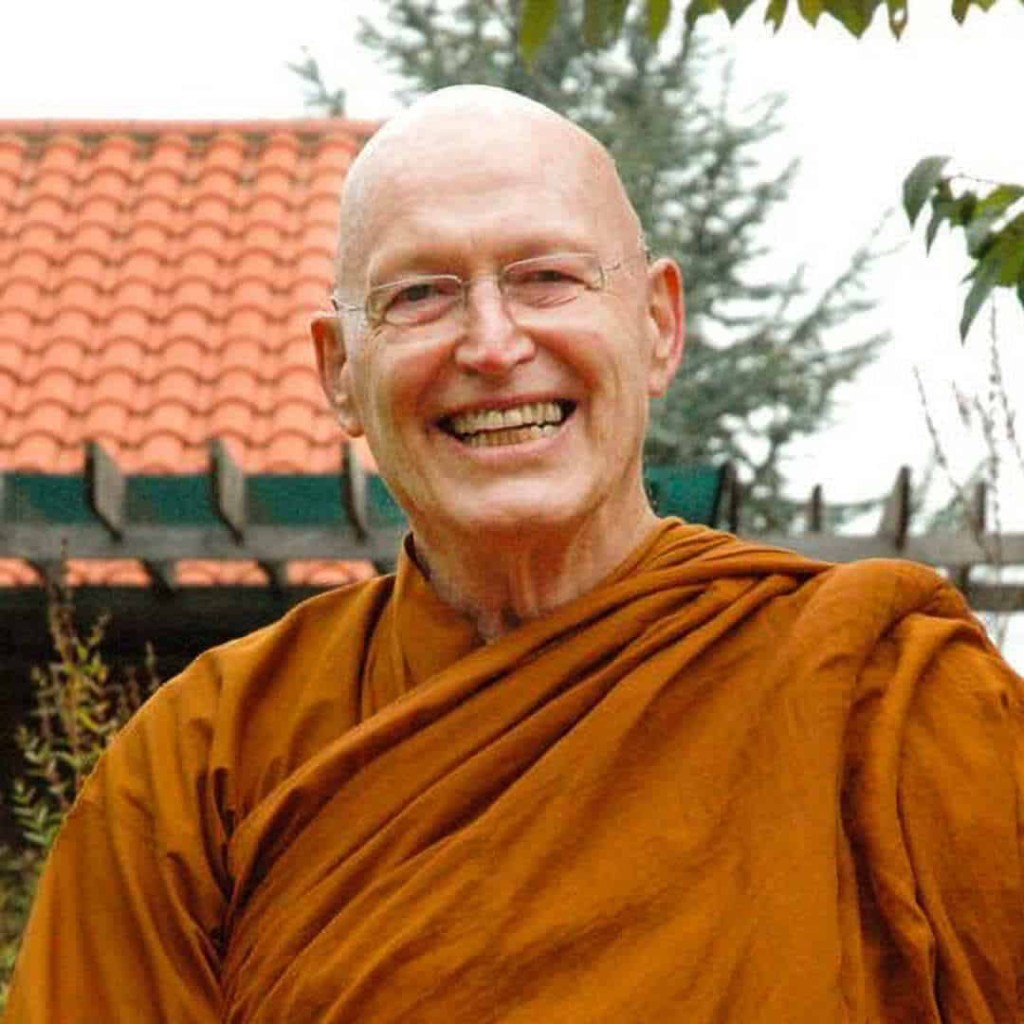
About ten years earlier, during his sixth year as a monk in Thailand, he had gone looking for ideal conditions in which to practise, away from the noise and interruptions that disturbed his meditation. He found an island, caves, silence and isolation, and was already thinking about somewhere even more remote when an infected foot forced him to return to ‘civilisation’.
Later he wrote: “I contemplated my greed for peace. And I did not seek tranquillity anymore.”
Without knowing the story, the line loses most of its meaning. The point is that he had realised he was not simply enjoying peace. He wanted it. Needed it. He had begun arranging his life to preserve it, and resenting anything which disturbed it. The search for tranquillity had become another form of attachment. There is something of Hesse’s Siddhartha in that: the young ascetic looking down on people still entangled in money, status, pleasure, grief, family, love – all the messy business of being human – only to discover later that renunciation can feed the ego just as easily as possession.
Hesse, Siddhartha
During the Samana period Siddhartha looks with contempt on the whole machinery of worldly existence: merchants trading, princes hunting, mourners grieving, prostitutes working, doctors tending the sick, lovers loving, mothers nursing children. To him it all seems false, transient, corrupt, almost beneath notice. Later, even after entering worldly life himself, he still regards people as “childlike”, absurdly consumed by money, pleasure, status, family, anxiety and small disappointments.
I asked Sumedho during one of those retreats how a lay person could possibly achieve the kind of equanimity he had, while dealing with family, work and all the complications of ordinary life.
He smiled. Who was he, he said, living as a monk in an ordered monastic community, to advise me, with all the trials and tribulations of family life, on how to achieve equanimity? I would find my own path.
I have carried that answer with me for forty years.
I was rather in awe of him then. Watching him on YouTube today, still giving talks from Amaravati in his nineties, I suppose I remain so. There is an extraordinary depth in both the story of the cave and the answer he gave me, but perhaps even admiration has to go.
For years I thought the question was how one reached that state of equanimity. It wasn’t. The desire to attain it was the problem.
And after all the philosophy, meditation, searching, and the ordinary battering of life, the answer turns out to be two words which are much easier to understand than to live.
Let go.


Leave a comment