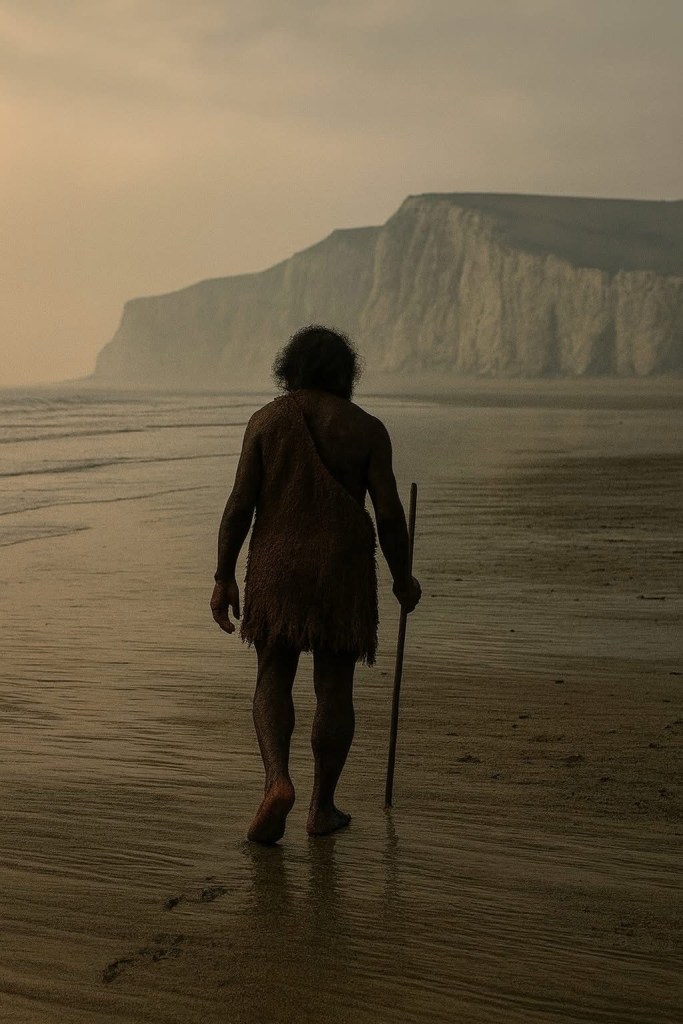
The first people to walk this green and pleasant land came from Africa. Not recently – but in the long dawn of our species, when the only borders were rivers and mountain ranges, and the only language was survival.
They carried no papers or flags. They followed herds, water, warmth. They crossed what was once land, and what would one day become sea, and left only stone tools, footprints, and genes in their wake.
They were not white – and whiteness had not yet been invented. That came later, gradually and imperfectly, through ice and pigment, adaptation and isolation.
Evolution, not entitlement.
And still, they moved. Across rivers and seas, over ridges, through forests, to the islands. Long before there was a Britain to be British about, there were people here – wandering, settling, moving again.
The earliest settlers brought fire and language. They carried no passports.
Then came others, in waves, over centuries. They brought bronze, iron, farming, burial rites, new gods and ghosts, memories and myths. They came from the west, the east, the near continent – from what we now call Europe, Asia, the Middle East.
They came because people always have – in search of food, space, safety. More clement skies. More peaceful and accepting neighbours.
The Celts – only a beginning because the fog of time obscures what came before – were just one ripple in the sediment time left behind.
The Romans followed, with roads and walls and underfloor heating. Then the Angles, Saxons, Jutes, and Norsemen. Vikings who came to plunder and stayed to trade. The Normans came latest of the conquerors, but left their mark in law, language, and stone.
This island has never been still. Never pure. Only porous.
And yet somehow, in our painful and lingering post-imperial insularity, we convince ourselves we are the finished product. Native. Defined. Entitled.
Some scowl at the boats now battling the waves across the Channel – forgetting that boats carried all of us, if not in our lifetimes, then in the long-forgotten memories of our ancestors.
Some of my own forebears came in chains. Others wielded the whips. One branch fled Jamaica. Another claimed a Scottish coat of arms. That is not contradiction. That is Britain.
Every family tree, if traced without blinkers, eventually runs aground on a foreign shore. Refugee. Coloniser. Indentured labourer. Chancer. Survivor.
We are not a race. We are a journey.
It is not migration that is new – it is the outrage. The myth of purity. The delusion that history and culture start and end at Dover, and that identity can be ring-fenced by fear.
It is not the boats that shame us. It is how we greet them.
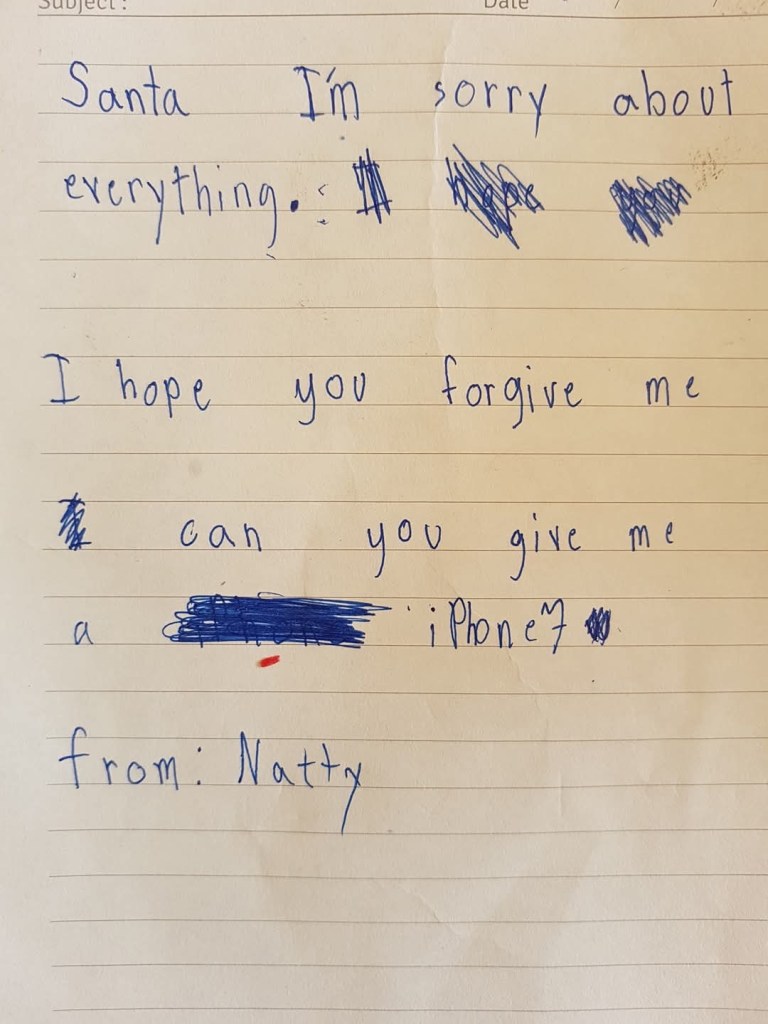
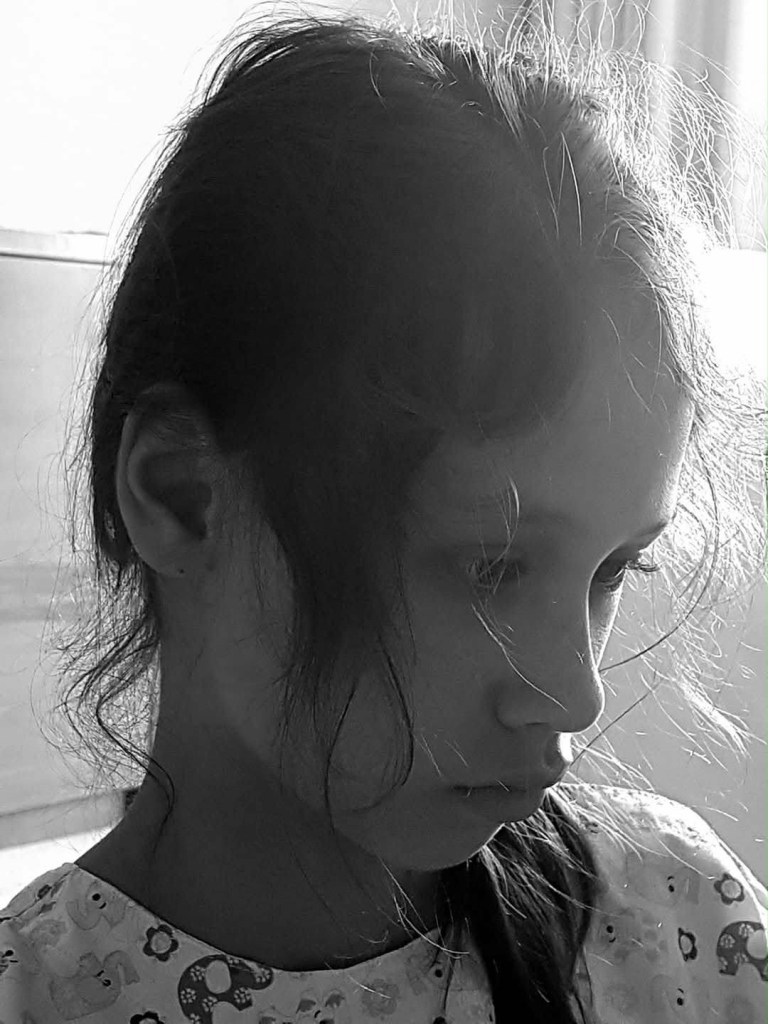
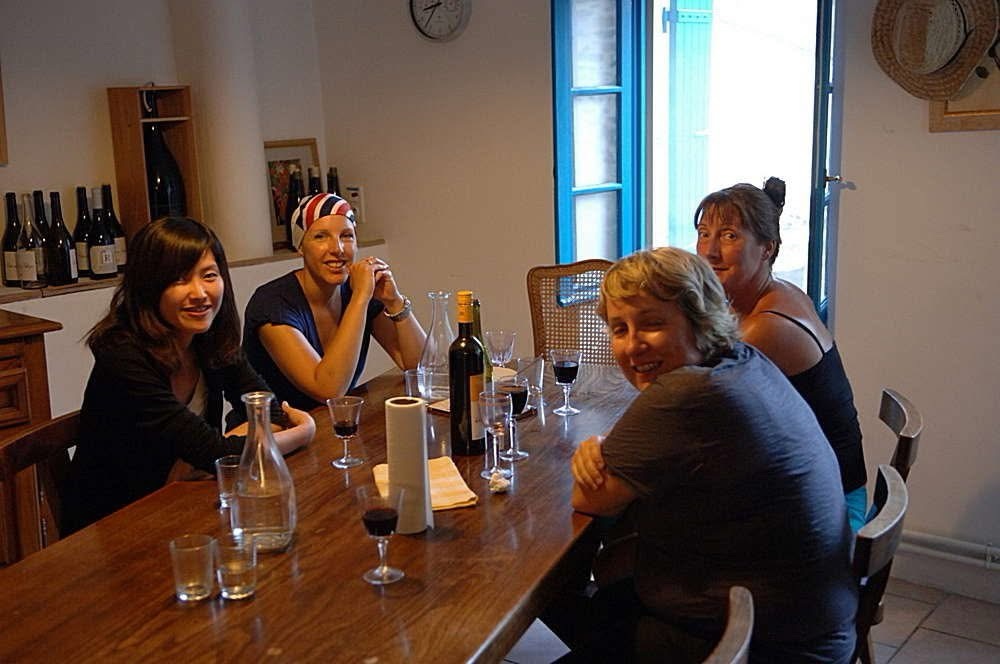
Natthaya, 2014. She had grasped the principles of repentance, but not yet the importance of separating it from the funding application. The opening was strong. The closing demand may have weakened her case.
Early 2000s: Over a couple of decades living and working around France, I came across a fair few Brits who – to all appearances back home – no doubt seemed rational and pragmatic people, comfortably settled in their professional and domestic lives. Yet on holiday across the Channel, quiet plans took shape. They yearned for something more. Not just a break. A better lifestyle. The dream was semi-retirement in sun-soaked simplicity, à la française, whether or not they spoke more than a smattering of French or had grasped the true costs of running gîtes in rural isolation.
Provence was particularly magnetic for these wide-eyed hopefuls. Peter Mayle’s A Year in Provence (1989) had created a whole new mythology: rustic bliss, village fêtes, lavender fields, cicadas. That book did for Provence what Eat Pray Love did for yoga retreats. You could almost hear the sound of estate agents rubbing their hands in glee. It’s no coincidence that Sotheby’s planted a branch in Gordes around that time – the hills of Provence had become a brand.
I would occasionally find myself – reluctantly – chatting to would-be expats over a drink. Certain triggers – “we’re thinking of opening a B&B”, “we’ve enrolled in an intensive French course” – set off alarms. I offered a few well-meaning caveats. A few listened. Others didn’t.
They sold up their three-bed semis back home, racing ahead with an impulse ‘bargain’ purchase of a vast if crumbling edifice, frequently in the middle of nowhere. Their Gallic Shangri-La. Yet the grass, it turned out, could be less than a luxuriant shade of green. A brittle, sun-frazzled beige in need of constant watering and care.
One case sticks vividly in my mind. It was 2003. Not far from our place, down in the Ouvèze valley, stood a large, dilapidated farmhouse that had been on the market for years, at a greatly inflated price. It was, in estate agent parlance, “full of potential”. Translation: structurally unsound, inconveniently located, and uninhabitable without a massive injection of cash. Yet one bright March morning, for a retired British couple – she a school inspector, he a headteacher – it was love at first sight. They signed on the dotted line.
They hadn’t done any homework. Hadn’t spoken to anyone local – like us, just a few hundred metres up the hill – who could have told them exactly why the place had been on the market for so long. Natural British reserve, perhaps. Or more likely that habitual self-assurance, the quiet assumption that they knew better than the natives.
The valley looks idyllic in spring. Crisp air, birdsong, the quiet gurgle of the river. But what they hadn’t noticed was the road. A surprisingly busy departmental route, just fifty metres from the house. Come summer, it would become a thundering corridor of tourist traffic. Cars and caravans roared through, bouncing noise off the steep valley sides like a natural amphitheatre. The windows shook.
It didn’t take long. Within days, they were already thinking of selling. I dropped by and offered support and local contacts, but was swiftly dismissed – “Our son is a lawyer in Geneva”. I bit my lip; their son could have been senior partner at Kirkland & Ellis for all the difference that would make in our Provençal backwater.
But they didn’t give up. They overcame their misgivings, and with true British grit and determination, brought in a stream of architects, engineers, and landscapers. Massive earthworks were undertaken to build a noise-deflecting wall. Huge expense was incurred. Views sacrificed. And still, during certain hours, you had to raise your voice to be heard indoors.
Then came the first of their legal battles. They tried to block an ancient droit de passage – a right of way that passed near the house. I warned them not to waste their time. They of course ignored the advice and cordoned off the passage with chains. Local farmers bulldozed the barriers, promptly and without ceremony. In this part of the world, you don’t overturn centuries-old rights of access because your brunch is being disturbed.
Next – the coup de grâce.
On a visit home from an extended stay in Savoie, the house was gone. Completely. Apparently, they’d given up on the renovation and, on a whim – following some dodgy advice – had bulldozed it to rubble. They’d been told that knocking it down and starting completely from scratch would be simpler.
A bigger mistake they could not have made.
What they hadn’t realised was that, under French planning law, once a building on agricultural land is demolished, its residential rights vanish with it – a far more rigid system than Britain’s looser patchwork of green-belt and rural zoning rules. Meaning it’s not a house anymore. It’s a field. You can’t rebuild on a field. Not a house. Not a shed. Nothing.
They tried everything to claw something back – including one particularly ambitious application to turn the land into a 25-room hotel with a sulphurous spa, using a spring that happened to rise on my neighbouring property. The local mayor was not amused. Or fooled. They pled their case to the departmental préfet, and finally went to judicial appeal – all in vain.
The DDE (Direction Départementale de l’Équipement) ruled promptly and decisively. The dream was dead. All that remained was a large hole in the ground, a few sad trenches with rusting rebar, and two deeply embarrassed and extremely angry retirees.
By 2011, the whole site – piles of stone, weed-covered foundation trenches, two hectares of farmland – was quietly put up for sale. Asking price €10,000 – the full stop to an adventure that had already cost them many hundreds of thousands, and rather more in blood, sweat and tears.
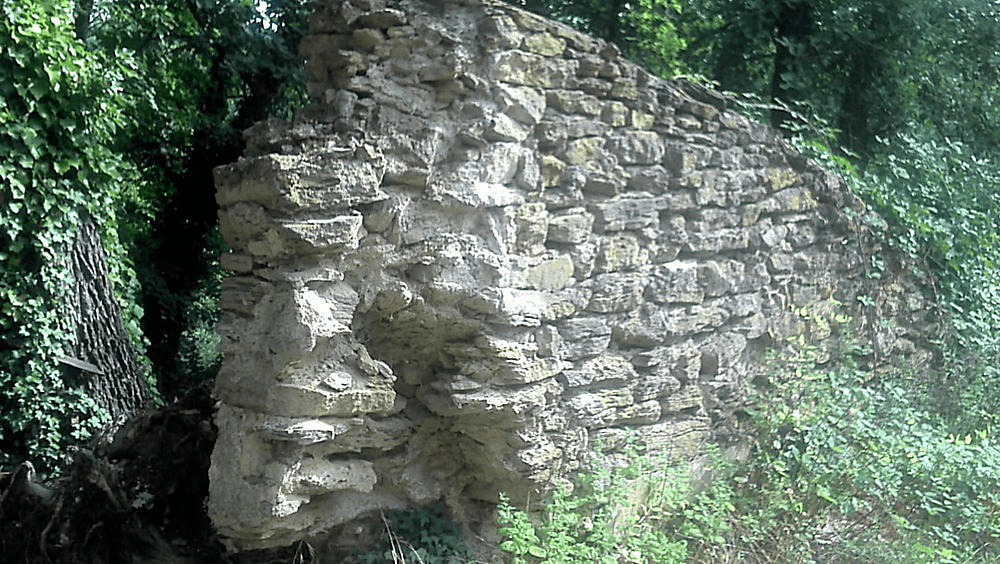
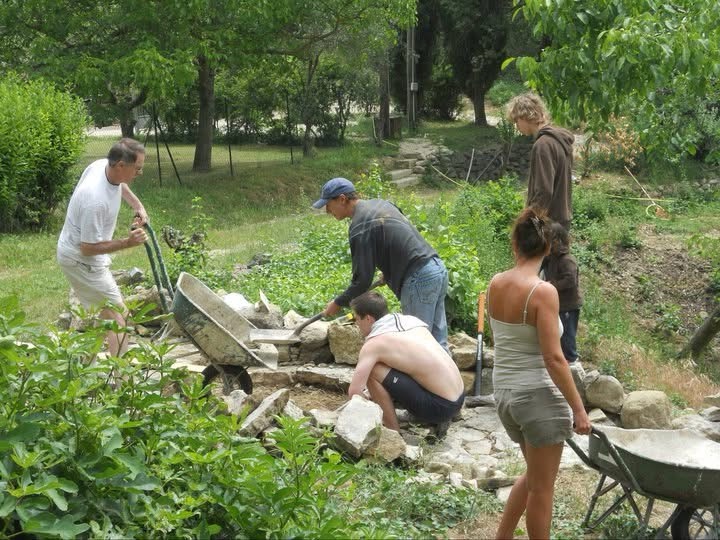
Last wall standing
Two neighbours, armed with the required farmer status giving them priority over other offers, had their eyes on converting a couple of ruined outbuildings into holiday gîtes. One asked me to provide a letter supporting her bid. I was aware that the original tip-off enabling the authorities to miraculously turn up in the few hours between the last wall coming down and the new one going up came from an all-too-local source. But in the final analysis, it was hubris that brought about the Brits’ downfall – not unscrupulous French neighbours.
What happened to our overconfident, naïve and unprepared dreamers? They had no choice but to abandon one of the most expensive fields in Provence. And leave behind a story the locals still recount, with a mixture of pity, schadenfreude, and a Gallic shrug.
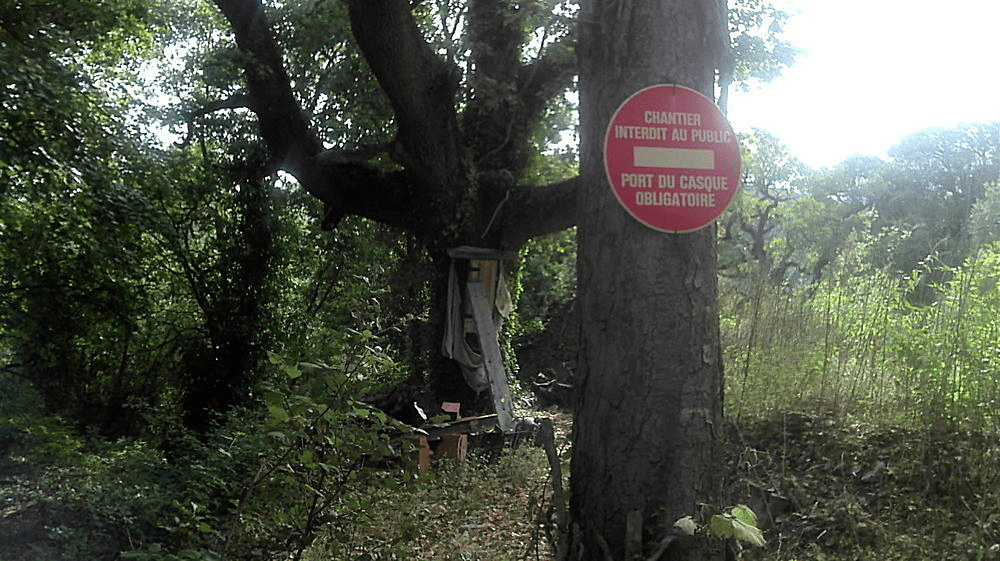
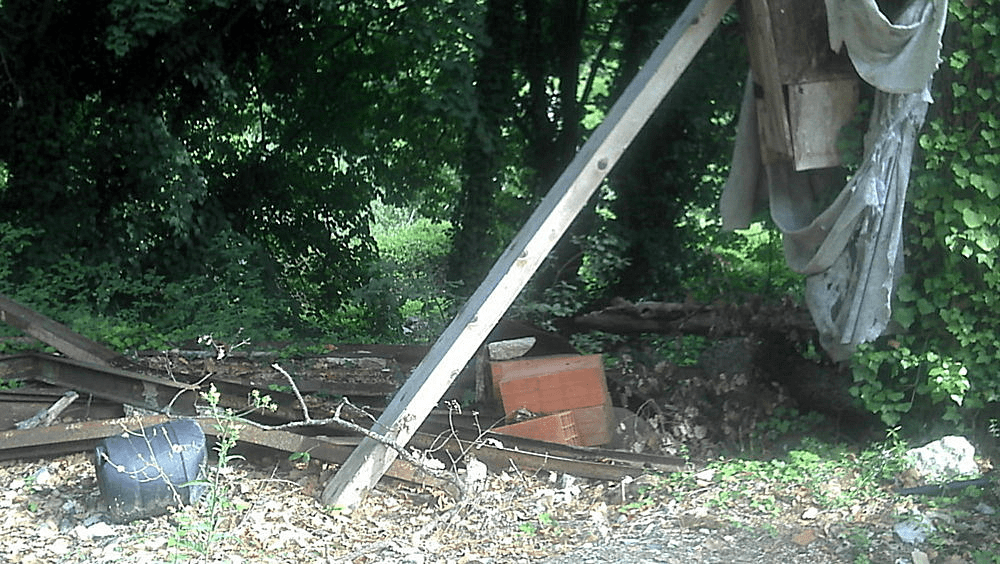
Work site – hard hat compulsory
Greenness, after all, isn’t just about the hue of the grass on the other side of the fence.
The field – 2011
Postscript 2025: The New Reality
With Brexit long behind us and nationalism again on the rise across Europe and the United States, attitudes have hardened. Borders too. The easy mobility of the 1990s and early 2000s now feels like another age.
After the Maastricht Treaty created EU citizenship in 1993, Brits enjoyed the freedom to live and work anywhere in the EU – a privilege that quietly rewrote thousands of midlife plans and retirement dreams. A Brit could pack up, drive south, and settle anywhere in France with little more than a ferry ticket, an address, and the conviction that they’d “made the leap”. Bureaucracy existed, but it was mostly local and surmountable.
Today, it’s different. Since Brexit, British citizens are classed as third-country nationals – legally no different from Colombians or Belarusians when it comes to settling in France. Anyone wishing to move permanently must first obtain a long-stay visa before entering France, then apply for a residence permit. For those retiring or living on private means, the rules are tighter: proof of accommodation, comprehensive health insurance, and sufficient income – typically assessed around the net minimum wage (≈ €1,400 per person per month) or equivalent savings.
The easy cross-Channel drift for Brits post-1993 has vanished. Dreaming of Provence remains free; living there now comes with an administrative price tag. For many would-be émigrés, the grass may still look greener, but these days you need to prove you can afford to water it.
Take your pick – CouchSurfing, HelpX, WWOOFing. Different acronyms, same broad principle: a kind of barter network for the twenty-first century wanderer. Travellers exchange their labour, skills, or mere enthusiasm for food, lodging, and a taste of local life. No money changes hands – just goodwill, elbow grease, and a pinch of cultural curiosity.
CouchSurfing always sounded vaguely disreputable, conjuring images of scruffy backpackers slumped in smoky lounges. In reality, it’s more often a polite, Airbnb-lite experience. Mostly urban. Mostly brief. And nowadays, largely sanitised.
WWOOFers, meanwhile, tend to head for the hills – or at least for the nearest compost toilet. In return for shared meals and fresh air, they plough the permaculture furrow, dig ditches by moonlight, and discuss lunar planting cycles with soft-spoken eco-hosts and their dogs. Always dogs.
HelpX falls somewhere in between. It casts a wider net – no requirement to know your nitrogen from your phosphorous, or to ferment your own vegan kimchi. If you’re willing to paint a wall, prune a vine, or just not leave toothpaste streaks in the bathroom, you’ll probably do fine.
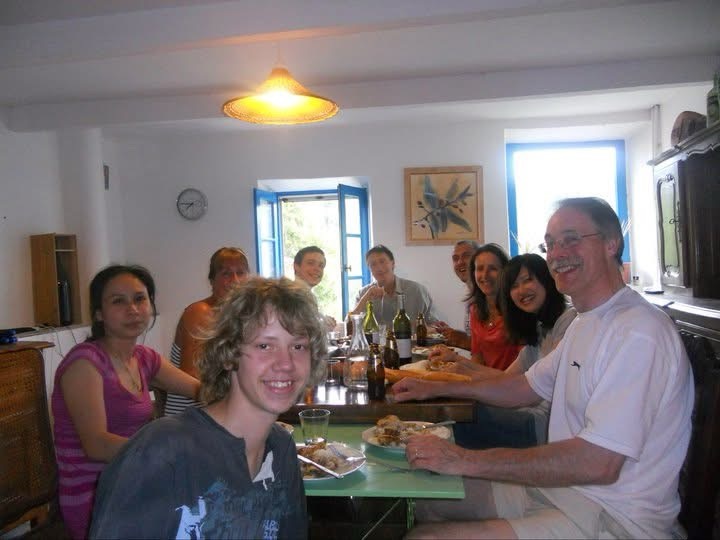
When I stumbled back home to France after one of my extended spells in Thailand, I started hosting. Sceptically, at first. But a year in, I had to admit – it worked. Mostly.
There were hiccups. One Brit arrived oozing menace, told us he kept a gun in his lorry cab, and allegedly pulled a knife on his previous host over dinner. His stay here ended with Kathryn, a wonderful Yorkshire lass who returned for multiple stays, being thrown against a wall. After he left, he rang late at night to threaten us all. The usual pleasantries.
Kathryn Barker, she fought to the end. RIP May 2022.
Then came John – a wide-eyed Englishman with a time perception problem. You could send him to weed a remote patch of garden and find him an hour later in the same spot, mid-stare, seemingly locked in existential awe at two coupling gendarme beetles. Then cannabis plant began popping up instead of courgettes. Nina, our 90 kilo English Mastiff – who would sample anything remotely edible amongst the veg – ambled erratically poolside early evening, and fell in. It was a full moon, and she apparently discovered her inner lupus and began howling at the moon. John wrote later, asking if he could return. We declined.
Another helper, a sweet but baffled French girl, was asked to turn over a flower bed. Half an hour later she returned, garden fork in hand, looking forlorn. “It doesn’t work,” she said. She hadn’t realised you needed to use your foot to push the fork into the earth. To her credit, she later became an expert at adorning the sunloungers.
But there were gems. Retired Canadians who could tile a roof without complaint. Hungarians who cooked like angels and fixed broken water pumps. Germans who repointed walls with frightening efficiency. A couple of Irish lads who drank most of the pastis but rewired the entire barn. An entire New Zealand farming family who had taken a year off to tour Europe in a camper van, and stripped the brambles from steep slopes with hand-held scythes at speeds a Stihl brush cutter would struggle to match. And countless others, from early-twenties backpackers to seasoned nomads in their sixties, who left behind more laughter than mess.
At the dinner table, stories were swapped about hosts. There was the swinger couple in the Dordogne, who preferred jacuzzi-based bonding to house renovation. The Dutch château owner who believed aliens lived at the Earth’s core and fed his helpers little more than lukewarm lentil soup. One HelpXer escaped on foot to the nearest village, with the host following in his car, accusing the poor guy of “ingratitude” through the open window.
Of course, the system has its flaws. A minority of hosts exploit cheap labour; a minority of travellers exploit generous hosts. There are the overstayers, the under-washers, and the pathologically oblivious. But the same could be said of any extended family.
What struck me most, though, was the sheer global sprawl of it all. There were host listings in Moldova, Fiji, El Salvador, even Jordan (spelled with an extra “n” on the site last I checked). South-East Asia was catching on too – Laos, Cambodia, Vietnam, Thailand, even parts of China.
Would I recommend it? Without hesitation. If you’ve got a spare room, some half-finished projects, and an appetite for strangeness – yes. If you’re twenty and restless, and you don’t mind weeding courgettes in exchange for clean sheets and dinner – absolutely.
It’s not Shangri-La. But it’s real. Human. Messy. And occasionally magnificent.
This blog doesn’t promise answers. It doesn’t promise recipes, travel hacks, or 10 ways to boost your productivity using only yoghurt and positive thinking. It certainly doesn’t promise consistency. What it does offer is a kind of meander through memory, place, and thought – sometimes personal, sometimes political, occasionally photo-heavy, and often coloured by scepticism and a nagging sense of impending global collapse.
Doubt may be an uncomfortable state. But certainty is ridiculous.
New Year’s Eve. The local hunters were out in force, already well into their celebrations and firing potshots at anything that moved faster than a snail. Fortunately for the region’s fauna (including us), most creatures with the good sense to keep their heads down survived intact. The kids and I managed the hundred-metre dash from house to garage without incident.
By dusk, and in good time for the first round of apéritifs, we bumped our way up the rutted track through olive groves to a neighbour’s house. No public roads here, and the risk of stray bullets not negligible. We were deep in the Provençal hills, far from anything resembling restraint.
Inside: bedlam. The merriment was already at full throttle, the Pastis bottle emptying rapidly. Resistance was futile. A quick perroquet – Pastis with mint syrup and ice – and I was in the spirit. Seven people conducting three conversations apiece, all at full volume.
Children hovered at the fringes, wisely keeping a respectful distance. In rural Provence, modern parenting has yet to breach the stone walls. Kids learn young that interruption is perilous.
Through the double glazing, I caught the dull crack of a gunshot. I was the only one not mid-diatribe, and no one else seemed to notice. I considered asking about the legality of nocturnal firearms, but a heated debate over the butcher’s far-right sympathies had already taken centre stage. As so often here, the volume was inversely proportional to the level of genuine disagreement.
Conversation veered towards Isabelle’s unfortunate Peugeot. Parked overnight in Malaucène, she’d assumed the midnight pops and bangs were early fireworks. Come morning, four cars including hers were charred husks. One, it was whispered, had been torched for insurance. When the brakes gave way, it rolled downhill into the rest. The explosions? Tyres.
Then the phone shrieked – volume cranked to eleven, or it would never have been heard over the din. It was Jean, a neighbour and, as it turned out, the source of the earlier gunfire. He wanted to know if anyone had seen intruders. The phantom truffle thieves were back.
Minutes later, Jean burst in, shotgun slung casually over one shoulder. “Quand mes chiens parlent…” he muttered cryptically – “When my dogs speak…” – leaving the threat to hang in the smoky air.
I hadn’t met Jean before. His complexion bore the distinctive hue of prolonged Pastis exposure. Forty-something? Sixty? Hard to tell. He launched into a breathless tale of truffle theft, rural espionage and canine clairvoyance, punctuating every twist with the wave of his shotgun. I instinctively ducked.
Partway through what resembled Rambo: The Agricultural Cut, Jean paused to check the weapon. Not loaded. I exhaled. Someone refilled his glass.
Two younger lads grabbed their own rifles from beside the door, ready to join the night patrol. God help any unfortunate soul out for a midnight stroll. I asked Laurent, our host, about the legalities. He reassured me they only tirent dans l’air – shoot into the air. I wasn’t convinced they knew which way was up.
Conversation turned, inevitably, to les Anglais. With barely a glance in my direction, the party erupted in laughter. I’d missed the joke. Probably for the best.
Apparently, the Baron family over the hill had sold a charming cottage to an English couple just before the financial crash. They’d retained a narrow strip of land right up to the house wall. The Brits, oblivious, signed the deeds. Two weeks later, the Barons arrived at dawn with a vine-pruning crew and a van full of radios. Every day. Loud. The Brits caved. The Barons sold them the sliver – at several times the going rate.
Eventually, we took our leave. Kids bundled into the car, NRJ radio blasting, we crept back down the track, headlights slicing through the olive trees. I prayed Jean and his militia wouldn’t mistake us for escaping truffle bandits.
We made it.
To friends, old and new – Bonne Année 2002
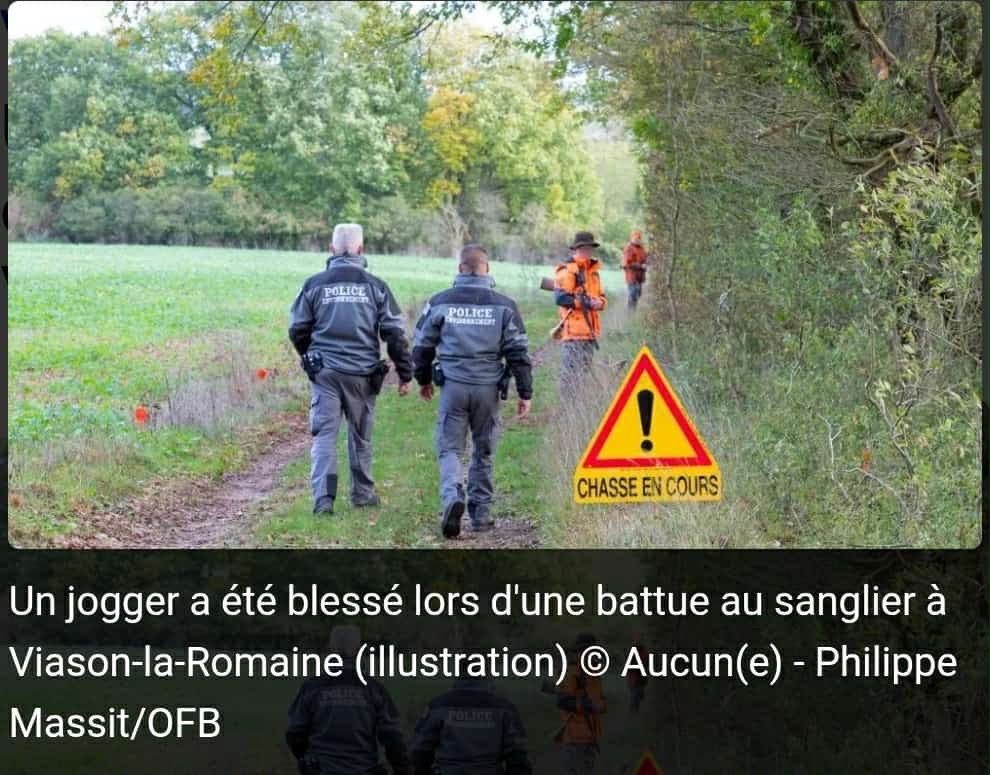
Post-scriptum – France Bleue News, 24/11/2025
Jogger takes shot to the knee during a wild boar hunt




 No Sacred Cows