• Family trees are strange things. They offer the illusion of order, a tidy branchwork of names and dates. But beneath the surface, they’re tangled with myth, omission, and the mess of human behaviour. Mine is no different. It begins in Scotland, detours through Jamaica, dips its toes in the abolitionist movement, and ends up – for a moment, at least – in the House of Lords.

    In 2000, curiosity got the better of me, and I began investigating my mother’s side of the family – the Wedderburns. The process started slowly, with dusty registers and hesitant searches, but eventually, a story began to emerge that was far richer – and darker – than I’d anticipated.

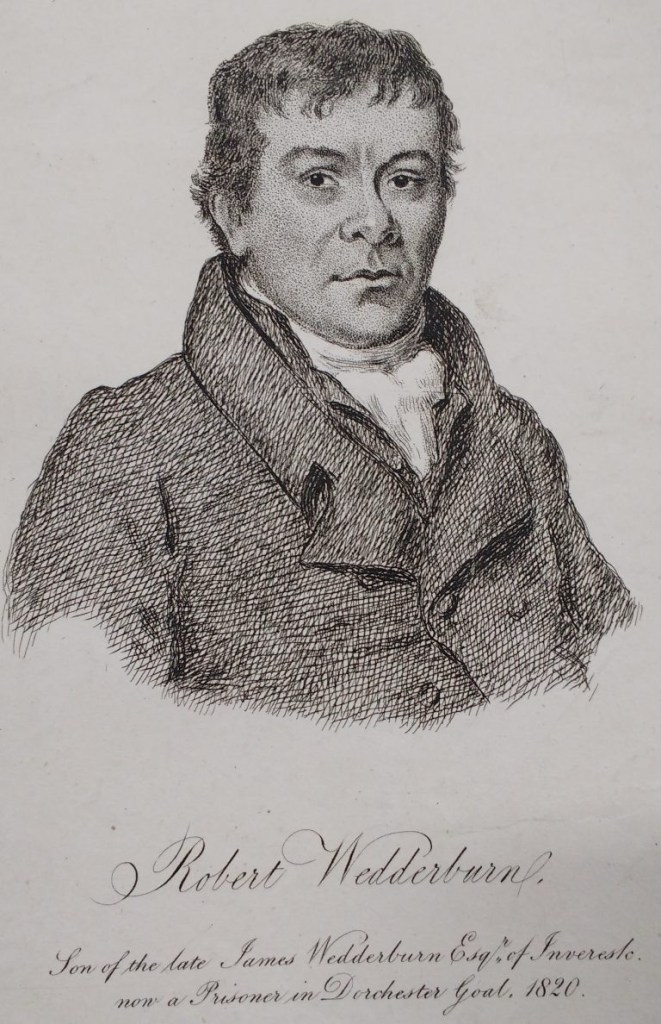
    I confirmed that we were directly descended from Robert Wedderburn: a radical, a pamphleteer, an anti-slavery campaigner, a fierce critic of Empire. The illegitimate son of an enslaved woman and a Scottish plantation owner, he was born in Jamaica in the late 18th century and later became a thorn in the side of British respectability. His writings – vivid, angry, unrelenting – had been buried for years but not forgotten. And there he was, in my bloodline, my ancestral grandfather. A ghost with something to say.

    I kept the discovery to myself for a while. Not because I was ashamed – quite the opposite – but because I sensed it might cause a stir. That opportunity arrived in 2001, at a centenary party for the mother of my cousin Lord Kenneth (Bill) Wedderburn, a Labour peer, legal heavyweight, and fellow descendant.

    It was a polite gathering – hors d’oeuvres, linen tablecloths, clinking glasses. Various limbs of the family tree had assembled, including the more genteel of our ‘scalemaker’ line, convinced their name traced back to the aristocratic Wedderburns of Blackness in Dundee. And indeed it did – but not quite in the manner they had imagined. It was the perfect moment to drop a quiet genealogical bombshell.

    I outlined, cheerfully, how our name didn’t just descend from Scottish aristocracy but also from slavery and resistance. Robert Wedderburn wasn’t some obscure offshoot. He was direct blood. Some eyebrows lifted. Some dropped. A few went missing altogether. There was a ripple of discomfort, a touch of denial. But also, to my surprise, a smattering of genuine intrigue. Bill’s daughter Professor Lucy Wedderburn, I distinctly remember, actually laughed in delight.

    Bill Wedderburn wasn’t at the party – he and his mother had long since fallen out – but we met up the following day. He was sharp as ever, keen to see the evidence. I brought baptism records, slave registers, Robert’s pamphlets, even the will of Jamaican slave and plantation owner Sir John Wedderburn, who had named his mixed-race children as beneficiaries. It was all there, plain as day. And of course Robert was born ‘free’.

    To Bill’s credit, he was delighted. This was no embarrassment – it was dynamite. He’d always seen the links between class struggle and racial injustice, and here they were, stitched into his own lineage. He arranged for me to visit the House of Lords – a surreal experience, not least because I was introduced as a newly discovered cousin to one Alexander Scrymgeour-Wedderburn, the 12th Earl of Dundee, hereditary peer and Royal Standard Bearer of Scotland.

    The Earl was gracious, if faintly bemused. When Bill told him of our shared descent, he offered the standard reply: that the Black Wedderburns were simply former slaves who had adopted the name of their owners. Bill raised an eyebrow. I produced the documents.

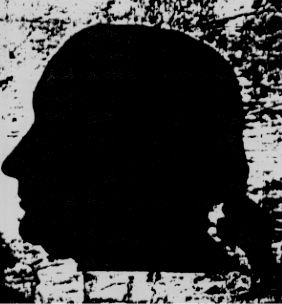
    It wasn’t really a contest. The Earl, though courteous, was no match for Bill’s legal tenacity. He conceded, eventually, and even invited me to visit his estate in Scotland, where the family still kept records, letters, and a silhouette woodcut portrait of the executed Sir John Wedderburn – originally sketched by the gaoler’s daughter on the night before his hanging after Culloden.
    That was the moment, I think, when history stopped being abstract. Two men, once on opposite sides of a slave-owning dynasty – one a Labour peer, the other a hereditary lord – now sat across from each other at Westminster, their bloodlines reluctantly re-entwined.

    Bill and I kept in touch. We shared a quiet pleasure in the irony of it all. He once said, grinning, “Well, that puts the bloody cat among the pigeons, doesn’t it?” Indeed it did.

    I wrote to the Earl later, to follow up on his invitation. He never replied.

    Aquila non captat muscas, goes the old family motto – the eagle does not catch flies. Maybe not. But some of us keep flitting about, nonetheless.

    The Blackness Wedderburns – our branch of the family – have an even more interesting motto: Non Degener. Well, that didn’t quite work out for them, did it. At least, not in their intended sense.
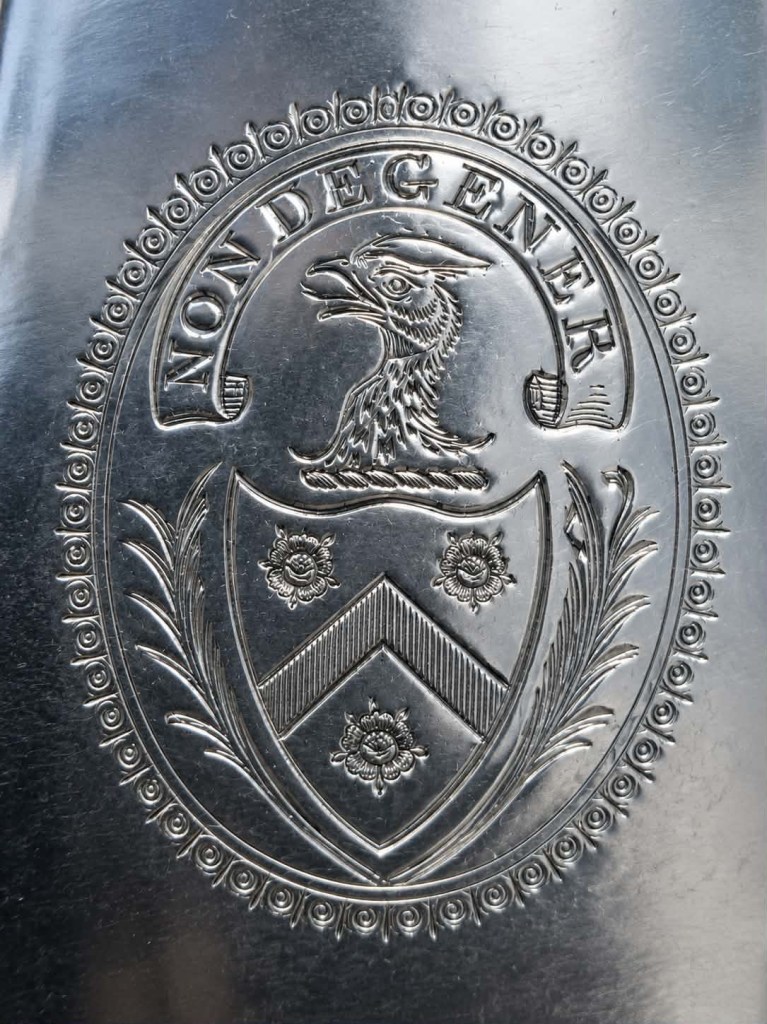
    Non Degener – “not degenerated” inscribed on the side of a Georgian sterling silver tea caddy from the late 1700s that also bears the initials of Robert Wedderburn’s father, James – now in the possession of Robert’s scalemaker descendants, Philip and Tracy Wedderburn in Australia. Robert once travelled to Inveresk to try to reconcile with his father, but James refused to see him, his footman sending him away with a cracked silver sixpence and a draft of stale ale. Robert would certainly appreciate the irony of our House of Lords meeting, more than two centuries later.

    That House of Lord’s meeting was in 2001. Now in 2025, the world has changed greatly. However, the French saying “plus ça change, plus c’est la même chose” comes to mind. The more things change, the more they stay the same. And this is delightfully encapsulated in the epilogue to the detailed and meticulously researched biography of Robert Wedderburn by Ryan Hanley, published in March 2025. I’ve corresponded with Ryan several times over the past couple of years, and I’m sure he won’t mind my quoting this final passage.

    “In our atomised and terminally online times, Robert’s insistence on the need for radical solidarity over liberal individualism sounds like a clarion call through the fog of an obscured past, a nearly forgotten, brief moment when another world seemed possible. It is fitting that he is more and more seen by scholars as an important figure for our understanding of the relationship between slavery and capitalism. His apparently intuitive understanding that racialised capitalism was the common denominator in the exploitation of workers around the world – from enslaved people in Jamaica to factory workers and dung-tailors in London – has inspired scholars to explore how early socialist ideas were articulated in relation to empire.

    It seems difficult not to see ourselves reflected when we look at the world that made – and then so spectacularly unmade – Robert’s reputation. Within the ongoing omni-crisis of late-stage capitalism – food banks, unaffordable housing, resurgent state-condoned racism, and paid-for political gaslighting operating at an industrial scale – Robert’s outright rejection of any authority derived from the violent expropriation and hoarding of land and resources is now very much back in vogue.

    The language that scholars have used when describing Robert’s radicalism – “organic,” “natural,” “earthy,” even “pungent” – speaks to an enduring sense that he embodies a pure form of radicalism: radicalism as it should be. His prophetic vision of a world without slavery or poverty was predicated on the idea that solidarity between colonised and exploited peoples was not only possible and desirable but inevitable.

    While he learned, to his cost, toward the end of his life, that such solidarity could not be taken for granted, Robert remained optimistic about the capacity for poor and enslaved people to find common cause in the pursuit of freedom and equality. Until his death, he believed that they might one day even be successful. For this belief, he was once derided as naïve – even deluded. But he was more of a realist than people gave him credit for.

    He understood from the example of Haiti the need to plan carefully to defend anything that might be gained from an insurrectionary movement for freedom. He learned from Barbados and Demerara, and from William Davidson and Arthur Thistlewood too, that insurrections most often ended up with bloody reprisals – with severed heads held up to the crowd or fixed on a spike over Temple Bar. He learned from his father and half-brother Andrew that the law is no guide to conscience, and that power has a habit of legitimising itself as it reproduces.

    Most importantly, he learned from [his mother] Rosanna and [grandmother] Amy that sometimes it was worth the punishment to thumb one’s nose at authority – to unsettle for a moment the complacent, self-regarding assumptions about justice and honour held among a pack of slaveholders. Seemingly doomed acts of defiance in the face of overwhelming odds can yield major effects further down the line.

    In Jamaica they have a saying: “If you are the big tree, then we are the small axe.” There is nothing naïve about that.”

    Bill, had he still been here, would have loved this work by Dr Ryan Hanley. And I can’t help but see how our worldviews, two centuries later, uncannily mirror Robert’s, and have done so since well long before either of us even knew of his existence. A kinship in more than the genetic sense.

    House of Lords revisited

    If I have a regret, it’s that I only got to know Bill properly when he was nearing the end of his life. We met on several occasions afterward, usually at the House of Lords. I liked him immensely. He was direct, abrasive, unapologetic – not unlike Robert, I imagined.

    We lunched together in the Peers’ Dining Room a few times – an august venue where the long table rule still holds: one sits beside whomever arrived before. One time I was sandwiched between Bill and the eccentric Lord Longford – known as “Lord Porn” for his anti-pornography crusades, and “Lord Wrongford” for his unpopular and undoubtedly misguided attempts to free Myra Hindley, one of the Moors murderers. Conversation was sporadic and punctuated by explosive sneezing, tissues tumbling from his every pocket like ticker tape.

    Another visit brought minor scandal. Wandering the corridors, I found myself face-to-face with the Speaker of the House and his entourage. You’re supposed to stand aside in silence. I didn’t. Bill hissed at me like a schoolmaster catching a pupil smoking behind the bike sheds.

    Later, while Bill was needed for a vote, I wandered off and slipped into what appeared to be a quiet library. Within moments, a flustered staff member appeared – but couldn’t cross the threshold from the red-carpeted corridor to the green-and-red of the room itself. “Sir! Sir!” he stage-whispered. “Only peers may enter the Library!” I apologised and stepped out, but couldn’t resist asking whether the many decrepit Lords had to do their own dusting.

    For all its grandeur, its ritual and its red velvet robes, that place still can’t quite silence the ghosts.
  • I’ve long wondered whether human beings are anything more than elaborate, error-prone information processors – complex, yes, but not fundamentally different from other life forms. As artificial intelligence moves from science fiction to daily reality, the question seems less about our limitations than about our supposed uniqueness.

    People often insist that AI will never replace humans in areas requiring subtlety or empathy – diplomacy, for instance, with its unspoken codes, glances, and emotional intelligence. But why not? With enough data and processing power, a machine could conceivably simulate those same nuances. If our instincts are simply fast-processed experience – rapid recognitions shaped by evolution – there’s no reason in principle that a machine couldn’t do the same, only faster.

    Still, reading emotion, sharing it, and being moved to act on it are not the same. A system may interpret feelings flawlessly yet remain unmoved by them. Empathy involves motivation as well as perception.

    Perhaps what we call “intuition” is a form of data compression: experience, pattern, reaction. We’re biological pattern-recognition systems built on feedback loops and fuzzy logic, prone to error but good at improvising coherence. Yet much of that intuition depends on embodiment – hormones, sensations, and habits grounded in a physical world. Machines might reproduce the structure of intuition, but not necessarily its texture. Even so, if intuition is mostly compression, the idea that AI could surpass us – not only in speed but in subtlety – becomes difficult to dismiss.

    The deeper question is self-awareness. Can a machine ever be truly conscious? Most say no – that machines can simulate understanding but never experience it. Yet human consciousness itself evolved gradually, not as a divine spark. If certain forms of intelligence and embodiment can support self-awareness, then perhaps it isn’t beyond reach for silicon. Whether functional equivalence alone can generate experience remains unresolved, but it is at least plausible.

    We like to believe we’re uniquely self-aware, but perhaps, as Stephen Hawking warned, the greatest enemy of knowledge is not ignorance but the illusion of knowledge. Nowhere is that illusion stronger than in our belief that we are the pinnacle of awareness – that our consciousness is both unique and central.

    Douglas Adams captured that delusion beautifully in his tale of the sentient puddle. One morning it wakes, marvelling at how perfectly the hole fits its shape. Naturally, it concludes that the world was made just for it. But the puddle is wrong. The hole wasn’t made for it; the puddle simply conforms to its container. We are that puddle. We fit the world not because it was designed for us, but because we have adapted ourselves to it – and then mistaken that fit for specialness. The same bias colours how we build machines: we design them in our image, then take the resemblance as proof of our own centrality.

    Perhaps consciousness is not a revelation but a trick – a sleight of mind that lets a limited brain cope with an overwhelming world. A coping mechanism disguised as profundity. If so, AI might one day match or exceed our self-reflection – not by copying us exactly, but by evolving something functionally equivalent, perhaps even superior. To do that, though, machines may need grounding in the real world: bodies, sensors, or other means of shared reference that give meaning to their models rather than mere simulation.

    And if certain forms of intelligence can support self-awareness, the future may belong to machines – not necessarily as rivals, but as successors. Yet there is also a middle path: not successors, but partners and hybrids. The frontier may lie in shared cognition rather than replacement, in symbiotic systems that blend biological and artificial minds.

    That need not be a tragedy. It could mark the next step, not of biological evolution, but of cognitive and perhaps moral evolution. Cooperation, after all, was never uniquely human; it was an evolutionary advantage. Among intelligent machines, survival might favour those who collaborate – those who find value in coexistence. But cooperation is fragile. It depends on trust, incentives, and governance. Machines, like humans, would need structures of accountability to make it endure.

    If so, the rise of machine intelligence may not spell our extinction, but offer continuity – a passing of the torch, not to something that mirrors us perfectly, but to something that inherits our insights. And if such systems ever cross the threshold into true experience, we’ll face another question: what, if anything, do we owe them?

    If we are wise – and that remains uncertain – we may yet learn to live alongside these new minds. The question is not whether they become like us, but whether we can accept no longer being central.

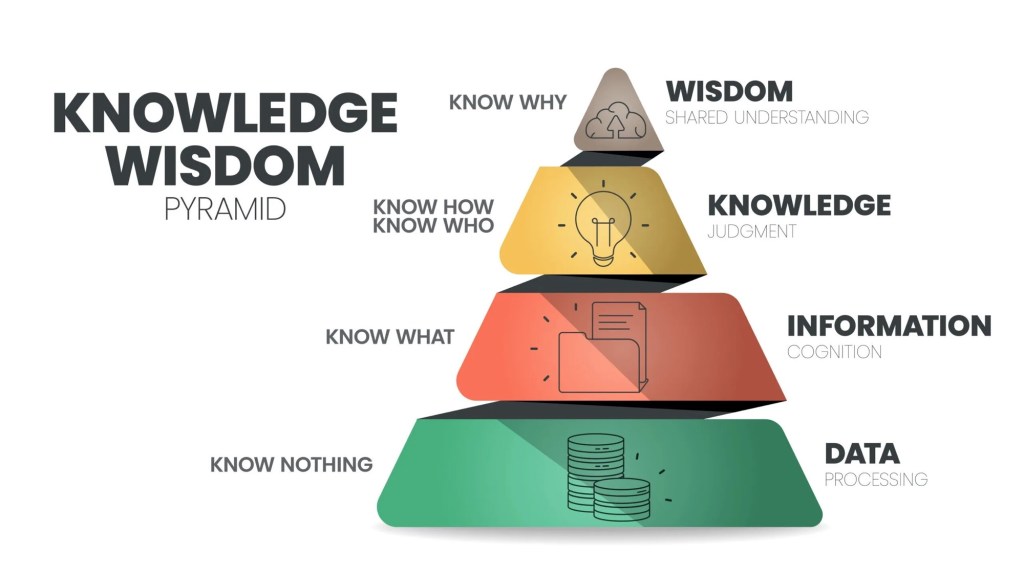
    “The saddest aspect of life right now is that science gathers knowledge faster than society gathers wisdom”

    Isaac Asimov

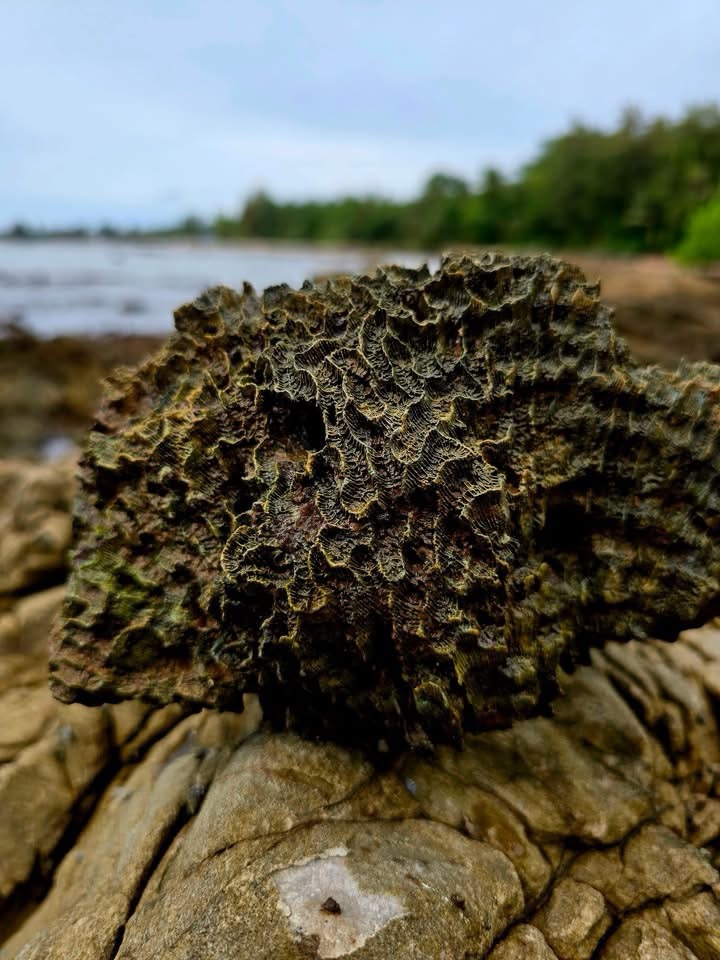
  • Once, this was a living coral – a complex city of polyps, feeding and breathing in warm tropical waters. Now it lies bleached and brittle on a Chumphon shoreline, carved by time and tide into a relic of itself. A single Asian weaver ant explores the labyrinth where an ocean colony once thrived.


    Brain coral, long dead, now carried ashore – an ant tracing the outline of a vanished ecosystem.

    Life continues, but on a smaller scale – as it always does when the great systems fail.

    Along much of Thailand’s coast, pieces like this have been washing up more often. The Gulf has warmed sharply over recent years, and surveys across both the Gulf and the Andaman show widespread bleaching – in some shallow zones as high as 80–90 per cent. Even protected marine parks have reported repeated stress events, the kind reefs cannot fully recover from.

    The coral in my hand is just one fragment, but it speaks to a wider pattern: systems under pressure, ecosystems thinning out, and the quiet arrival of signs most people only notice when they are already too late. Sometimes the tide brings in more than shells.

    Fossilised brain coral (family Faviidae), Chumphon, Thailand:


    Coral fragments along the Chumphon shoreline, each a small reminder of what the Gulf has been losing.
  • Up the Khlong Without a Clue

    By some feat of navigational incompetence – possibly involving an upside-down online compass or Google Maps pointing every which way except the desired direction (and certainly not my own misplaced sense of direction) – I managed to take the E-line khlong boat from Thonglor Pier entirely the opposite way. Not slightly wrong, not “I’ll hop off in two stops and fix it”, but full, unwavering commitment to the error. Quite an achievement, given that the Saen Saep line offers only two options: towards the city, or towards parts unknown. Naturally, I chose the latter.

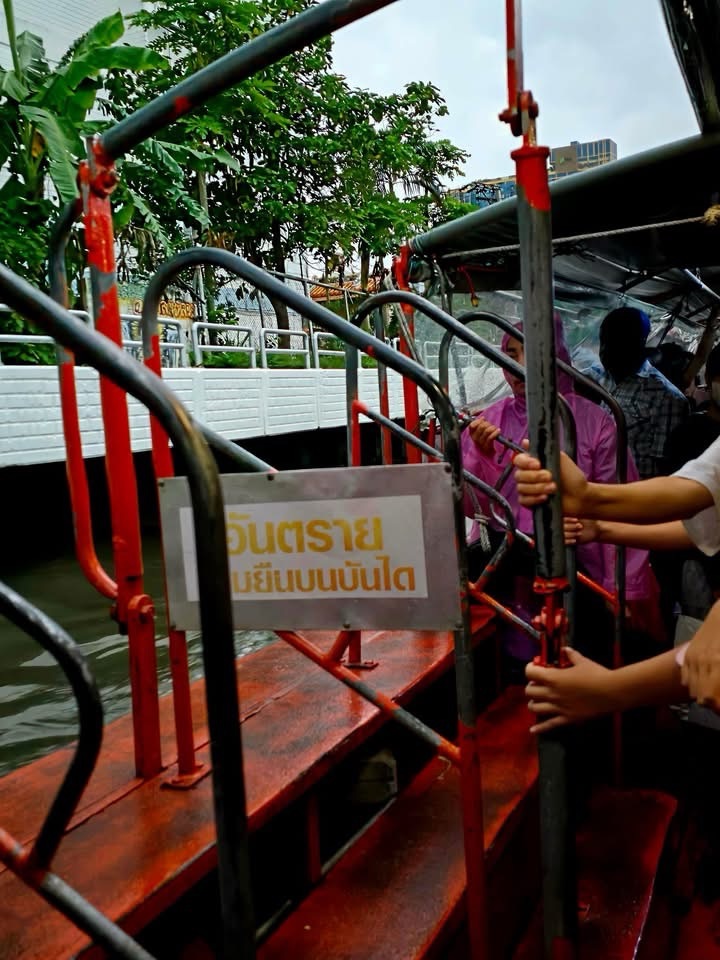
    These boats have been racing up and down the canal since the 1990s, powered by ageing diesel engines that sound like a WWII submarine clearing its throat. They nominally carry around a hundred passengers, though on this particular afternoon it felt more like a hundred and fifty, plus my backpack. I doubt anyone keeps count.

    Mine was packed to the gunwales. I sensibly positioned myself in a seemingly generous gap between bodies, only to discover why it had been left unclaimed. The tarpaulin roof is made of overlapping, sagging panels, each collecting its own private lake of rainwater. One enthusiastic lurch and an entire reservoir emptied itself directly onto my head, to the thinly disguised amusement of nearby seasoned commuters. I managed a resigned smile as the water trickled briskly down my spine. Bangkok canal travel initiation: complete.

    Fifteen stops later – thunder cracking, lightning flashing, and the scenery becoming ever more obscure – I conceded that the surroundings were not going to become familiar. Time to get off.

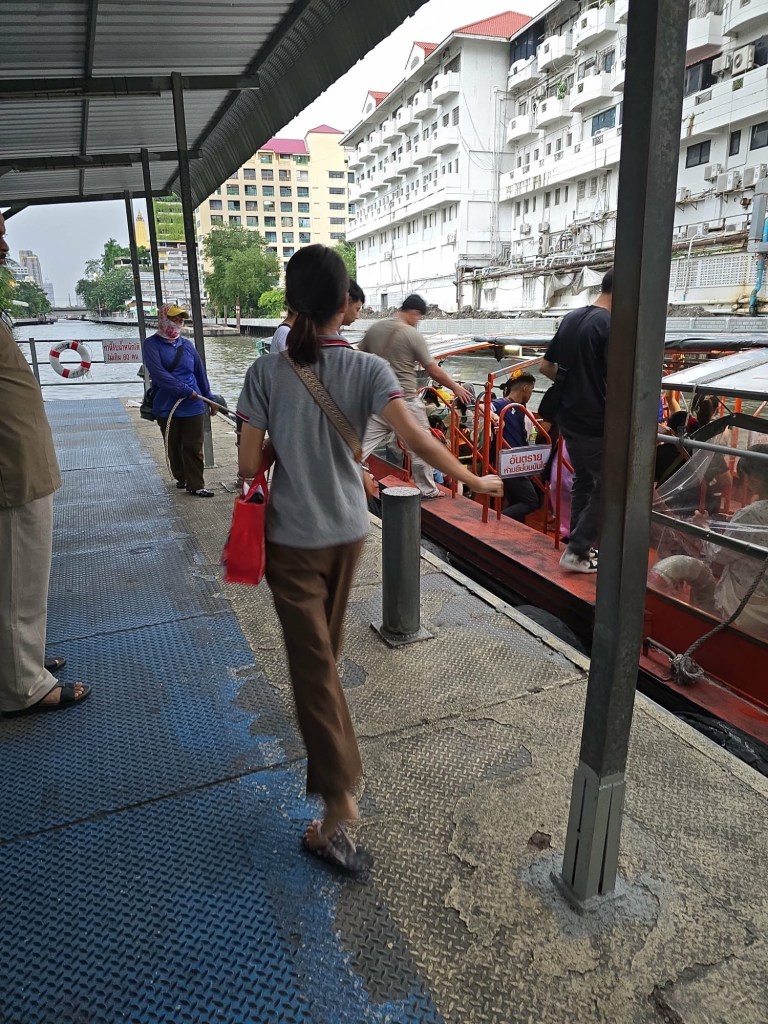
    Embarking and disembarking were adventures of their own. The boats do not exactly stop; they merely flirt with the idea of slowing down. In that theatrical split second, a wiry, perpetually exasperated crewman – the conductor, who hops on and off with feline agility – loops a rope around a bollard just long enough for passengers to throw themselves on or off. My own attempt was greeted with an expression combining pity, urgency, and the faintly hopeful assumption that I would not fall in.

    I had arrived at a gloomy, deserted pier whose roof leaked in sympathy with the boat’s. The location could best be described as “somewhere in Bangkok, technically”. A flash of lightning illuminated corrugated shacks and shadowy warehouses, and the following crack of thunder delivered a distinctly Calvino-esque jolt — the sort of Bangkok backwater where, in Christopher G. Moore’s Vincent Calvino novels, rain hammers on corrugated roofs, shadows gather in unhelpful places, and a wrong turn tends to precede something regrettable happening to the detective.

    “In the end, we are all characters in other people’s stories”

    https://www.christophergmoore.com/product-page/district-18

    District #3 – a Vincent Calvino crime novel, 18th in the series

    Mercifully, although khlong boats do not run far into the night, one appeared. Another eighteen baht bought me a place on a blissfully emptier vessel – this time heading the way I had intended all along – and I retraced my unintended odyssey, complete with the expected splashes, sharp turns, and several enthusiastic near-collisions with oncoming traffic.

    True to form, I still overshot Asoke Pier by two stops, but E5 and Phetchaburi MRT were perfectly serviceable. After my brief career as a maritime liability, I decided it was far safer to continue underground.

  • This content is password-protected. To view it, please enter the password below.

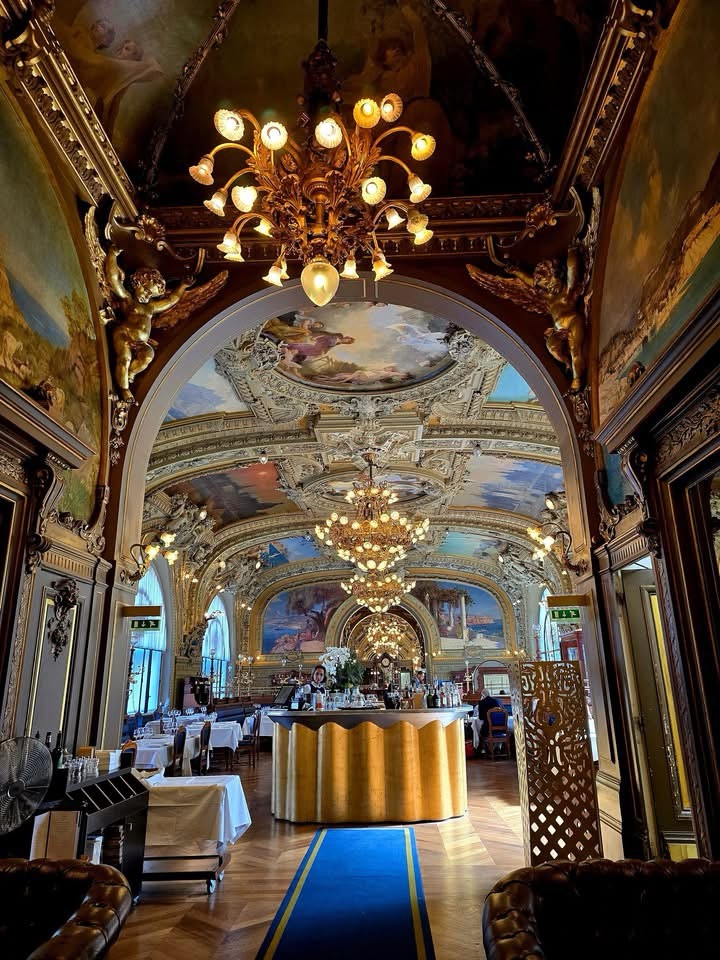
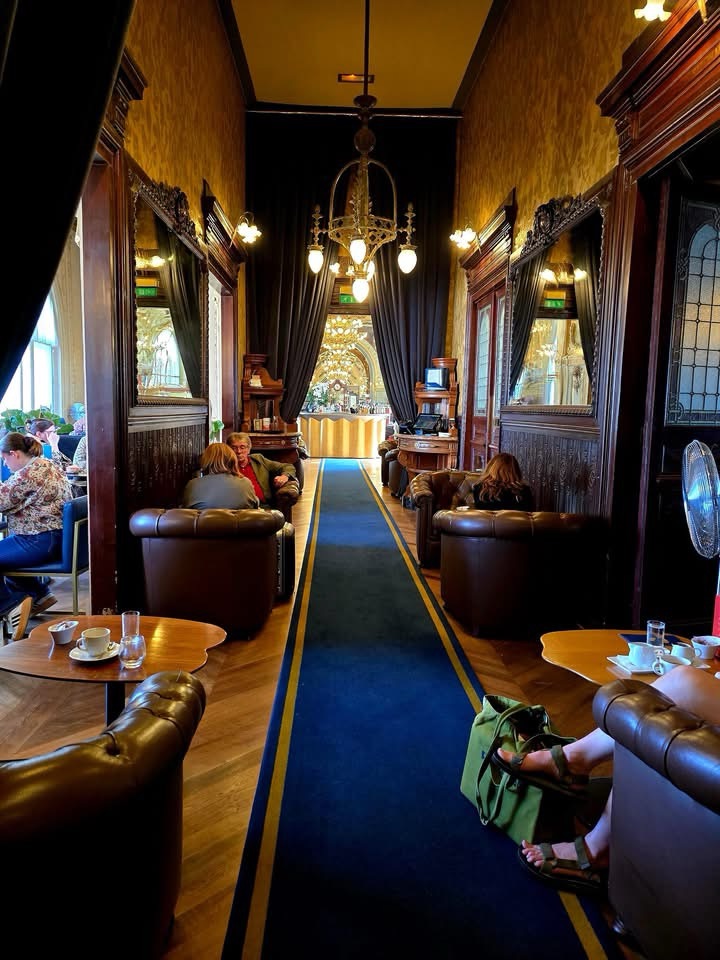
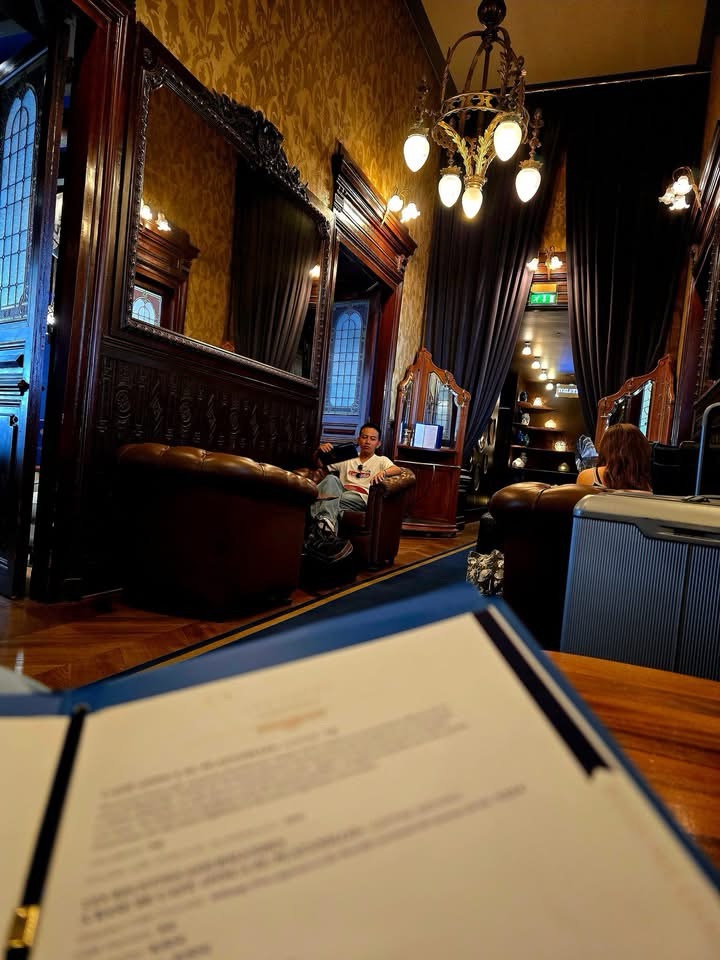
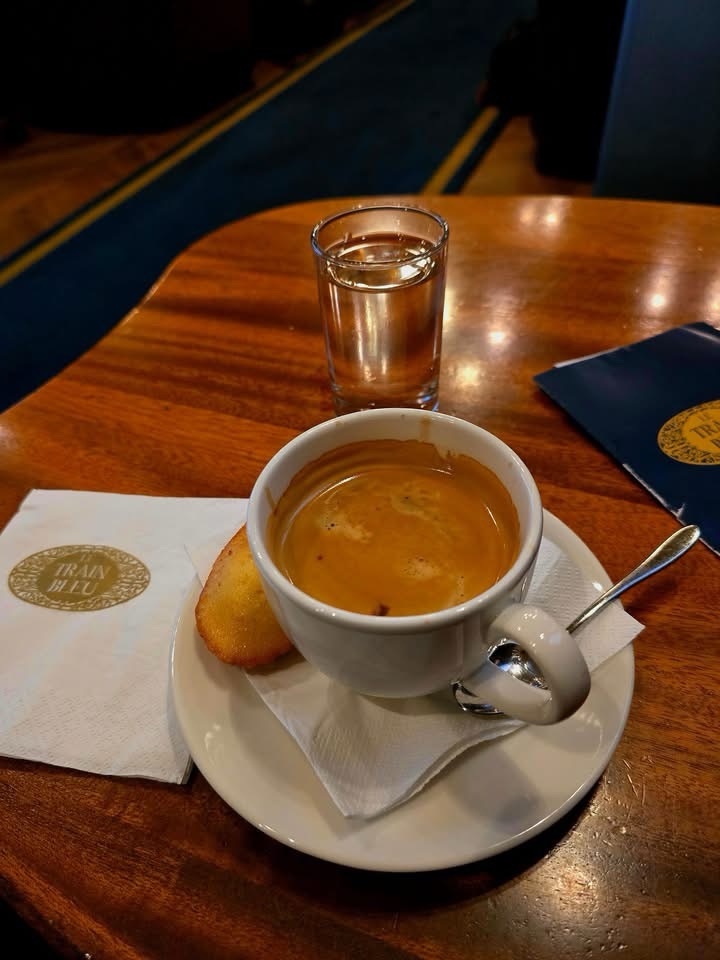
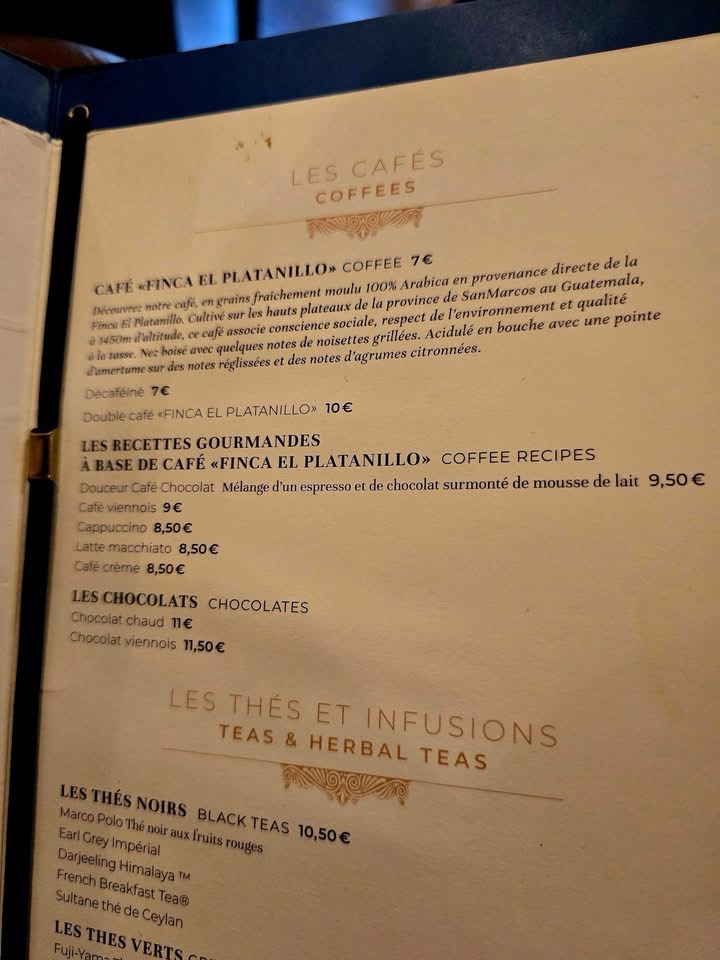
  • Well, if one must wait for a delayed TGV, this is surely how to do it – sinking into a leather armchair beneath chandeliers and gilt, in the quiet splendour of Le Train Bleu. 10€ may seem steep for a double shot of caffeine – even a Finca El Platanillo 100% Guatemalan Arabica, cultivated at 1450m – but context is everything – and here, nestled into a leather armchair at Le Train Bleu, you are not paying for coffee so much as an experience.

    Besides, you get a free madeleine on the side, and with a single shot at €7, the double almost counts as thrift. Almost.

    In this echo of another age, even a delay becomes something almost deliberate – an invitation to linger rather than rush. Opened in 1901 for the Universal Exhibition, Le Train Bleu is a showcase of Belle Époque grandeur and Beaux-Arts theatricality… painted ceilings, sculpted cherubs, and a setting that once welcomed travellers bound for the Riviera, Cairo, and Constantinople.

    There is time, here. And perhaps that is the rarest luxury of all.

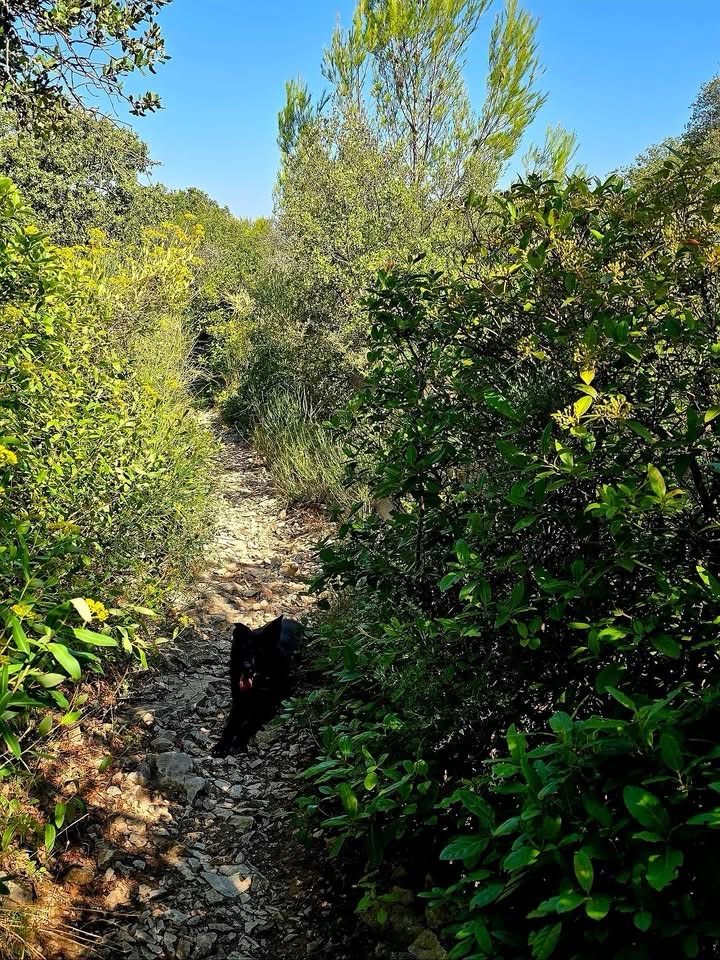
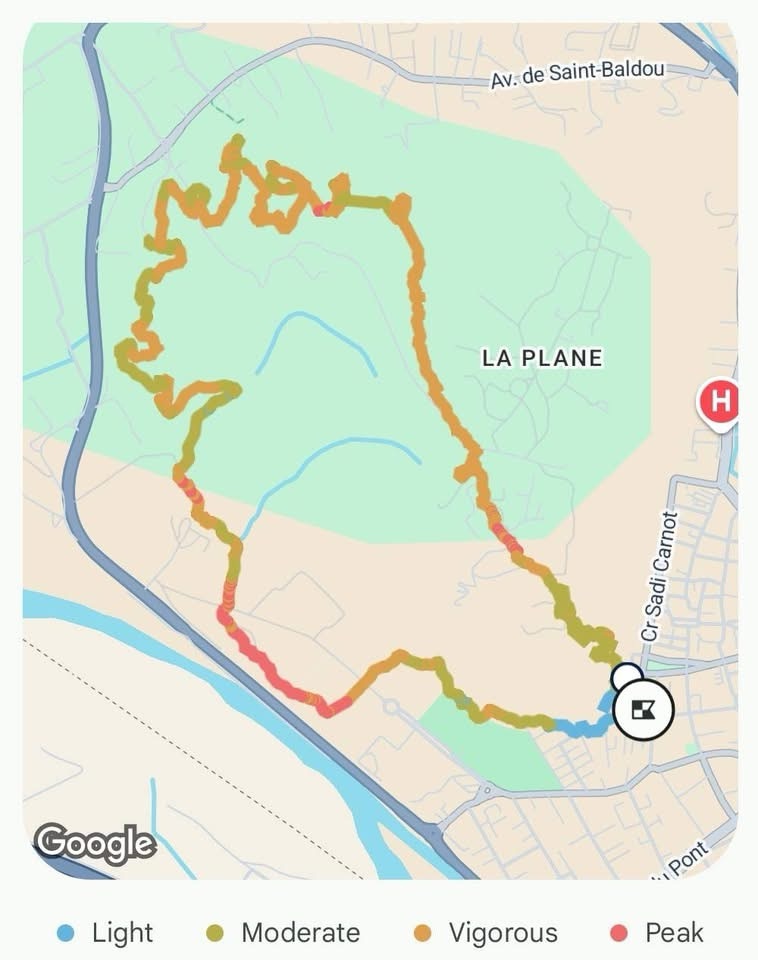
  • Sometimes the best way to silence the newsfeed, the static, the murk of thought, is to lace up your shoes and head for higher ground. This morning, I did just that – setting off early with my indefatigable four-legged companion, Glo, for a fast 9.6 km hike through the garrigue behind the Colline Saint-Jacques in Cavaillon.

    Glo is a rescue – of entirely indecipherable ancestry and unbothered by the mystery. When I adopted her in September 2019, she was five months old, skin clinging to bone, with a look in her eyes that spoke of beatings and bites and a life already too full of fear. She had been chewed – quite literally – by other dogs, and the world, understandably, made no sense to her. It has taken years, but much of that fear has gone. She still startles at sudden movement or unexpected noise, but in open spaces, on winding trails, nose twitching and eyes scanning the horizon, she is transformed. Steady, alert, and inseparable. What remains of her past now follows behind us – at a good distance.

    The route itself was anything but tame. Twisting rocky paths, sudden inclines, a few scrambles, and more than a few sections tipping into “peak exertion” – according to the tracker, at least. But the physical effort was laced with something deeper. A sense of continuity, of walking quite literally in the footsteps of thousands who passed this way before.

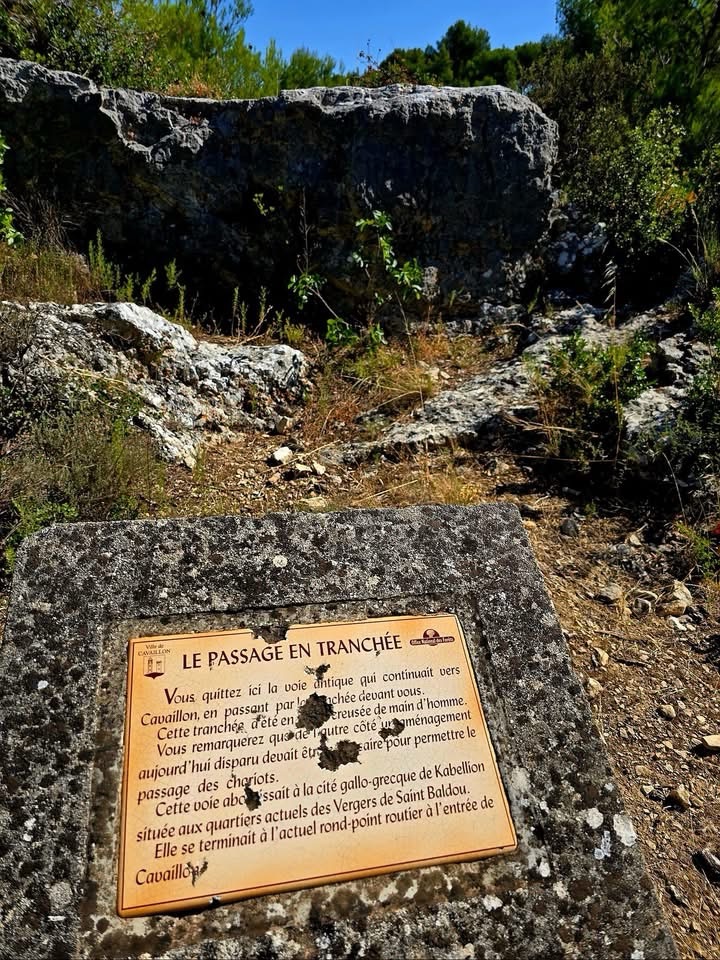
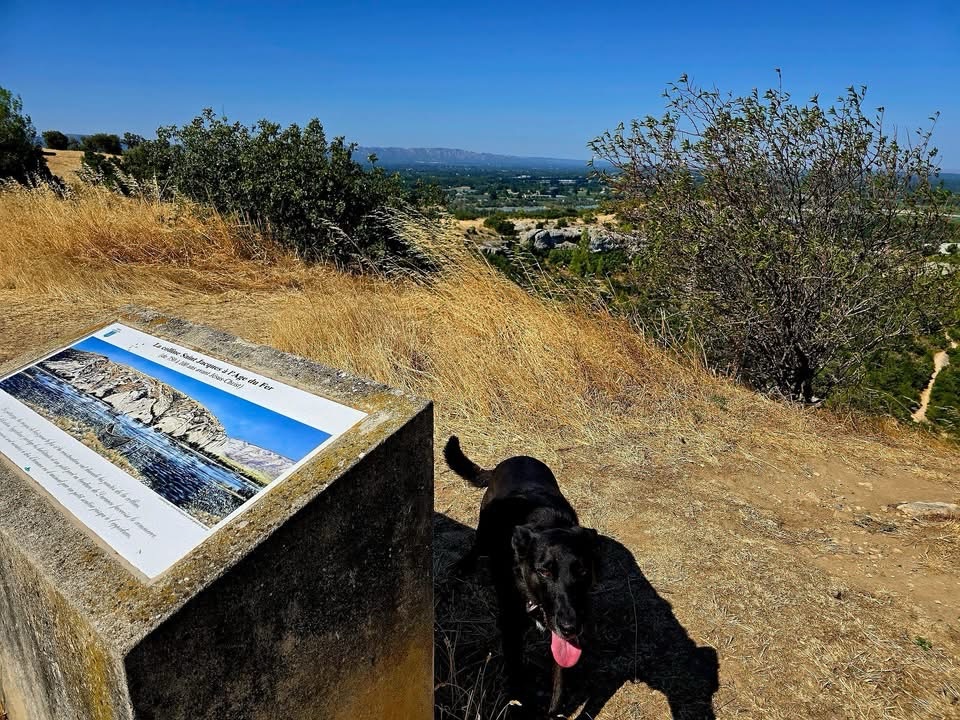
    Saint-Jacques has been occupied since the Neolithic. At La Grande Baume, a cave still sheltering in the limestone, our ancestors left flints and arrowheads – but no trace of themselves beyond that. Romans later carved their passage through the rock at Le Passage en Tranchée, their carts biting ruts deep into the stone. Quarrymen followed in later centuries, chiselling into the hillsides at Les Carrières, leaving behind the ghost grid of their labour. The paths loops through it all, past dry gorges, shaded ravines, low holm (evergreen) oaks and sun-shattered cliffs. Glo, wiser than me, took the steeper stretches at her own unhurried pace, pausing to sprawl in the shade with the confidence of a creature who knows the heat will always outlast us.

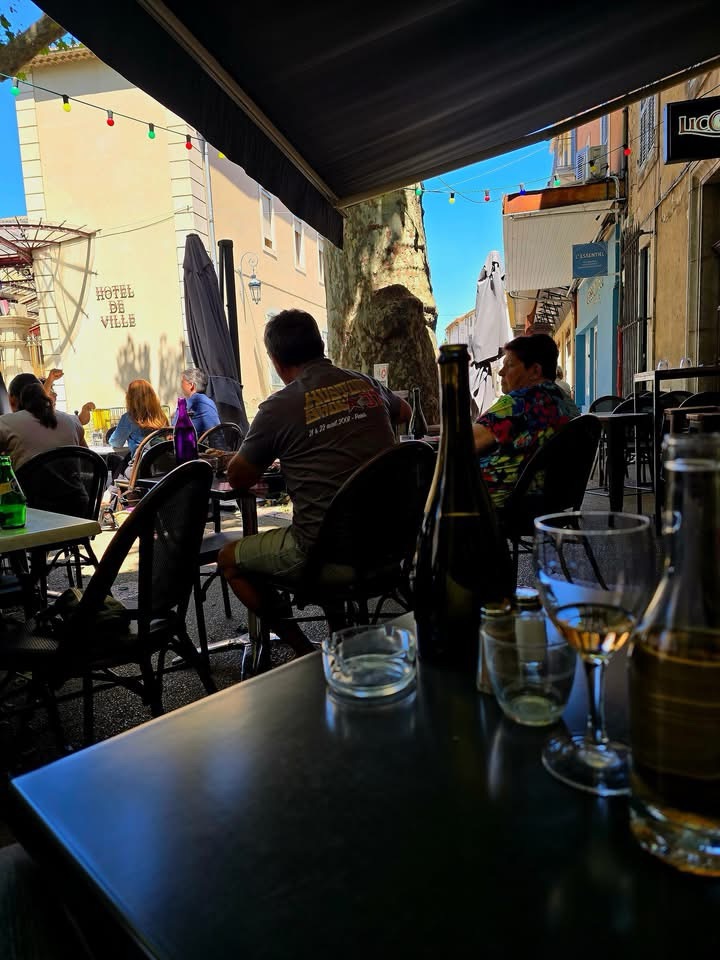
    After nearly ten kilometres and a fair bit of sweat, we descended into town – dusty, satisfied, and ready for something restorative. I dropped Glo off at home for a well-earned nap in a cool corner, then made my way solo to Bistrot Ô Méryl, tucked under the plane trees by the Hôtel de Ville.

    L’Assiette ô Meryl arrived like a love letter to Provence on a plate. First, a half of chilled Cavaillon melon, served plain but dusted elegantly with piment d’Espelette – sweet, cool, with just the faintest warmth on the tongue. Then the main affair: a generous salad of local greens dressed in light vinaigrette, overlaid with folds of cured ham, thick shavings of aged cheese, confit tomatoes bursting with intensity, and thin grilled slices of aubergine just kissed by the flame. Anchoring the whole dish were two slices of courgette terrine – a savoury loaf packed with slices of summer squash, bound in herbed egg, baked to just the right balance of soft and firm.

    It was rustic without being rough. Thoughtful without being precious. Paired with the rosé maison – pale, dry, and properly cold – it did not so much rejuvenate as reassure: yes, some things still make sense.

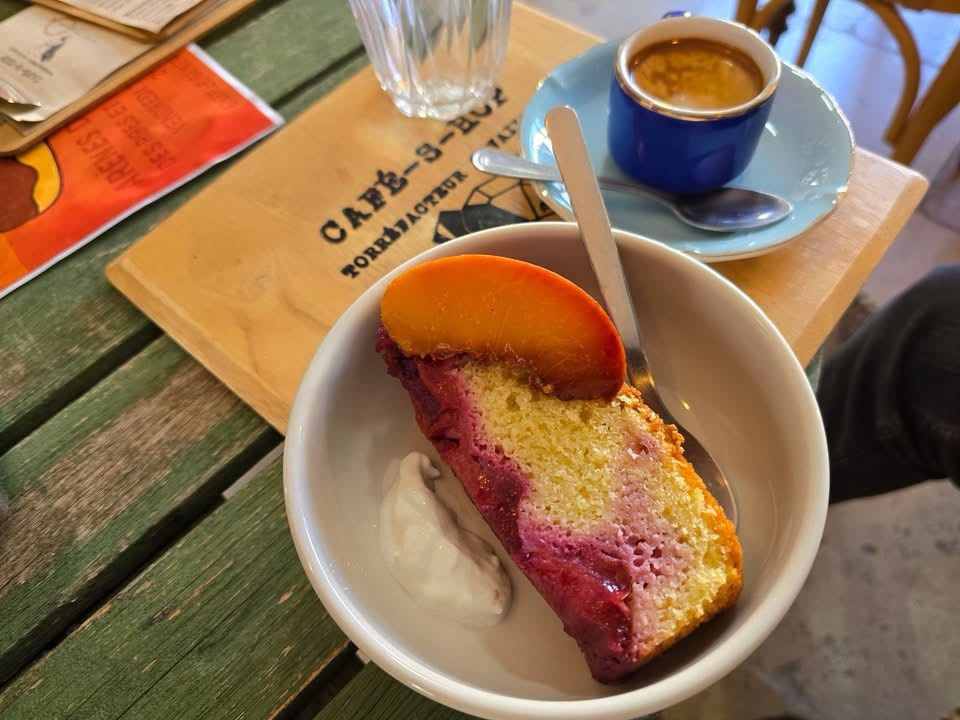
    To finish, I wandered across to Café-s-Hop Cavaillon, my favourite little torrefaction spot in town. Glo stayed home, sleeping off the morning’s adventure. Inside, framed hessian coffee sacks and shelves of beans and paperbacks lined the walls. Tourists and a few locals lingered over laptops or shared low conversation, the whole place running on the unspoken agreement that time could afford to move slowly, just for a while.

    An espresso – no embellishments, no sugar, just beans and heat and clarity – was the final punctuation mark. Well, nearly.

    There was cake. Of course there was cake. A rustic slice – peach and red fruit folded into a golden sponge, gently sweet, served with a curl of ripe peach and a spoonful of crème fraîche just tart enough to restore perspective. Simple, and perfect.

  • Inflation is often sold as a mysterious force in mainstream commentary – like weather, or fate. In reality, it is a predictable redistribution mechanism. A stealth tax. And like most mechanisms in our economic system, it redistributes to the few. It’s a pipeline – straight from your pocket to theirs. A slow, silent redistribution of value upwards, wrapped in economic jargon and blamed on whatever is culturally convenient.. globalists, migrants, wind farms, your neighbour’s pronouns. Yes, energy shocks and supply issues play a role. But who ends up better off after the dust settles? Not you.

    The Winners?

    • Governments groaning under debt (they repay with devalued money).
    • Borrowers with fixed-rate loans.
    • Owners of property, stocks, and commodities.
    • Corporations with pricing power.
    • The already rich, who simply rebalance their portfolios and barely feel the breeze.

    The Losers?

    • You.
    • Wage earners, pensioners, small businesses.
    • The so-called “middle class”, now largely the working poor with a better wardrobe.

    While prices rise and security slips away, people get desperate for someone to blame. And into that void, step the salesmen. Enter the Snake Oil Populists.. in suits, flags, or fatigues. They arrive with righteous fury and easy targets. “Your life’s getting harder? Blame the EU. Blame immigrants. Blame the green mafia. Blame the elites in Brussels, London, or Washington”. But look closer, and the story collapses under its own hypocrisy.

    Nigel Farage

    Swills pints and rants about sovereignty – while pocketing over £1 million a year from media gigs, crypto promotions, and campaign donations. Net worth? At least £3.2 million – and that is just the declared portion.

    Marine Le Pen

    Claims to stand for working France – but the lifestyle says otherwise. Between her MP salary, party stipends, and her role as sole heir to Jean-Marie Le Pen’s estate – including a multi-million euro villa in Saint-Cloud – her financial comfort is beyond dispute.

    Her father, who died earlier in 2025, was tied to a Swiss trust valued at over €2 million, including gold coins and ingots, as revealed by Mediapart in a 2015 investigation. Whether she benefits directly or not, she now inherits the broader political and financial legacy of one of France’s most entrenched dynasties. Populist on the podium, property heiress on paper.

    Viktor Orbán

    Waves the flag of Hungarian values – while consolidating media control, funnelling public funds to friends, and ruling over a loyalist oligarchy where nationalism and self-enrichment go hand in hand.

    Donald Trump

    Back in office, and back on the grift. Claims to be saving the nation – while peddling merchandise, crypto coins, and policy outrage. He imposes tariffs that make Americans pay more, while offering tax breaks for the already wealthy. He promised to drain the swamp. He bottled it, slapped his name on it, and sold it to Americans instead.

    Vladimir Putin

    Less a populist in the Western electoral sense, more a czar in camouflage. But the performance is familiar: defending tradition, civilisation, the ‘Russian soul’ – all while dissent is crushed, fortunes are hoarded, and ordinary citizens bury their sons.

    Officially, he earns a civil servant’s salary. Unofficially, he is linked to a financial empire worth up to $200 billion via oligarchs and offshore proxies. While sanctions bite the public and war drains the economy, the regime’s upper tier remains insulated.

    The slogans are nationalistic. The results are plutocratic. Ordinary Russians, meanwhile, face inflation, shortages, and funerals.

    Giorgia Meloni

    Italy’s “outsider” PM now governs comfortably within the system she once decried – especially when Brussels keeps the money flowing. Loud on cultural warfare, quiet on protecting oligarchic tax perks. She rails against Brussels while happily spending EU money. The rhetoric is nationalist. The reality is fiscal dependency and strategic ambiguity.

    And on, and on. The grift Is the point. Modern populism is not about fixing problems – it is about monetising resentment. It follows the TV preacher playbook.

    • Convince people they are under attack.
    • Offer salvation through loyalty and outrage.
    • Live off their fear, their donations, and their despair.

    Whether it is miracle water, nationalist rhetoric, or freedom coins, the pitch is always the same:

    “Trust me. I’m one of you”.

    They are not. They never were.

  • Tearing up Churchill’s Legacy

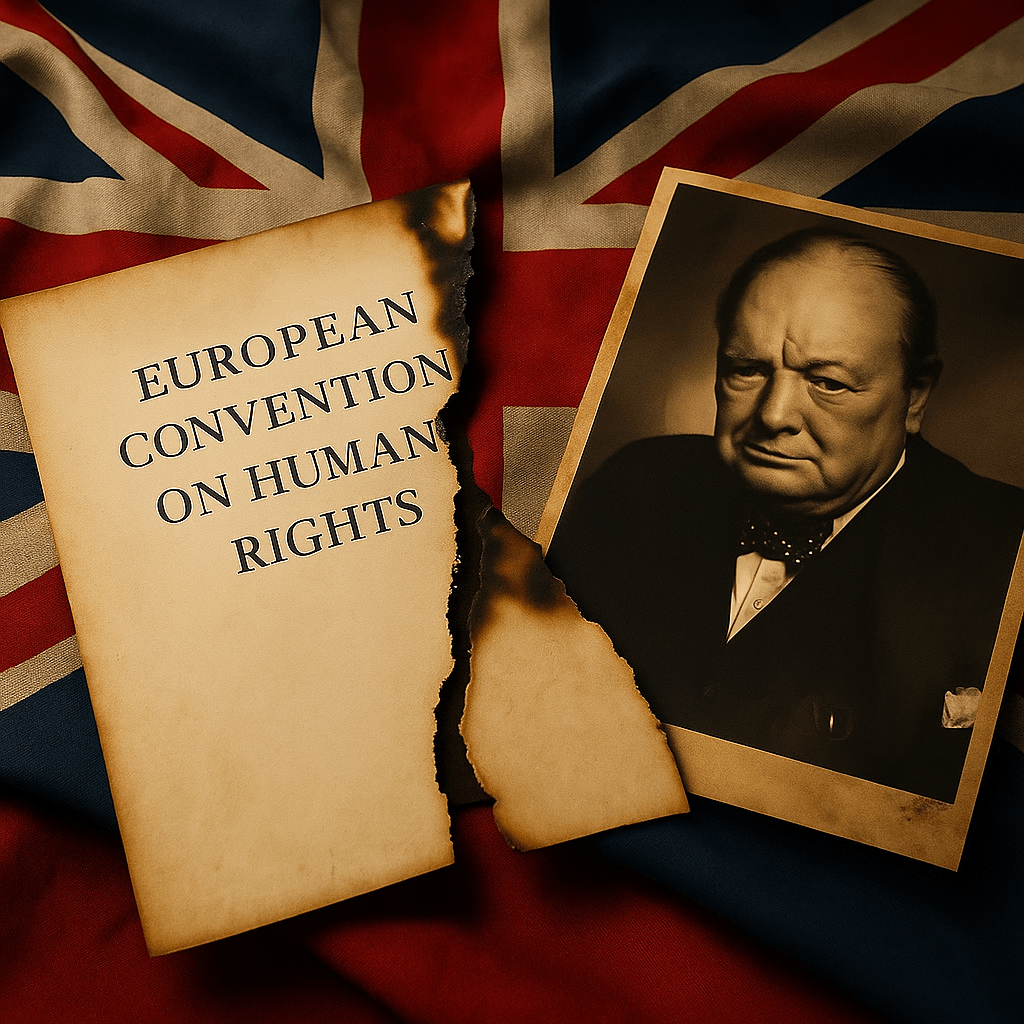
    Leaving the ECHR isn’t some fringe fantasy – it’s the next phase of Britain’s post-Brexit drift into isolation and unchecked power. Rejoiners should recognise it as another break from the European consensus we helped build. But it’s not just about Europe – it’s about you. Whether you lean left, right, or you’re still on the fence, this is your warning – the rights they’re dismantling aren’t just for migrants or criminals. They are yours too. And once they’re gone, there’s no one left to appeal to.

    𝙒𝙝𝙮 𝙙𝙤 𝙩𝙝𝙚 𝙏𝙤𝙧𝙞𝙚𝙨 𝙖𝙣𝙙 𝙍𝙚𝙛𝙤𝙧𝙢 𝙐𝙆 𝙬𝙖𝙣𝙩 𝙤𝙪𝙩 𝙤𝙛 𝙩𝙝𝙚 𝙀𝘾𝙃𝙍?

    Well, let’s not pretend this is about sovereignty. It’s about impunity. Because it’s the last thing standing between them and unchecked power.

    The European Court of Human Rights is that deeply inconvenient body that says – shock, horror – you can’t just lock up autistic people without trial. You can’t ban gays from serving in the army. You can’t spy on your population en masse, deny justice to Hillsborough families, or let police walk away after failing domestic abuse victims. You can’t deport a man to be tortured just because he didn’t fill in form X in triplicate. You know… basic decency. In short, it’s a pain in the arse for authoritarians in suits.

    So naturally, the British hard right sees this as a threat. Not to the country – but to themselves. Because it turns out that when you’re flogging nationalism to the masses while handing contracts to your donors and waving through state overreach, the last thing you want is a supranational court saying, “Actually, that’s illegal.”

    Reform UK’s take? Bulldoze it. Farage has all but tattooed “Leave the ECHR or Britain dies” on his forehead. It’s his new Brexit. Simpler, nastier, and with even fewer facts attached. It’s not about national sovereignty – it’s about the freedom to punish without consequences.

    And the Tories? They’re whispering the same thing while doing their best impression of Serious Legal Minds. Kemi Badenoch’s set up a “lawfare” commission to decide whether we should bin the ECHR? Translation: “We’ve already decided, but want a white paper to hide behind”.

    Robert Jenrick says the Tories will die unless they commit to quitting it. Which is weird, since most people thought they were dying because of corruption, cronyism, and burning the country for sport – but sure, blame the court that defends our rights.

    They call it “foreign interference”. We call it “not being ruled by bastards”.

    The real irony? The ECHR isn’t even an EU institution – it was set up by Churchill’s government after WWII, precisely to stop nations sleepwalking back into authoritarianism. But try explaining that to a Reform voter convinced that asylum seekers are lurking in every box of imported Belgian chocolate, or a Tory backbencher who thinks habeas corpus is Latin for ‘send them back’.

    This isn’t about principle. It’s about power. The power to strip rights from you, without the bother of you having anywhere to appeal. Because the wealthy already have legal armour. You? You’ve got the ECHR. For now.

    So next time someone parrots the line about “taking back control”, maybe ask – control for whom, exactly?

    EDIT – this is for Rejoiners…

    It’s vital to understand that leaving the ECHR wouldn’t just gut individual rights – it would also torpedo any future attempt to rejoin the EU. Membership of the Convention is a non-negotiable requirement for all EU states. Walk away from it now, and we don’t just burn bridges – we lock the gates behind us.

    – Article 6(3) TEU makes ECHR adherence mandatory

    – Leaving would signal a rejection of core EU legal values

    – It would collapse judicial cooperation (extradition, data sharing, mutual recognition of rulings)

    – Brussels would see the UK as unstable and even more untrustworthy than it does at present

    – It would hand a gift to far-right, anti-democratic governments inside the EU (like Hungary’s), who would point to the UK as proof that you can abandon rights commitments and still expect trade and cooperation.

    So yes – it matters greatly, if you care about returning to Europe. This kills that prospect stone dead.

  • Looking through my crystal ball…

    Democracies will erode under the weight of attention spans shorter than a hamster’s. The planet will heat, then hiccup, then wheeze, then expire, because the best we can do is redesign shampoo bottles to save the turtles. And we will still waste time arguing over the colour.

    Eventually, we might upload what’s left of our culture into a badly managed cloud server that’ll crash during an El Niño-induced power surge. And the backup? Stored on magnetic tape in a warehouse that will evaporate during the first major global nuclear conflict.

    The cockroaches, meanwhile, will continue their quiet, effective rule. At least, until the sun becomes a red dwarf and Earth is burnt to a crisp.

    Humanity has outdone itself in finding ways to shout into the void with astonishing vigour and almost no meaningful return. Social media is bombarded with 700 comment threads debating whether tattooed eyebrows are empowering or oppressive, while glaciers the size of Luxembourg quietly detach and drift out to sea. Thousands of hours of YouTube videos and Reddit threads are devoted to explaining why airplanes don’t fly off the edge, while actual scientists weep into their test tubes. Deeply philosophical Instagram reels on “authenticity” are delivered from ‘influencers’ in their hot tubs in Dubai, followed by an affiliate link for discounted collagen powder. On X the exchanges are getting heated… should dogs be vegan? Raging factions. Faked studies. Emotional appeals. Meanwhile, the dog is in the corner eating a sock.

    On a Facebook group, a terrified mother wonders “is my baby’s aura too orange?” More and more mums reply, posting photos of their children’s expressions and asking strangers to interpret their energetic vibrational field. The baby just wants mashed banana. Meanwhile, people are dramatically posting that they’re quitting social media… on social media… every three months… while checking the comments for validation.

    It goes on, and on. Depressingly. I’m sure you won’t believe me (or at least I hope not, perhaps you are a follower?) … but there really are YouTube tutorials on “How to Manifest Wealth Using Lemon Water”. Because – apparently – the path to financial stability lies not in economic policy or labour rights, but in citrus and positive vibes. Elaborating a little – because I hope at least some of you still find this impossible – it really has racked up millions of views on TikTok and YouTube. Here’s the basic (ludicrous) idea…

    You write your financial desires or affirmations on a piece of paper, eg “I am a magnet for success and wealth”). You then place it under a glass of lemon-infused water. You speak your intentions to the water (yes, really) … “Money flows easily to me” kind of thing. Finally, you drink the water, absorbing the “high vibrational frequency” of your words. If you want to ensure success, don’t forget to stir the lemon water clockwise to “activate manifestation”, to add cinnamon (for “even greater wealth”), and use crystal glassware to “amplify energetic resonance”…

    Meanwhile, I’ve just spent 90 minutes compiling this contribution, which next to no one will bother reading through to the end. Oh, the irony ….