
I spent a night recently at the Sofitel Le Faubourg in Paris, invited by someone I am very fond of and respect. The hotel is next door to the American Embassy, in that small and polished part of the city where wealth, power, diplomacy and fashion seem to have gathered together for mutual reassurance.
Approaching from Madeleine Métro, I found the road guarded by gendarmes carrying sub-machine guns. It was a suitably symbolic entrance. One crossed an invisible line from ordinary Paris into a world whose buildings, guests and institutions required armed protection.
The hotel itself was beautiful, outwardly discreet and faintly unreal inside. Everything worked. Staff were gracious, almost obsequiously so. Invisible yet omnipresent. Wandering the corridors, the instant I lost my sense of direction I was discretely guided on my way. The lighting softened both the furniture and the guests. People moved through the bar with the ease of those accustomed to being born to be served. Some were probably famous. Others merely possessed the posture, grooming and expense accounts required to make fame seem plausible.
While waiting in the Sofitel bar for my cousins to arrive, I rattled off a message to a friend saying that I could probably buy back L’Eau Salée, my much loved old home that I had lost to dwindling finances, by pawning the jewellery of one of the women in the bar. Humour is often the only available response when reality becomes too surreal to absorb directly. I sipped their cheapest offering on the drinks menu, a glass of Vacqueras white, that would have paid for a three course meal in my local Cavaillon bistrot. With wine.
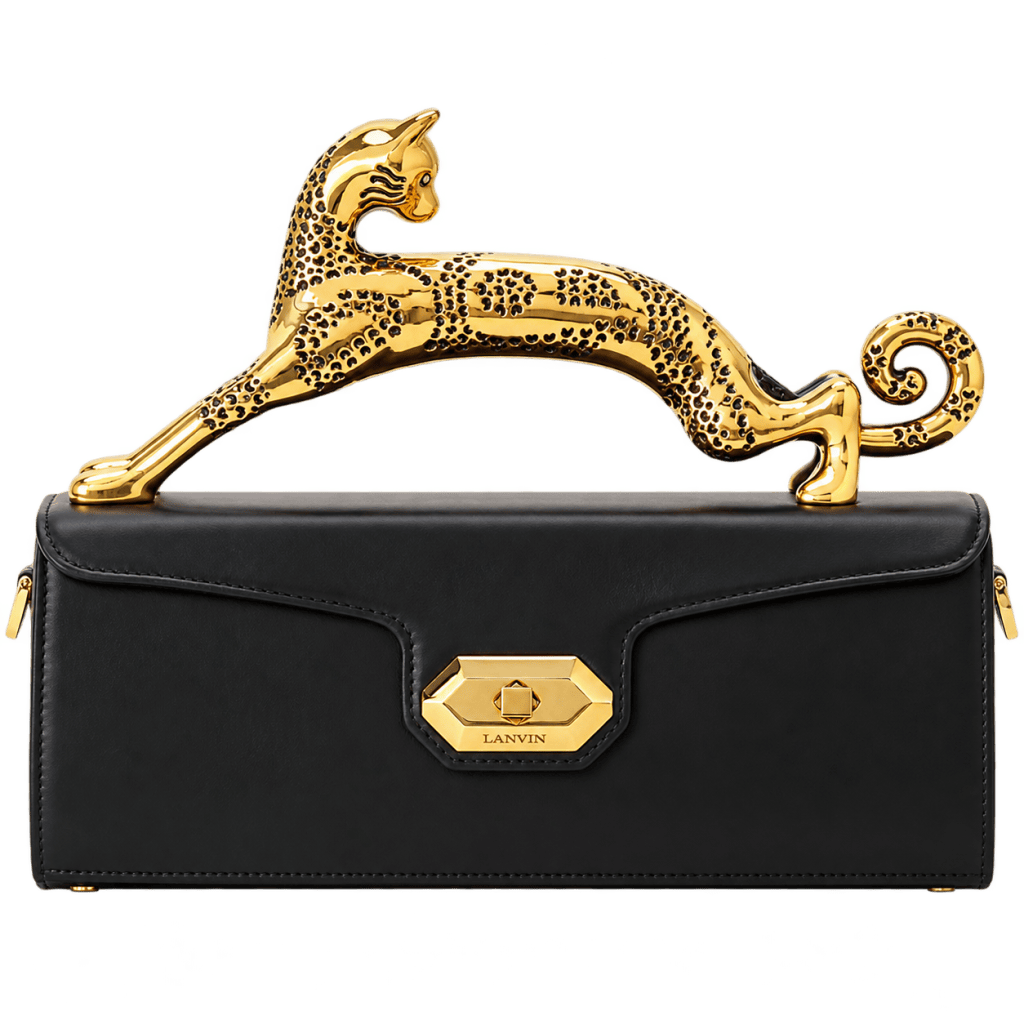
After dinner we wandered around the surrounding streets. Maxim’s was nearby, as were Hermès and the other great temples of luxury, their windows displaying objects of such distinction that attaching a price to them would presumably have been considered vulgar. If one needed to ask, one had already misunderstood the nature of the establishment. Wealth and glamour adorned and paraded these streets. Owned their soul. I listened in to an utterly serious discussion about which of the latest Lanvin handbags would be secured the following day. A surreptitious Google revealed one went for €3390.
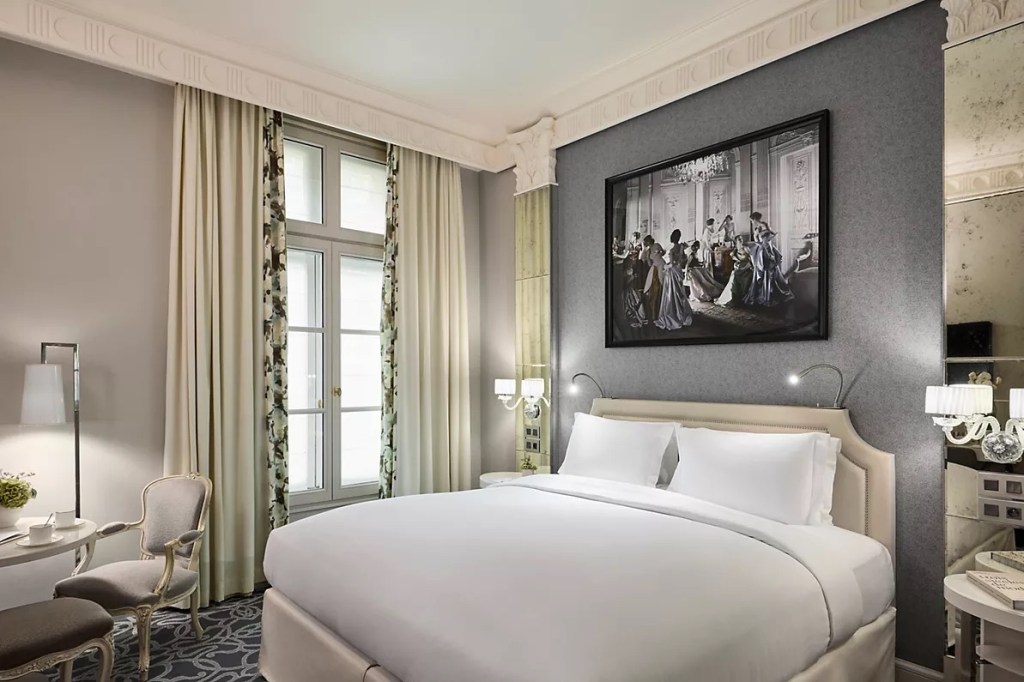
I had no idea what my room cost. I had been invited. I discovered later that the same category was advertised from €745.09 for one night. It was a very pleasant room, although I cannot say that I immediately identified €745 worth of nightly experience. The bed was excellent, the bathroom elegant and the silence almost complete. There was, however, no apparent means of turning off the air-conditioning. I eventually solved the problem by climbing into bed beneath the quilt wearing the luxuriously heavy Sofitel dressing gown: extravagance deployed to solve a problem created by extravagance. I slept my usual six hours. By morning I remained essentially the same person, merely one who had slept between more expensive sheets at €2 per minute.
I enjoyed my stay. That is important. I was among people whose company I enjoyed, treated with great generosity, surrounded by beauty, comfort and attention. I do not begrudge anyone a good meal, a fine hotel or a beautiful object. Life is brief. Pleasure in itself is not a moral failure.
Nor do I care very much about rich people as a category. Some inherit wealth, some create it, some stumble into it, some spend their lives fearing its loss. People in business take risks. I have done so myself, on a smaller scale. I know the anxiety of wages, rent, tax, cash flow, competition and the knowledge that one bad season can undo years of work. It is too easy to condemn individuals for participating in a system from which almost none of us is truly isolated.
What troubles me is not wealth itself. It is impertinence. It is the scale of our presumption towards the world that sustains us, the confidence with which we treat the planet as inventory, the future as collateral and other forms of life as scenery. We behave less like temporary inhabitants than owners who have somehow acquired the freehold.
Free-market capitalism cannot restrain itself where wages, protections and costs differ radically between countries. A company that chooses to pay more, pollute less or keep production in a higher-cost economy may behave more decently, but it also risks being undercut by one that does not. The customer demands a lower price. The retailer must remain competitive. The manufacturer cuts costs. The investor demands growth. Production moves to wherever labour is cheapest, regulation weakest and damage easiest to conceal.
Nobody needs to be especially wicked. That is part of the horror. Each decision can be defended as reasonable. Each participant can say that somebody else would have done the same. The business owner cannot stop because his competitors will overtake him. The consumer cannot stop because the culture has taught him or her that consumerism and ownership are identity. Governments cannot stop because only growth can pay for promises already made. Investors will not stop because stillness leads to failure. And I cannot pretend to stand outside it. I own things made cheaply elsewhere, replace things that might have lasted longer and enjoy comforts whose origins I rarely investigate. The carousel is whizzing around so fast that no one can get off, even if they want to.
We have seen the principle before. Colonialism and slavery also converted disparities of power into wealth. Labour, land and human life were taken cheaply or by force, and the rewards accumulated in the hands of the vanishingly few. The comparison is one of mechanism, not equivalence; a badly paid worker with a contract is not a slave. But the ancient temptation remains recognisable – where enormous differences in power exist, those with the greater power discover remarkably persuasive reasons for taking advantage of them. The modern version is cleaner to look at. It has contracts instead of chains, supply agreements instead of plantations, sustainability statements instead of imperial proclamations. Exploitation has learned to speak the language of opportunity, development and consumer choice.
The veneer of civilisation and respectability is real, but wafer thin, and transient. The handbag arrives immaculate. Its history less so.
Yet even that is not quite the source of the sadness I felt. Human beings have exploited one another for most of recorded history. We have always loved display, hierarchy and possession. What makes our present behaviour so difficult to comprehend is that we now understand, with greater clarity than any previous generation, how fragile and ephemeral our existence is. Our ancestors could plead ignorance. Increasingly, we cannot.
Life on Earth has taken roughly four billion years to develop from chemistry into organisms capable of self-awareness, curiosity, memory, imagination and love. Matter has somehow reached the point at which it can look back at the universe and ask where it came from. We have built instruments capable of seeing galaxies whose light began its journey before the Earth existed. We can examine the structure of cells, listen for signals from other worlds and reconstruct the first moments after the birth of the cosmos.
And still so many believe that mankind is at the centre of things, that we were somehow meant to be here, that this vast and almost entirely hostile universe was arranged with us in mind.
Almost everything beyond the thin skin of our atmosphere would kill us. There is no breathable air, no shelter, no warmth, no audience. Distances are so great that we can write them down but cannot truly imagine them. Our entire history has taken place on a fleck of dust, beneath a wafer-thin layer of gases clinging temporarily to its surface, during a fraction of an instant in the eternity of time and space.
Everything we have ever loved is here. Every child, every song, every animal, every tree, every act of kindness, every remembered face, every lost voice, every question we have asked of the darkness. All of it exists within that fragile boundary.
And we want Lanvin handbags.
The absurdity is not that people want beautiful things. Beauty matters. Craftsmanship matters. Colour, pleasure, adornment and celebration are part of being human. A world reduced to bare subsistence would not be a triumph of wisdom. The tragedy is that we have confused pleasure with purpose, abundance with permanence and price with value. We are prepared to risk bread tomorrow for handbags today.
We treat clean air, a stable climate, fertile soil and functioning ecosystems as though they were background conditions guaranteed by some benevolent authority. Economists call the damage an ‘externality’, a word of almost perfect moral emptiness. Carbon emissions are external. Poisoned water is external. Exhausted workers are external. Vanishing species and unborn generations are external. The product appears affordable only because much of its true cost has been passed to someone who cannot refuse it or send us the bill. Perhaps these were not shops without prices after all. The price was simply absent from the label.
Walking those immaculate streets, I had the strange sensation that the shops were not merely selling objects. They were displaying the end result of an entire civilisation’s arrangement with reality. Materials extracted elsewhere, labour performed elsewhere and consequences suffered elsewhere had been gathered, refined, branded and placed behind flawless glass. Perhaps that is what luxury increasingly means – insulation from origins, consequences and limits.
I generally leave this part of Paris with an enhanced sense of the absurd. There are armed men protecting streets lined with handbags worth several months’ wages. There are hotel rooms costing far more than my €745 a night, shops whose customers need not ask the price and an economic system presenting all of it as normal, desirable and infinitely reproducible.
For a while, one can be dazzled by it. Paris does splendour very well. The windows seduce, the service is perfect. Then something shifts. The elegance begins to feel like stage scenery erected at the edge of an approaching storm.
That is the sadness of it. Not that people are foolish, although often we are. Not that they are wicked, because most are not. It is that a species capable of understanding so much seems unable to act upon what it knows. We can see the danger. We can measure it, model it and watch it drawing closer. Yet the machinery continues, driven less by any single will than by millions of individually rational choices combining into collective insanity. Perhaps what has died in me is not hope itself, but the simpler faith I once had that knowledge would eventually make us wiser. I used to think that once people understood a danger clearly enough, reason would do the rest. I no longer believe that.
Sometimes, holding these two realities in mind at once, I feel detached from the world around me. People discuss leather, colour and exclusivity, while somewhere behind the conversation stands the silent knowledge that the only known home of conscious life is being damaged for things nobody truly needs. Social life carries on with immense confidence. Menus are studied. Purchases are considered. Cars arrive. Champagne is poured. Nobody is fiddling while Rome burns. That would at least require noticing the fire.
Perhaps that is why the sadness is difficult to express. It is grief without a funeral, mourning for something not yet entirely lost. Because it is not entirely lost. We remain capable of wonder. We remain capable of restraint, generosity and foresight. We can still recognise beauty without needing to own it, prosperity without endless growth, and pleasure without pretending that consequences belong to someone else. We have built the machinery, but machinery can be altered. The carousel can be slowed, however loudly those upon it insist that speed is life. That is not optimism. Optimism expects things to turn out well. Hope merely refuses to accept that they cannot.
We are the part of the universe that has begun to understand itself. And as far as we are aware, the only part. That ought to have made us careful.
I hope against hope, for the future of all of our children, that it still might.


Leave a Reply