No Sacred Cows

Scepticism served medium rare

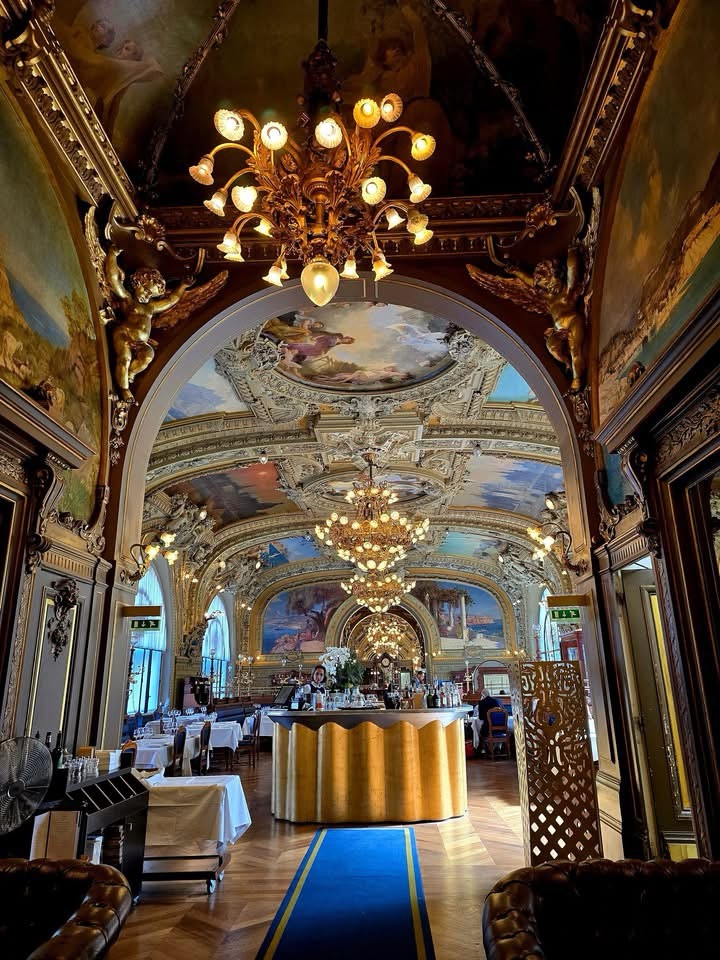
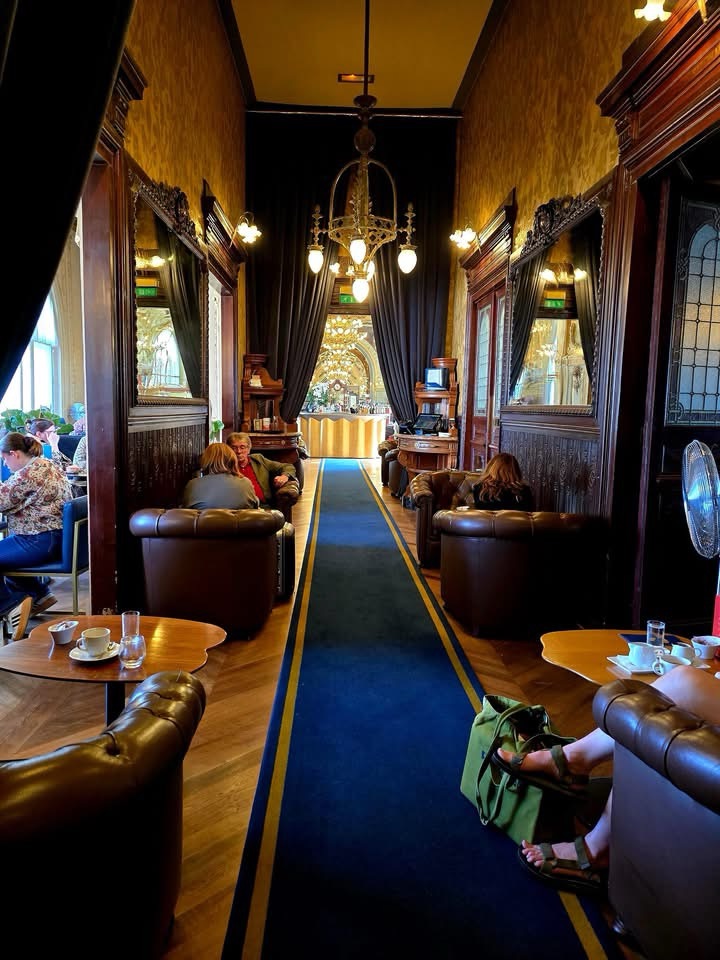
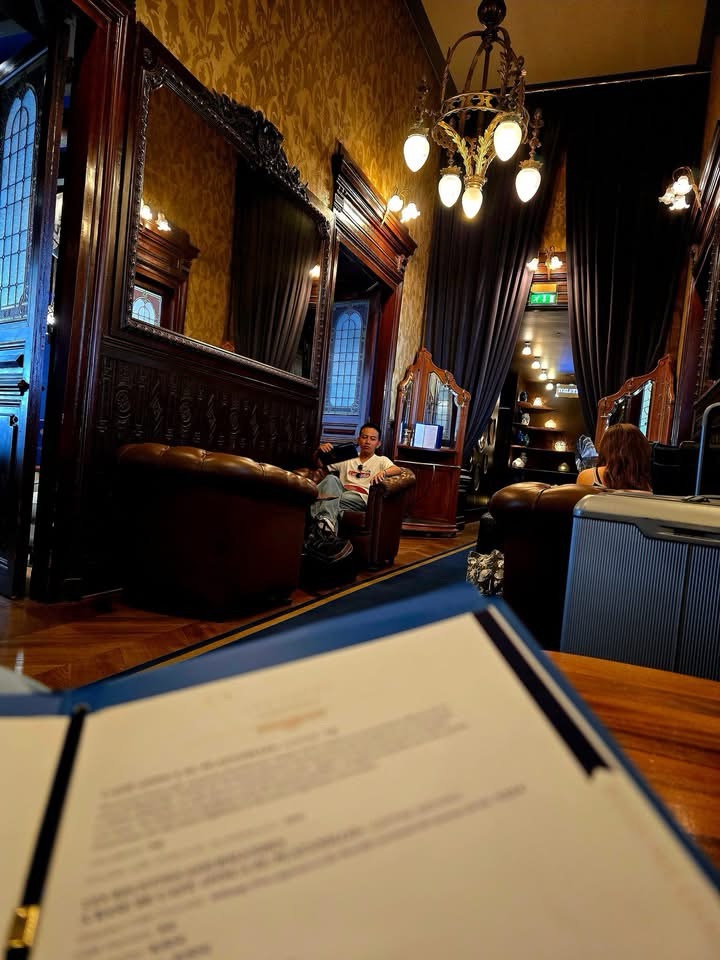
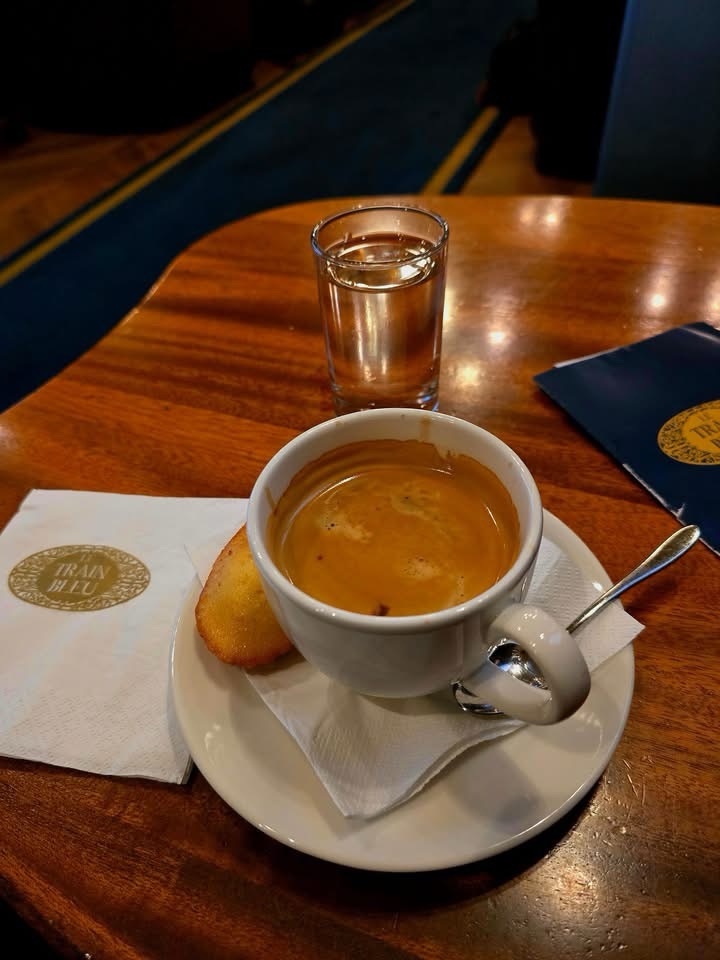
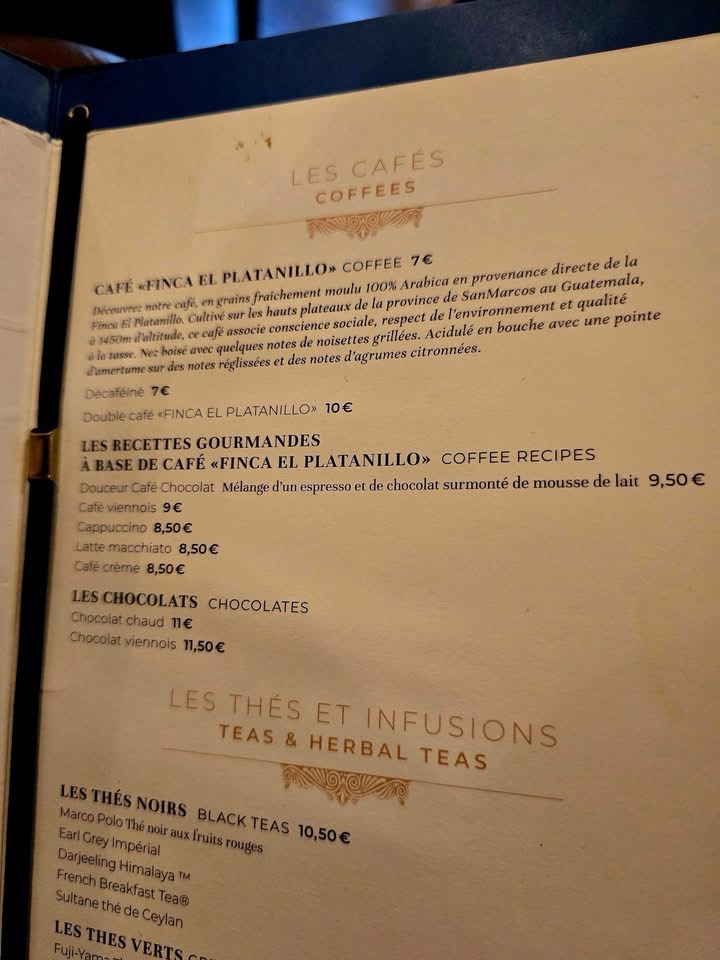
  • Well, if one must wait for a delayed TGV, this is surely how to do it – sinking into a leather armchair beneath chandeliers and gilt, in the quiet splendour of Le Train Bleu. 10€ may seem steep for a double shot of caffeine – even a Finca El Platanillo 100% Guatemalan Arabica, cultivated at 1450m – but context is everything – and here, nestled into a leather armchair at Le Train Bleu, you are not paying for coffee so much as an experience.

    Besides, you get a free madeleine on the side, and with a single shot at €7, the double almost counts as thrift. Almost.

    In this echo of another age, even a delay becomes something almost deliberate – an invitation to linger rather than rush. Opened in 1901 for the Universal Exhibition, Le Train Bleu is a showcase of Belle Époque grandeur and Beaux-Arts theatricality… painted ceilings, sculpted cherubs, and a setting that once welcomed travellers bound for the Riviera, Cairo, and Constantinople.

    There is time, here. And perhaps that is the rarest luxury of all.

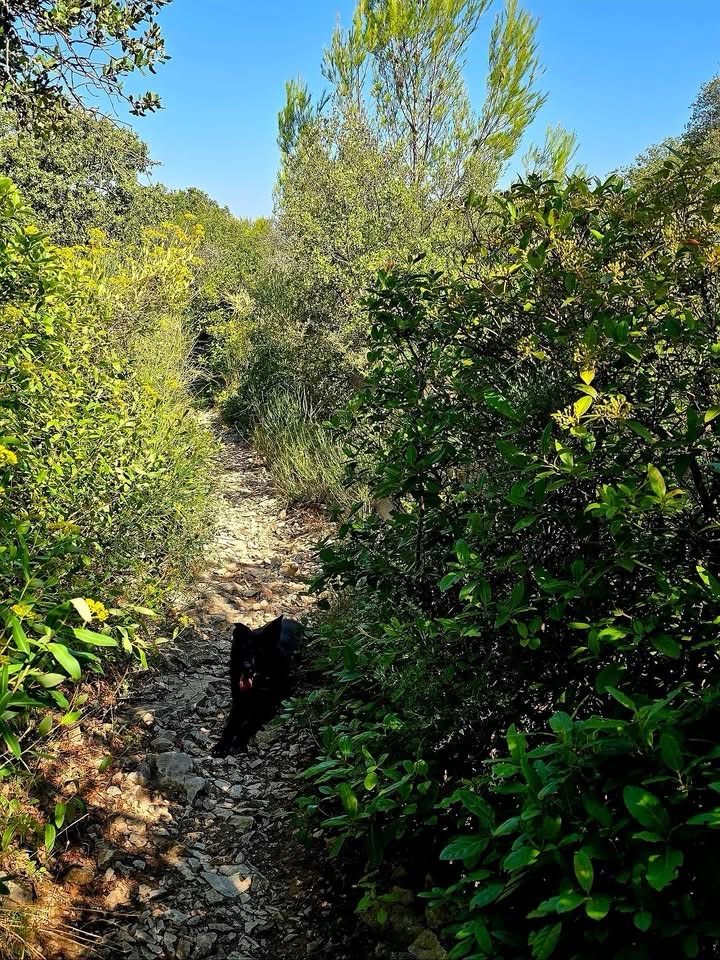
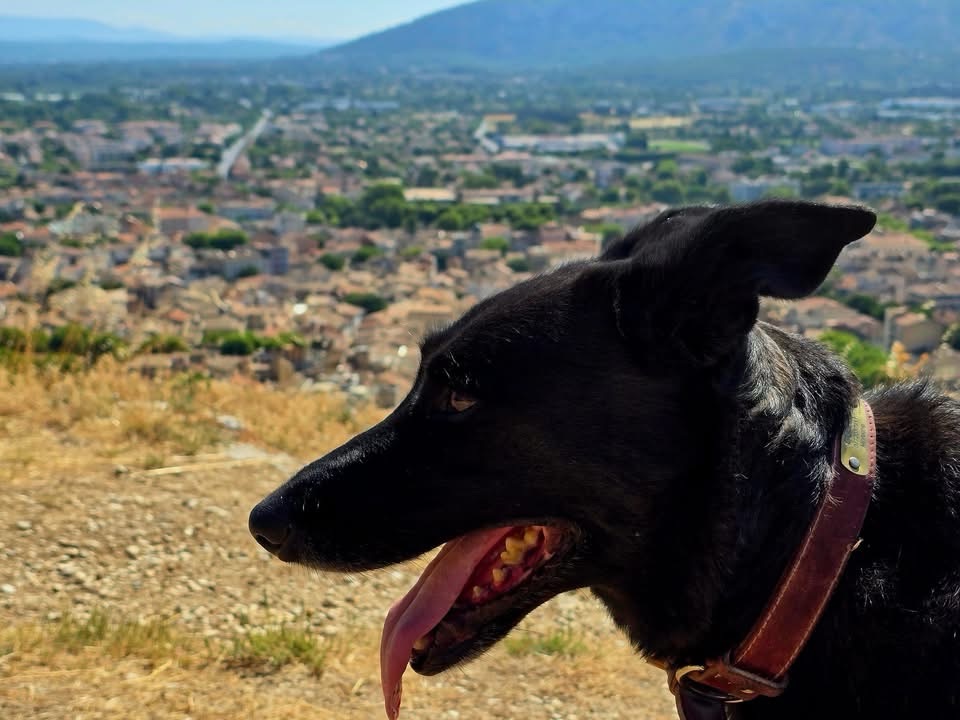
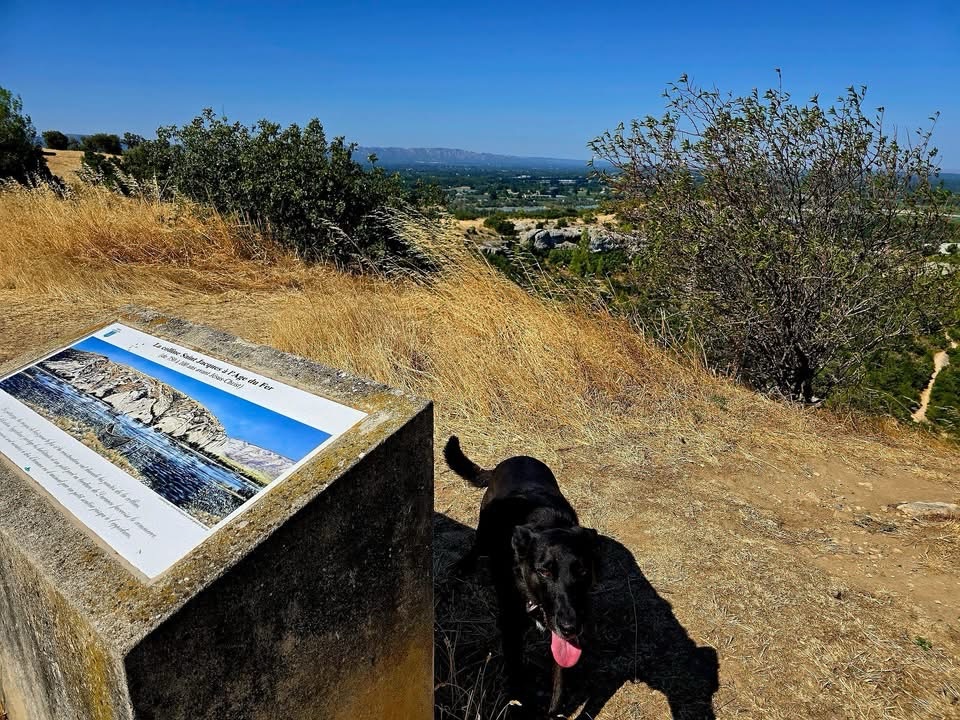
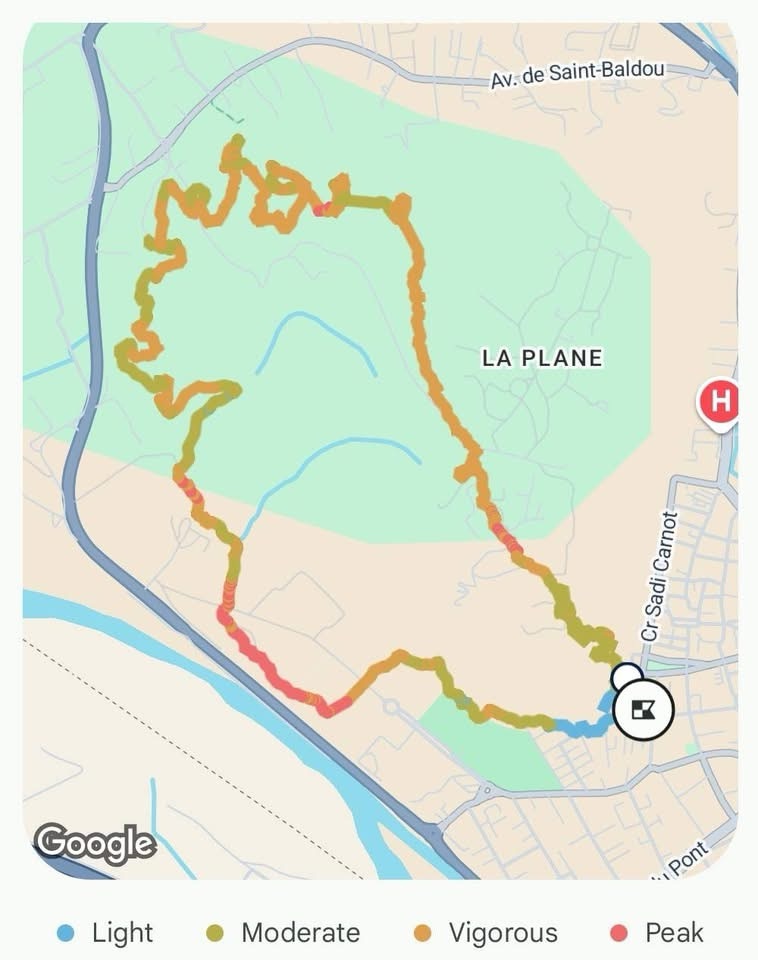
  • Sometimes the best way to silence the newsfeed, the static, the murk of thought, is to lace up your shoes and head for higher ground. This morning, I did just that – setting off early with my indefatigable four-legged companion, Glo, for a fast 9.6 km hike through the garrigue behind the Colline Saint-Jacques in Cavaillon.

    Glo is a rescue – of entirely indecipherable ancestry and unbothered by the mystery. When I adopted her in September 2019, she was five months old, skin clinging to bone, with a look in her eyes that spoke of beatings and bites and a life already too full of fear. She had been chewed – quite literally – by other dogs, and the world, understandably, made no sense to her. It has taken years, but much of that fear has gone. She still startles at sudden movement or unexpected noise, but in open spaces, on winding trails, nose twitching and eyes scanning the horizon, she is transformed. Steady, alert, and inseparable. What remains of her past now follows behind us – at a good distance.

    The route itself was anything but tame. Twisting rocky paths, sudden inclines, a few scrambles, and more than a few sections tipping into “peak exertion” – according to the tracker, at least. But the physical effort was laced with something deeper. A sense of continuity, of walking quite literally in the footsteps of thousands who passed this way before.

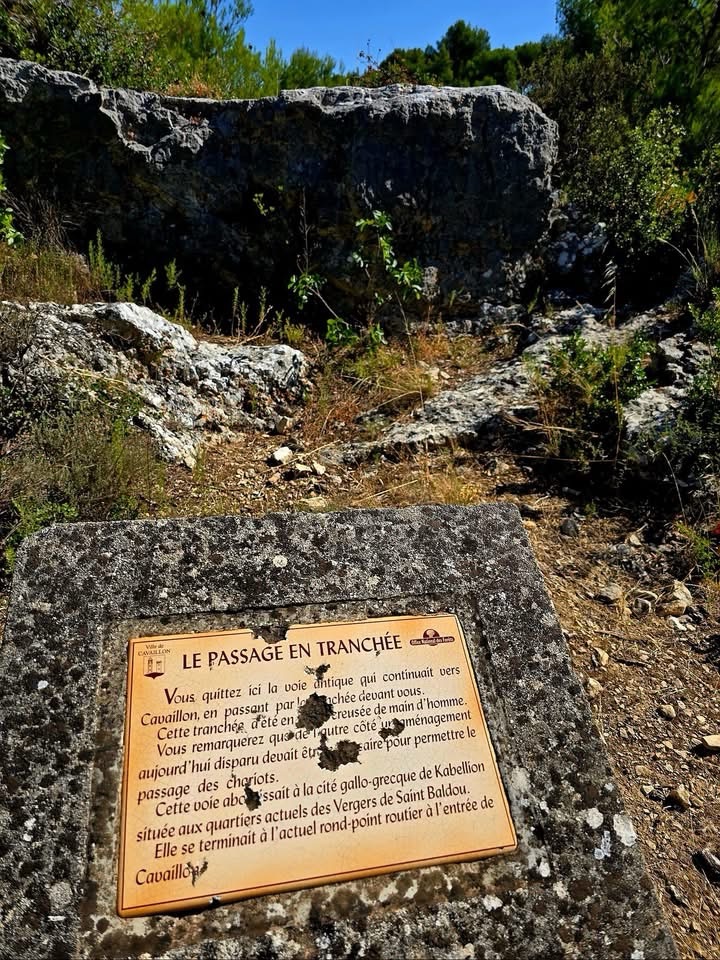
    Saint-Jacques has been occupied since the Neolithic. At La Grande Baume, a cave still sheltering in the limestone, our ancestors left flints and arrowheads – but no trace of themselves beyond that. Romans later carved their passage through the rock at Le Passage en Tranchée, their carts biting ruts deep into the stone. Quarrymen followed in later centuries, chiselling into the hillsides at Les Carrières, leaving behind the ghost grid of their labour. The paths loops through it all, past dry gorges, shaded ravines, low holm (evergreen) oaks and sun-shattered cliffs. Glo, wiser than me, took the steeper stretches at her own unhurried pace, pausing to sprawl in the shade with the confidence of a creature who knows the heat will always outlast us.

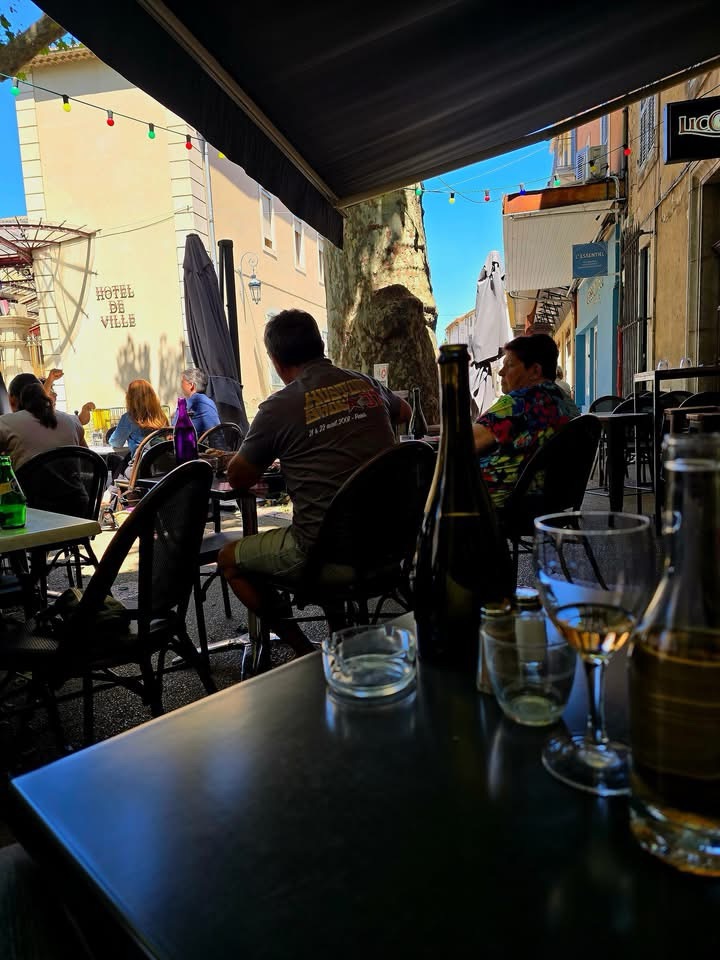
    After nearly ten kilometres and a fair bit of sweat, we descended into town – dusty, satisfied, and ready for something restorative. I dropped Glo off at home for a well-earned nap in a cool corner, then made my way solo to Bistrot Ô Méryl, tucked under the plane trees by the Hôtel de Ville.

    L’Assiette ô Meryl arrived like a love letter to Provence on a plate. First, a half of chilled Cavaillon melon, served plain but dusted elegantly with piment d’Espelette – sweet, cool, with just the faintest warmth on the tongue. Then the main affair: a generous salad of local greens dressed in light vinaigrette, overlaid with folds of cured ham, thick shavings of aged cheese, confit tomatoes bursting with intensity, and thin grilled slices of aubergine just kissed by the flame. Anchoring the whole dish were two slices of courgette terrine – a savoury loaf packed with slices of summer squash, bound in herbed egg, baked to just the right balance of soft and firm.

    It was rustic without being rough. Thoughtful without being precious. Paired with the rosé maison – pale, dry, and properly cold – it did not so much rejuvenate as reassure: yes, some things still make sense.

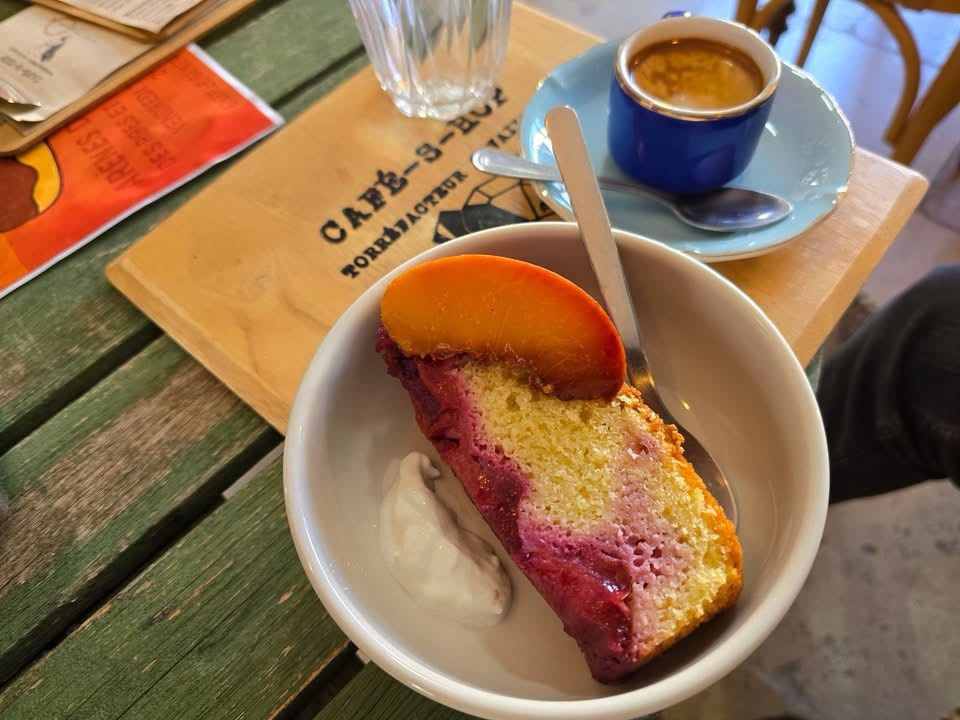
    To finish, I wandered across to Café-s-Hop Cavaillon, my favourite little torrefaction spot in town. Glo stayed home, sleeping off the morning’s adventure. Inside, framed hessian coffee sacks and shelves of beans and paperbacks lined the walls. Tourists and a few locals lingered over laptops or shared low conversation, the whole place running on the unspoken agreement that time could afford to move slowly, just for a while.

    An espresso – no embellishments, no sugar, just beans and heat and clarity – was the final punctuation mark. Well, nearly.

    There was cake. Of course there was cake. A rustic slice – peach and red fruit folded into a golden sponge, gently sweet, served with a curl of ripe peach and a spoonful of crème fraîche just tart enough to restore perspective. Simple, and perfect.

  • Inflation is often sold as a mysterious force in mainstream commentary – like weather, or fate. In reality, it is a predictable redistribution mechanism. A stealth tax. And like most mechanisms in our economic system, it redistributes to the few. It’s a pipeline – straight from your pocket to theirs. A slow, silent redistribution of value upwards, wrapped in economic jargon and blamed on whatever is culturally convenient.. globalists, migrants, wind farms, your neighbour’s pronouns. Yes, energy shocks and supply issues play a role. But who ends up better off after the dust settles? Not you.

    The Winners?

    • Governments groaning under debt (they repay with devalued money).
    • Borrowers with fixed-rate loans.
    • Owners of property, stocks, and commodities.
    • Corporations with pricing power.
    • The already rich, who simply rebalance their portfolios and barely feel the breeze.

    The Losers?

    • You.
    • Wage earners, pensioners, small businesses.
    • The so-called “middle class”, now largely the working poor with a better wardrobe.

    While prices rise and security slips away, people get desperate for someone to blame. And into that void, step the salesmen. Enter the Snake Oil Populists.. in suits, flags, or fatigues. They arrive with righteous fury and easy targets. “Your life’s getting harder? Blame the EU. Blame immigrants. Blame the green mafia. Blame the elites in Brussels, London, or Washington”. But look closer, and the story collapses under its own hypocrisy.

    Nigel Farage

    Swills pints and rants about sovereignty – while pocketing over £1 million a year from media gigs, crypto promotions, and campaign donations. Net worth? At least £3.2 million – and that is just the declared portion.

    Marine Le Pen

    Claims to stand for working France – but the lifestyle says otherwise. Between her MP salary, party stipends, and her role as sole heir to Jean-Marie Le Pen’s estate – including a multi-million euro villa in Saint-Cloud – her financial comfort is beyond dispute.

    Her father, who died earlier in 2025, was tied to a Swiss trust valued at over €2 million, including gold coins and ingots, as revealed by Mediapart in a 2015 investigation. Whether she benefits directly or not, she now inherits the broader political and financial legacy of one of France’s most entrenched dynasties. Populist on the podium, property heiress on paper.

    Viktor Orbán

    Waves the flag of Hungarian values – while consolidating media control, funnelling public funds to friends, and ruling over a loyalist oligarchy where nationalism and self-enrichment go hand in hand.

    Donald Trump

    Back in office, and back on the grift. Claims to be saving the nation – while peddling merchandise, crypto coins, and policy outrage. He imposes tariffs that make Americans pay more, while offering tax breaks for the already wealthy. He promised to drain the swamp. He bottled it, slapped his name on it, and sold it to Americans instead.

    Vladimir Putin

    Less a populist in the Western electoral sense, more a czar in camouflage. But the performance is familiar: defending tradition, civilisation, the ‘Russian soul’ – all while dissent is crushed, fortunes are hoarded, and ordinary citizens bury their sons.

    Officially, he earns a civil servant’s salary. Unofficially, he is linked to a financial empire worth up to $200 billion via oligarchs and offshore proxies. While sanctions bite the public and war drains the economy, the regime’s upper tier remains insulated.

    The slogans are nationalistic. The results are plutocratic. Ordinary Russians, meanwhile, face inflation, shortages, and funerals.

    Giorgia Meloni

    Italy’s “outsider” PM now governs comfortably within the system she once decried – especially when Brussels keeps the money flowing. Loud on cultural warfare, quiet on protecting oligarchic tax perks. She rails against Brussels while happily spending EU money. The rhetoric is nationalist. The reality is fiscal dependency and strategic ambiguity.

    And on, and on. The grift Is the point. Modern populism is not about fixing problems – it is about monetising resentment. It follows the TV preacher playbook.

    • Convince people they are under attack.
    • Offer salvation through loyalty and outrage.
    • Live off their fear, their donations, and their despair.

    Whether it is miracle water, nationalist rhetoric, or freedom coins, the pitch is always the same:

    “Trust me. I’m one of you”.

    They are not. They never were.

  • Leaving the ECHR isn’t some fringe fantasy – it’s the next phase of Britain’s post-Brexit drift into isolation and unchecked power. Rejoiners should recognise it as another break from the European consensus we helped build. But it’s not just about Europe – it’s about you. Whether you lean left, right, or you’re still on the fence, this is your warning – the rights they’re dismantling aren’t just for migrants or criminals. They are yours too. And once they’re gone, there’s no one left to appeal to.

    𝙒𝙝𝙮 𝙙𝙤 𝙩𝙝𝙚 𝙏𝙤𝙧𝙞𝙚𝙨 𝙖𝙣𝙙 𝙍𝙚𝙛𝙤𝙧𝙢 𝙐𝙆 𝙬𝙖𝙣𝙩 𝙤𝙪𝙩 𝙤𝙛 𝙩𝙝𝙚 𝙀𝘾𝙃𝙍?

    Well, let’s not pretend this is about sovereignty. It’s about impunity. Because it’s the last thing standing between them and unchecked power.

    The European Court of Human Rights is that deeply inconvenient body that says – shock, horror – you can’t just lock up autistic people without trial. You can’t ban gays from serving in the army. You can’t spy on your population en masse, deny justice to Hillsborough families, or let police walk away after failing domestic abuse victims. You can’t deport a man to be tortured just because he didn’t fill in form X in triplicate. You know… basic decency. In short, it’s a pain in the arse for authoritarians in suits.

    So naturally, the British hard right sees this as a threat. Not to the country – but to themselves. Because it turns out that when you’re flogging nationalism to the masses while handing contracts to your donors and waving through state overreach, the last thing you want is a supranational court saying, “Actually, that’s illegal.”

    Reform UK’s take? Bulldoze it. Farage has all but tattooed “Leave the ECHR or Britain dies” on his forehead. It’s his new Brexit. Simpler, nastier, and with even fewer facts attached. It’s not about national sovereignty – it’s about the freedom to punish without consequences.

    And the Tories? They’re whispering the same thing while doing their best impression of Serious Legal Minds. Kemi Badenoch’s set up a “lawfare” commission to decide whether we should bin the ECHR? Translation: “We’ve already decided, but want a white paper to hide behind”.

    Robert Jenrick says the Tories will die unless they commit to quitting it. Which is weird, since most people thought they were dying because of corruption, cronyism, and burning the country for sport – but sure, blame the court that defends our rights.

    They call it “foreign interference”. We call it “not being ruled by bastards”.

    The real irony? The ECHR isn’t even an EU institution – it was set up by Churchill’s government after WWII, precisely to stop nations sleepwalking back into authoritarianism. But try explaining that to a Reform voter convinced that asylum seekers are lurking in every box of imported Belgian chocolate, or a Tory backbencher who thinks habeas corpus is Latin for ‘send them back’.

    This isn’t about principle. It’s about power. The power to strip rights from you, without the bother of you having anywhere to appeal. Because the wealthy already have legal armour. You? You’ve got the ECHR. For now.

    So next time someone parrots the line about “taking back control”, maybe ask – control for whom, exactly?

    EDIT – this is for Rejoiners…

    It’s vital to understand that leaving the ECHR wouldn’t just gut individual rights – it would also torpedo any future attempt to rejoin the EU. Membership of the Convention is a non-negotiable requirement for all EU states. Walk away from it now, and we don’t just burn bridges – we lock the gates behind us.

    – Article 6(3) TEU makes ECHR adherence mandatory

    – Leaving would signal a rejection of core EU legal values

    – It would collapse judicial cooperation (extradition, data sharing, mutual recognition of rulings)

    – Brussels would see the UK as unstable and even more untrustworthy than it does at present

    – It would hand a gift to far-right, anti-democratic governments inside the EU (like Hungary’s), who would point to the UK as proof that you can abandon rights commitments and still expect trade and cooperation.

    So yes – it matters greatly, if you care about returning to Europe. This kills that prospect stone dead.

  • Looking through my crystal ball…

    Democracies will erode under the weight of attention spans shorter than a hamster’s. The planet will heat, then hiccup, then wheeze, then expire, because the best we can do is redesign shampoo bottles to save the turtles. And we will still waste time arguing over the colour.

    Eventually, we might upload what’s left of our culture into a badly managed cloud server that’ll crash during an El Niño-induced power surge. And the backup? Stored on magnetic tape in a warehouse that will evaporate during the first major global nuclear conflict.

    The cockroaches, meanwhile, will continue their quiet, effective rule. At least, until the sun becomes a red dwarf and Earth is burnt to a crisp.

    Humanity has outdone itself in finding ways to shout into the void with astonishing vigour and almost no meaningful return. Social media is bombarded with 700 comment threads debating whether tattooed eyebrows are empowering or oppressive, while glaciers the size of Luxembourg quietly detach and drift out to sea. Thousands of hours of YouTube videos and Reddit threads are devoted to explaining why airplanes don’t fly off the edge, while actual scientists weep into their test tubes. Deeply philosophical Instagram reels on “authenticity” are delivered from ‘influencers’ in their hot tubs in Dubai, followed by an affiliate link for discounted collagen powder. On X the exchanges are getting heated… should dogs be vegan? Raging factions. Faked studies. Emotional appeals. Meanwhile, the dog is in the corner eating a sock.

    On a Facebook group, a terrified mother wonders “is my baby’s aura too orange?” More and more mums reply, posting photos of their children’s expressions and asking strangers to interpret their energetic vibrational field. The baby just wants mashed banana. Meanwhile, people are dramatically posting that they’re quitting social media… on social media… every three months… while checking the comments for validation.

    It goes on, and on. Depressingly. I’m sure you won’t believe me (or at least I hope not, perhaps you are a follower?) … but there really are YouTube tutorials on “How to Manifest Wealth Using Lemon Water”. Because – apparently – the path to financial stability lies not in economic policy or labour rights, but in citrus and positive vibes. Elaborating a little – because I hope at least some of you still find this impossible – it really has racked up millions of views on TikTok and YouTube. Here’s the basic (ludicrous) idea…

    You write your financial desires or affirmations on a piece of paper, eg “I am a magnet for success and wealth”). You then place it under a glass of lemon-infused water. You speak your intentions to the water (yes, really) … “Money flows easily to me” kind of thing. Finally, you drink the water, absorbing the “high vibrational frequency” of your words. If you want to ensure success, don’t forget to stir the lemon water clockwise to “activate manifestation”, to add cinnamon (for “even greater wealth”), and use crystal glassware to “amplify energetic resonance”…

    Meanwhile, I’ve just spent 90 minutes compiling this contribution, which next to no one will bother reading through to the end. Oh, the irony ….

  • # Postscript: Bill Wedderburn, Robert and the return to Inveresk

    There is a final part of Bill Wedderburn’s story that deserves to stand separately from the account of his remarkable legal and political career.

    When I met Bill at the House of Lords in 2001, he already knew of Robert Wedderburn as a historical figure. What he did not know – he had no inkling of it – was that Robert was his own direct ancestor.

    His initial response to my claim was somewhat cynical. It was an extraordinary story, and Bill was a lawyer accustomed to testing evidence rather than accepting an attractive family tradition at face value. As I took him through the detailed genealogical and documentary evidence, however, his scepticism rapidly gave way to excitement. Once convinced, he embraced the discovery wholeheartedly and began his own enthusiastic exploration of Robert and the wider family history.

    A later newspaper article rather compressed this sequence, suggesting that Bill had discovered the connection himself after reading about Robert. In fact, I first presented him with evidence of the direct family relationship at our meeting in 2001. It was only after these discussions that Bill arranged a follow-up meeting for us at the House of Lords with the Earl of Dundee, Lord Scrymgeour-Wedderburn – our more remote, but equally direct, “blue-blooded” cousin.

    It is easy to understand why Robert spoke to Bill so powerfully. Robert was born in Jamaica in 1762, the mixed-race son of Rosanna, an enslaved African woman, and James Wedderburn, a Scotsman whose family’s restored prosperity was built upon Jamaican slavery. Although Robert was legally free from birth, his freedom offered little protection from poverty, racial prejudice or paternal rejection. Robert later described the contradiction in his own characteristically defiant language:

    “I am the offspring of a slave, it is true; but I am a man of free thought and opinion … imprisonment has but confirmed me that I was right.”

    He eventually made his way to London, where he became a sailor, tailor, preacher, pamphleteer and radical. He opposed slavery, religious oppression and the exclusion of working people from political power. Most strikingly, he saw that the suffering of enslaved people in the colonies and the exploitation of the poor in Britain were not separate moral questions. Both arose when power was concentrated in the hands of people who could not easily be held to account.

    While imprisoned in Dorchester Gaol, Robert received a visit from William Wilberforce. In the dedication to The Horrors of Slavery, he recalled that Wilberforce had given him “advice” and “two books beautifully bound in calf”. Wilberforce appears to have hoped that Robert would redirect his considerable talents away from domestic radicalism and towards the parliamentary antislavery campaign.

    Robert subsequently devoted more of his writing to colonial slavery, but he did not accept the political boundary that Wilberforce’s intervention implied. For Robert, the oppression of enslaved Black people in the colonies and the misery of working people in Britain belonged to the same struggle. He consequently welcomed Henry Brougham’s declaration at a later antislavery meeting that it would be “grossly inconsistent” for abolitionists to “neglect the misery that was near their own door, while they were holding out a helping hand to the wretchedness that was beyond the Atlantic”. As the historian Ryan Hanley observes, this accorded with the vision of transatlantic solidarity that Robert had always cherished.

    Wilberforce hoped to redirect an unruly domestic radical into respectable abolitionism. He succeeded only partially. Robert brought his own experience of colonial slavery more fully into his writing, but he would not remove the British poor from his politics.

    Bill had spent his own life addressing that same imbalance in a very different world and by very different means. Robert spoke in radical chapels and published incendiary pamphlets; Bill taught, wrote, practised law and spoke in Parliament. The family discovery did not create Bill’s convictions. By 2001, those convictions had guided him for more than half a century. What the discovery gave him was an unexpected companion from the past.

    Robert became, in Bill’s words, a kind of moral test. Interviewed by Cassandra Jardine for The Daily Telegraph in 2007, Bill explained:

    “One constantly comes across appalling oppression. Knowing about his work, I ask myself: ‘What would Robert think about this?’”

    That is perhaps the most revealing thing he said about the relationship. Bill did not treat Robert as an interesting addition to the family tree or as a name through which to claim borrowed distinction. He treated him as a continuing challenge.

    By then, Bill had begun to identify himself publicly as “the descendant of a slave”. He used that inheritance to illuminate present questions: trafficking in women and children, female genital mutilation, corporate manslaughter and the erosion of human rights through anti-terror legislation. He chose to identify not with the prosperous white Wedderburns who had benefited from slavery, but with Rosanna and with the son whom that branch of the family had refused to acknowledge. Robert himself had proudly claimed precisely that maternal inheritance. Answering a relative who attributed Rosanna’s sale to her “violent temper,” he declared:

    “Yes, and I glory in her rebellious disposition, and which I have inherited from her.”

    There is something quietly radical in that choice. Robert, once the unwanted and supposedly disreputable member of the family, had become the ancestor in whom Bill took pride.

    Solidarity without reward

    One idea in particular mattered greatly to Bill when he reflected on the abolition of the slave trade. Ordinary working people in Britain had supported abolition even though they stood to receive no immediate material advantage from it.

    For Bill, that mattered because it demonstrated the possibility of solidarity across race, nationality and circumstance. People could recognise an injustice inflicted on others and demand that it end, although ending it offered them no direct personal profit.

    The history of slavery is necessarily a history of cruelty, exploitation and inherited privilege. But Bill found within the history of abolition a countercurrent: collective action undertaken for somebody else’s freedom.

    That fitted naturally with his understanding of trade unionism and democratic politics. Solidarity could never mean merely defending one’s own narrow interest. At its best, it meant standing against injustice even when another person was its immediate victim. Robert had expressed almost exactly this principle two centuries earlier:

    “I am a West Indian, a lover of liberty, and would dishonour human nature if I did not shew myself a friend to the liberty of others.”

    There is an important historical qualification. The Act that received royal assent on 25 March 1807 abolished the British slave trade; it did not free the people already enslaved in Britain’s colonies. Emancipation came only in the 1830s. The bicentenary was nevertheless an occasion to remember a great mobilisation of public conscience – and also to recognise how much remained unfinished after 1807.

    Walking in Robert’s footsteps

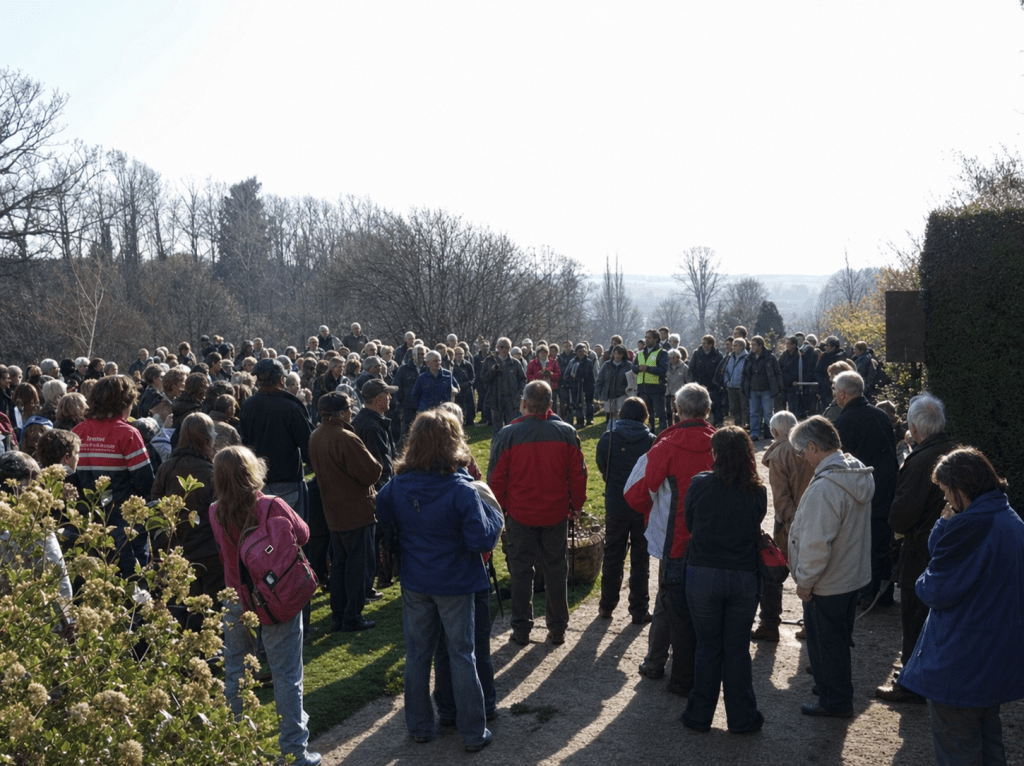
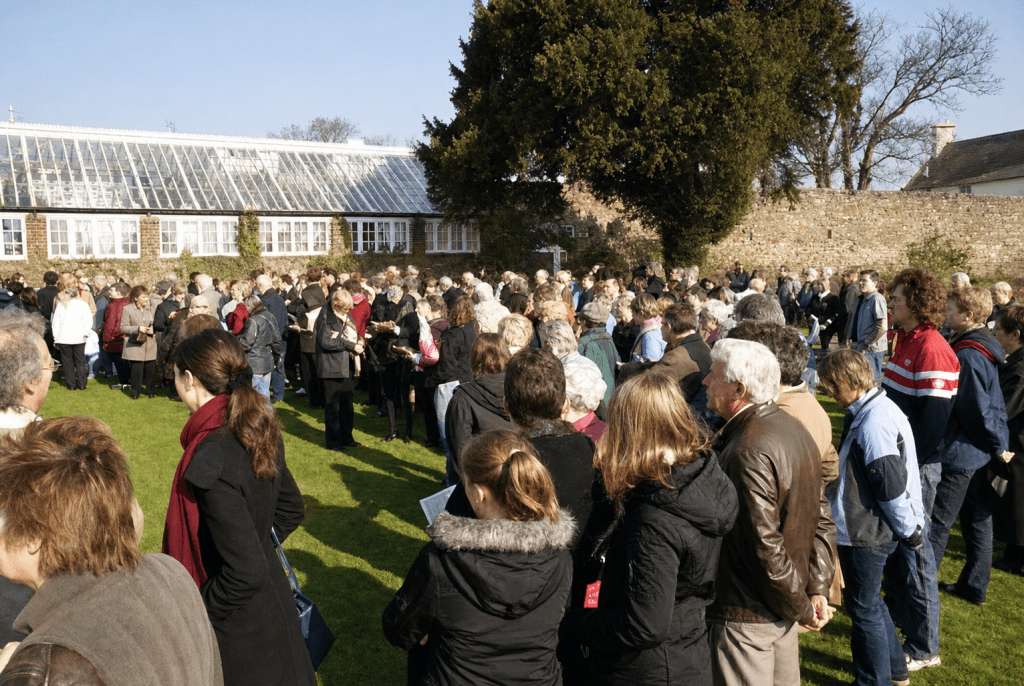
    The Telegraph article appeared on 22 March 2007, as Britain prepared to mark the two-hundredth anniversary of the Act. It described Bill and his wife, Frances, preparing to take part in a commemorative walk from Musselburgh to Inveresk. Around 300 people ultimately joined it.

    The route had a very particular meaning. In 1795, Robert had travelled to Scotland in search of his father. He walked from Musselburgh to Inveresk House, hoping that James Wedderburn would acknowledge him or offer him some assistance. James rejected him.

    Robert had crossed an ocean and come to his father’s country, only to be turned away. The white Scottish family had recovered its wealth and position through Jamaican slavery, yet had no place for the mixed-race son of an enslaved woman. More than two centuries later, Bill followed Robert’s route.

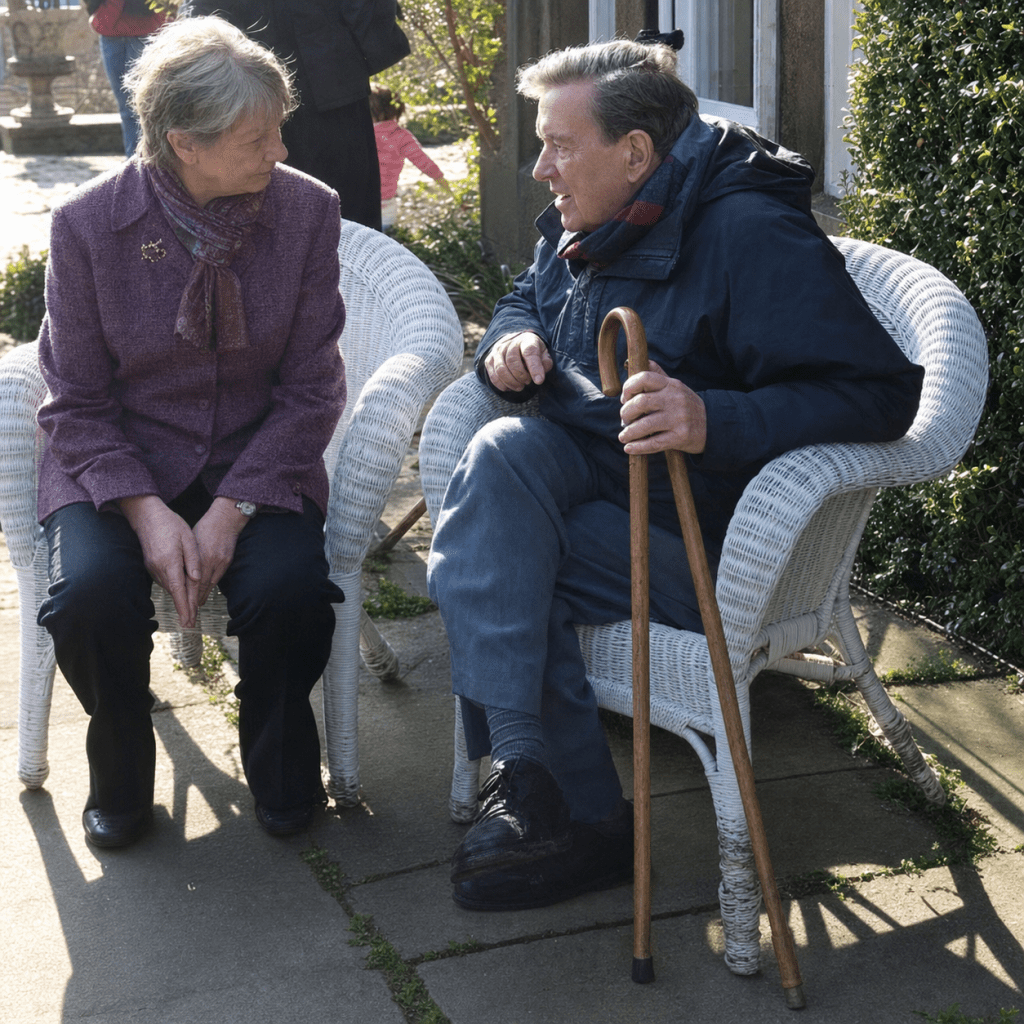
    The bicentenary walk from Musselburgh to Inveresk in March 2007, retracing Robert Wedderburn’s journey to seek recognition from his Scottish father.

    The symbolism is almost too perfect, but it was real. Bill stood where Robert had stood. Robert had arrived as an unacknowledged son and had been rejected in private. Bill returned publicly as Robert’s proud descendant – a distinguished lawyer, parliamentarian and defender of human rights – with his wife beside him and hundreds of people taking part in the act of remembrance.

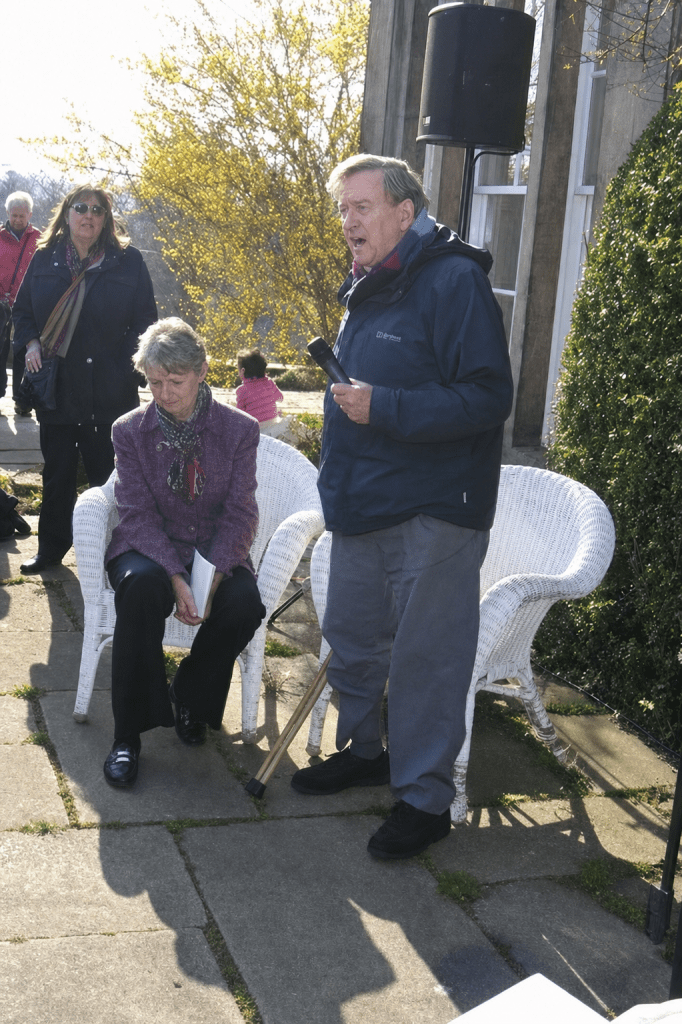
    Bill and Frances Wedderburn were present at the 2007 commemoration, six years after Bill learned of his direct descent from Robert. Arrival at Inveresk Lodge

    Nothing done in 2007 could repair what happened to Robert in 1795. Nor could a commemorative walk settle the much greater historical account of slavery, exploitation and the wealth drawn from it. Its importance lay elsewhere. A journey once marked by abandonment was being made again in recognition and solidarity. Robert was no longer walking alone.

    At Inveresk, more than two centuries after Robert Wedderburn came seeking acknowledgement and was turned away. The rejected son had returned, symbolically, through a descendant who honoured him.

    For me, that is the most moving image in the whole story. The morally important Wedderburn was no longer the wealthy plantation owner who had rejected his son. It was Robert: the son of Rosanna, the outsider, the religious dissenter and troublesome radical who insisted that slavery abroad and oppression at home belonged to the same struggle. Bill’s presence at Inveresk reversed the old rejection – not legally or literally, but publicly and morally.

    The connection between the two men should not be made mystical. Political principles are not carried automatically in the blood, and Bill had formed his long before he knew that Robert was his ancestor. That is precisely what makes the discovery so remarkable. Bill was not imitating Robert after learning of their relationship. He recognised, late in life, that another member of his family had confronted many of the same fundamental questions two centuries before him.

    What is freedom worth when a person has no power to exercise it? What obligations do we have towards people whose suffering brings us no personal loss? What should be done when established institutions protect privilege rather than justice?

    Robert answered as a radical preacher and pamphleteer. Bill answered as a lawyer, scholar and parliamentarian. Their language and circumstances were very different, but the argument running through both lives was recognisably the same.

    The Telegraph called its article “Still fighting for freedom”. It is an apt title because it applies equally to the ancestor and the descendant. Robert’s fight concerned slavery, poverty, political exclusion and religious authority. Bill’s concerned workers’ rights, collective organisation, equality, freedom of belief and the protection of people exposed to institutional power.

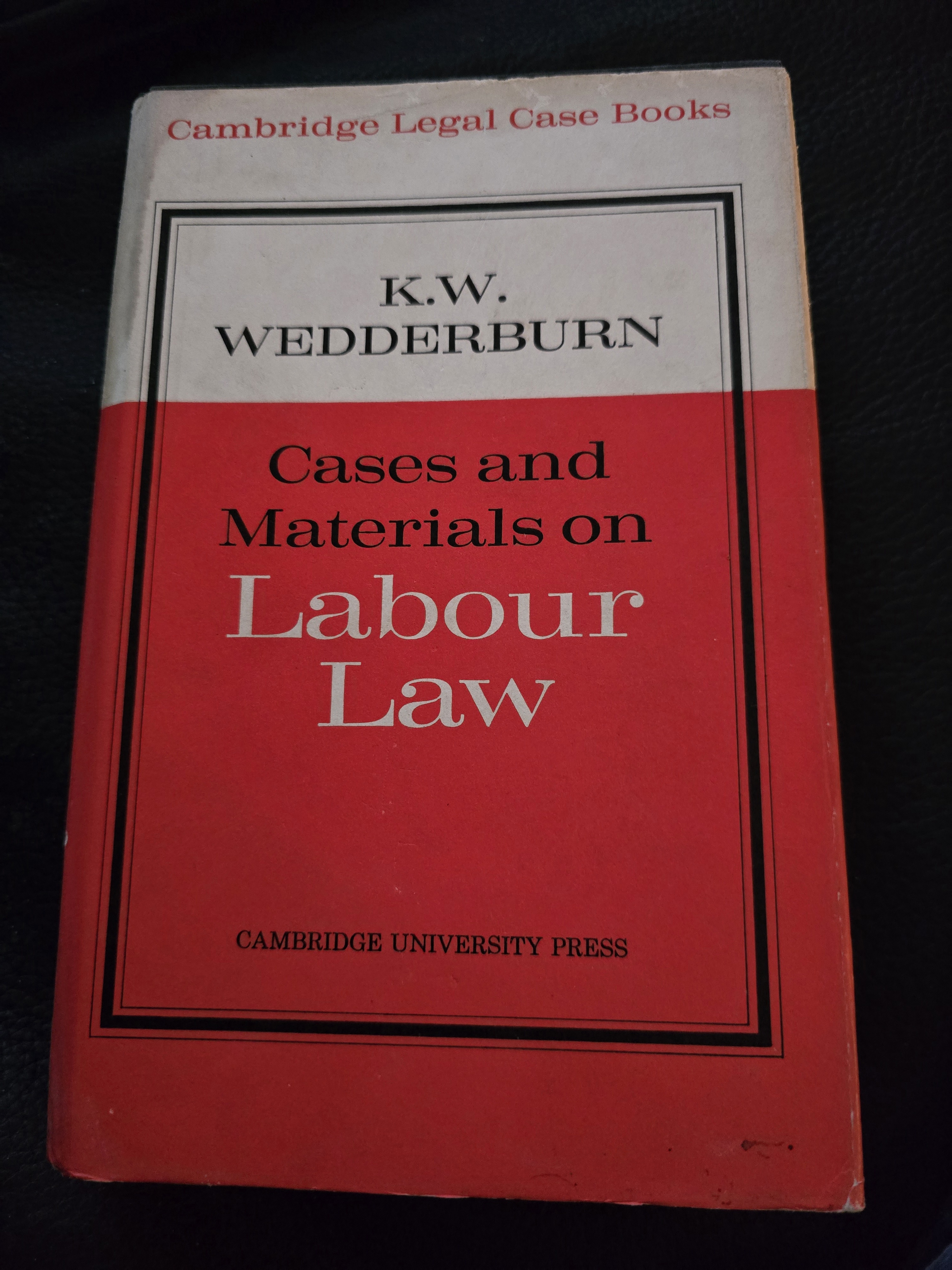
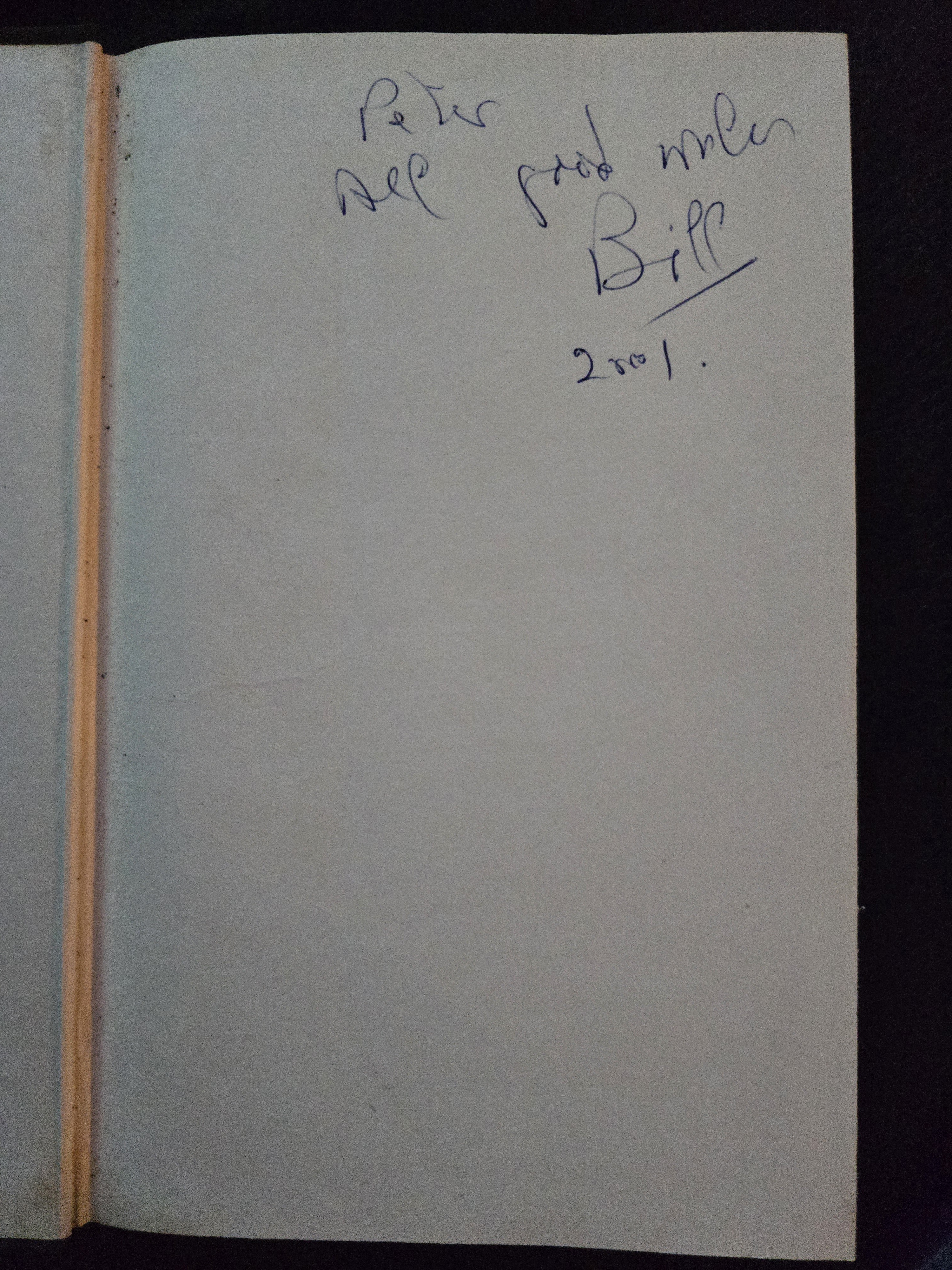
    And so the signed copy of Cases and Materials on Labour Law has a significance beyond its academic contents. Bill signed it for me at the House of Lords in 2001, when I showed him the evidence connecting us to Robert. It marks the moment when a great labour lawyer discovered that the family’s most compelling ancestor was himself an early advocate of solidarity between enslaved people and the British working class.

    Six years afterwards, Bill went to Inveresk and stood where Robert had once stood. Robert had gone there asking to be recognised by his family. Bill returned to recognise him.

  • What the sea remembers, the land forgets.

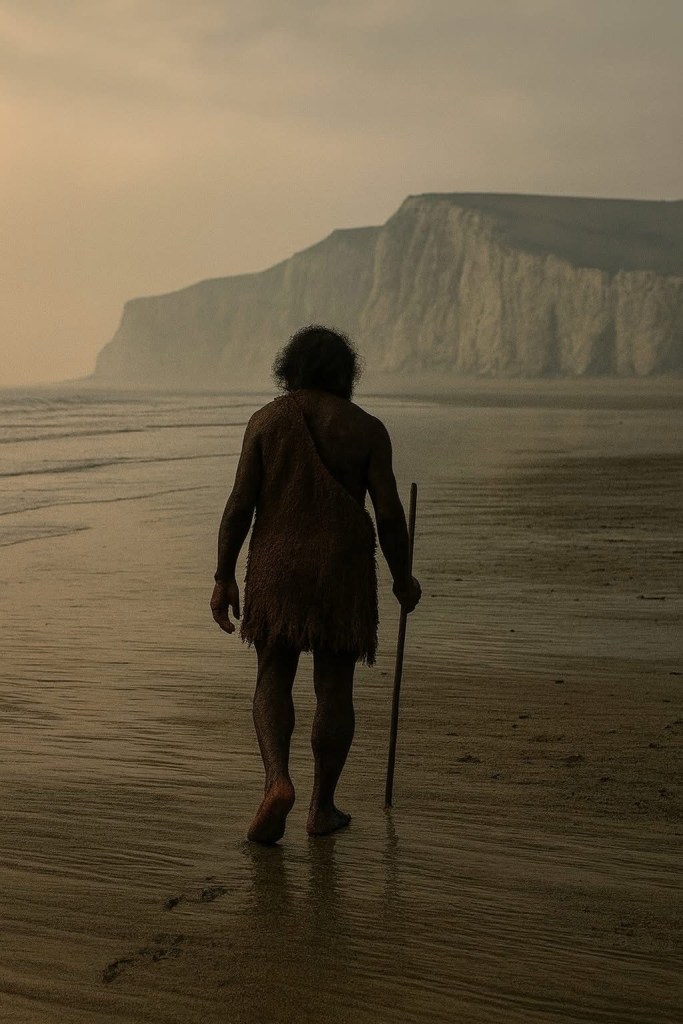
    The first people to walk this green and pleasant land came from Africa.
    Not recently – but in the long dawn of our species, when the only borders were rivers and mountain ranges, and the only language was survival.

    They carried no papers or flags. They followed herds, water, warmth.
    They crossed what was once land, and what would one day become sea, and left only stone tools, footprints, and genes in their wake.

    They were not white – and whiteness had not yet been invented.
    That came later, gradually and imperfectly, through ice and pigment, adaptation and isolation.

    Evolution, not entitlement.

    And still, they moved. Across rivers and seas, over ridges, through forests, to the islands.
    Long before there was a Britain to be British about, there were people here – wandering, settling, moving again.

    The earliest settlers brought fire and language. They carried no passports.

    Then came others, in waves, over centuries.
    They brought bronze, iron, farming, burial rites, new gods and ghosts, memories and myths.
    They came from the west, the east, the near continent –
    from what we now call Europe, Asia, the Middle East.

    They came because people always have – in search of food, space, safety.
    More clement skies. More peaceful and accepting neighbours.

    The Celts – only a beginning because the fog of time obscures what came before – were just one ripple in the sediment time left behind.

    The Romans followed, with roads and walls and underfloor heating.
    Then the Angles, Saxons, Jutes, and Norsemen.
    Vikings who came to plunder and stayed to trade.
    The Normans came latest of the conquerors, but left their mark in law, language, and stone.

    This island has never been still.
    Never pure.
    Only porous.

    And yet somehow, in our painful and lingering post-imperial insularity, we convince ourselves we are the finished product.
    Native. Defined. Entitled.

    Some scowl at the boats now battling the waves across the Channel –
    forgetting that boats carried all of us, if not in our lifetimes, then in the long-forgotten memories of our ancestors.

    Some of my own forebears came in chains. Others wielded the whips.
    One branch fled Jamaica. Another claimed a Scottish coat of arms.
    That is not contradiction. That is Britain.

    Every family tree, if traced without blinkers, eventually runs aground on a foreign shore.
    Refugee. Coloniser. Indentured labourer. Chancer. Survivor.

    We are not a race.
    We are a journey.

    It is not migration that is new – it is the outrage.
    The myth of purity.
    The delusion that history and culture start and end at Dover, and that identity can be ring-fenced by fear.

    It is not the boats that shame us.
    It is how we greet them.

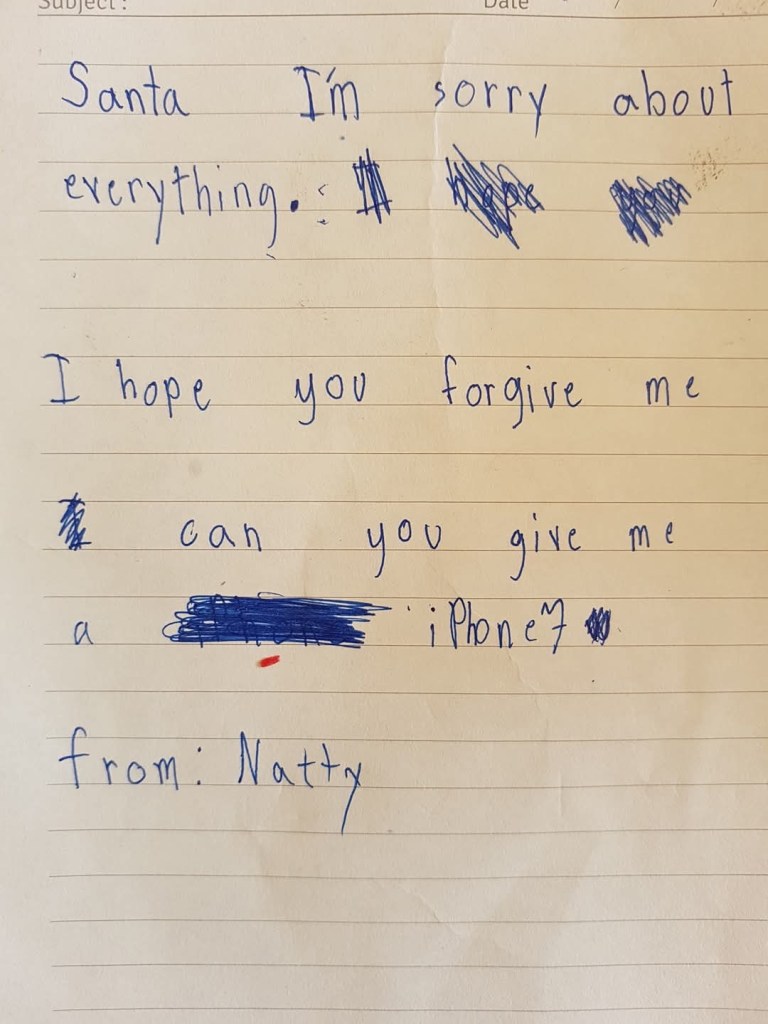
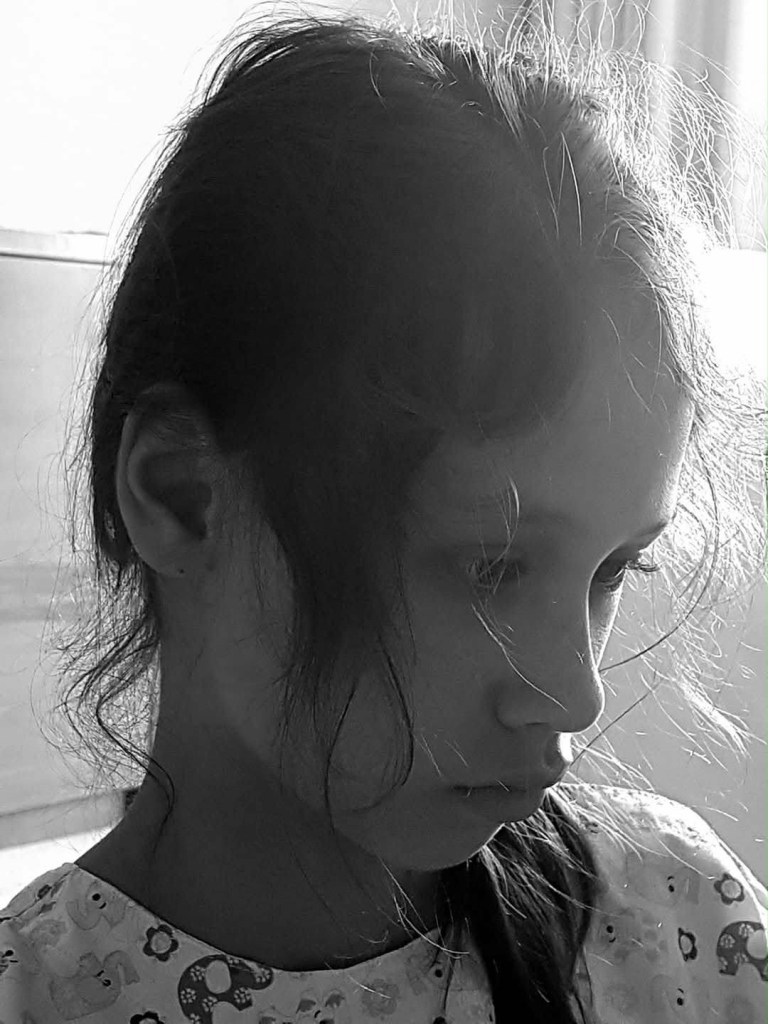
  • Natthaya, 2014. She had grasped the principles of repentance, but not yet the importance of separating it from the funding application. The opening was strong. The closing demand may have weakened her case.

  • Early 2000s: Over a couple of decades living and working around France, I came across a fair few Brits who – to all appearances back home – no doubt seemed rational and pragmatic people, comfortably settled in their professional and domestic lives. Yet on holiday across the Channel, quiet plans took shape. They yearned for something more. Not just a break. A better lifestyle. The dream was semi-retirement in sun-soaked simplicity, à la française, whether or not they spoke more than a smattering of French or had grasped the true costs of running gîtes in rural isolation.

    Provence was particularly magnetic for these wide-eyed hopefuls. Peter Mayle’s A Year in Provence (1989) had created a whole new mythology: rustic bliss, village fêtes, lavender fields, cicadas. That book did for Provence what Eat Pray Love did for yoga retreats. You could almost hear the sound of estate agents rubbing their hands in glee. It’s no coincidence that Sotheby’s planted a branch in Gordes around that time – the hills of Provence had become a brand.

    I would occasionally find myself – reluctantly – chatting to would-be expats over a drink. Certain triggers – “we’re thinking of opening a B&B”, “we’ve enrolled in an intensive French course” – set off alarms. I offered a few well-meaning caveats. A few listened. Others didn’t.

    They sold up their three-bed semis back home, racing ahead with an impulse ‘bargain’ purchase of a vast if crumbling edifice, frequently in the middle of nowhere.  Their Gallic Shangri-La. Yet the grass, it turned out, could be less than a luxuriant shade of green. A brittle, sun-frazzled beige in need of constant watering and care.

    One case sticks vividly in my mind. It was 2003. Not far from our place, down in the Ouvèze valley, stood a large, dilapidated farmhouse that had been on the market for years, at a greatly inflated price. It was, in estate agent parlance, “full of potential”. Translation: structurally unsound, inconveniently located, and uninhabitable without a massive injection of cash. Yet one bright March morning, for a retired British couple – she a school inspector, he a headteacher – it was love at first sight. They signed on the dotted line.

    They hadn’t done any homework. Hadn’t spoken to anyone local – like us, just a few hundred metres up the hill – who could have told them exactly why the place had been on the market for so long. Natural British reserve, perhaps. Or more likely that habitual self-assurance, the quiet assumption that they knew better than the natives.

    The valley looks idyllic in spring. Crisp air, birdsong, the quiet gurgle of the river. But what they hadn’t noticed was the road. A surprisingly busy departmental route, just fifty metres from the house. Come summer, it would become a thundering corridor of tourist traffic. Cars and caravans roared through, bouncing noise off the steep valley sides like a natural amphitheatre. The windows shook.

    It didn’t take long. Within days, they were already thinking of selling. I dropped by and offered support and local contacts, but was swiftly dismissed – “Our son is a lawyer in Geneva”. I bit my lip; their son could have been senior partner at Kirkland & Ellis for all the difference that would make in our Provençal backwater.

    But they didn’t give up. They overcame their misgivings, and with true British grit and determination, brought in a stream of architects, engineers, and landscapers. Massive earthworks were undertaken to build a noise-deflecting wall. Huge expense was incurred. Views sacrificed. And still, during certain hours, you had to raise your voice to be heard indoors.

    Then came the first of their legal battles. They tried to block an ancient droit de passage – a right of way that passed near the house. I warned them not to waste their time. They of course ignored the advice and cordoned off the passage with chains. Local farmers bulldozed the barriers, promptly and without ceremony. In this part of the world, you don’t overturn centuries-old rights of access because your brunch is being disturbed.

    Next – the coup de grâce.

    On a visit home from an extended stay in Savoie, the house was gone. Completely. Apparently, they’d given up on the renovation and, on a whim – following some dodgy advice – had bulldozed it to rubble. They’d been told that knocking it down and starting completely from scratch would be simpler.

    A bigger mistake they could not have made.

    What they hadn’t realised was that, under French planning law, once a building on agricultural land is demolished, its residential rights vanish with it – a far more rigid system than Britain’s looser patchwork of green-belt and rural zoning rules. Meaning it’s not a house anymore. It’s a field. You can’t rebuild on a field. Not a house. Not a shed. Nothing.

    They tried everything to claw something back – including one particularly ambitious application to turn the land into a 25-room hotel with a sulphurous spa, using a spring that happened to rise on my neighbouring property. The local mayor was not amused. Or fooled. They pled their case to the departmental préfet, and finally went to judicial appeal – all in vain.

    The DDE (Direction Départementale de l’Équipement) ruled promptly and decisively. The dream was dead. All that remained was a large hole in the ground, a few sad trenches with rusting rebar, and two deeply embarrassed and extremely angry retirees.

    By 2011, the whole site – piles of stone, weed-covered foundation trenches, two hectares of farmland – was quietly put up for sale. Asking price €10,000 – the full stop to an adventure that had already cost them many hundreds of thousands, and rather more in blood, sweat and tears. 

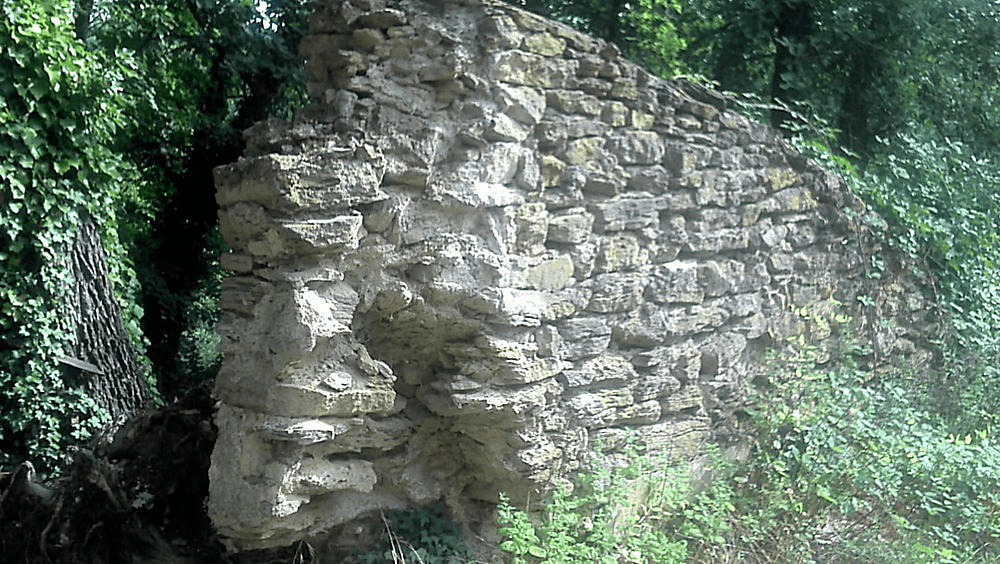
    Last wall standing

    Two neighbours, armed with the required farmer status giving them priority over other offers, had their eyes on converting a couple of ruined outbuildings into holiday gîtes. One asked me to provide a letter supporting her bid. I was aware that the original tip-off enabling the authorities to miraculously turn up in the few hours between the last wall coming down and the new one going up came from an all-too-local source. But in the final analysis, it was hubris that brought about the Brits’ downfall – not unscrupulous French neighbours.

    What happened to our overconfident, naïve and unprepared dreamers? They had no choice but to abandon one of the most expensive fields in Provence. And leave behind a story the locals still recount, with a mixture of pity, schadenfreude, and a Gallic shrug.

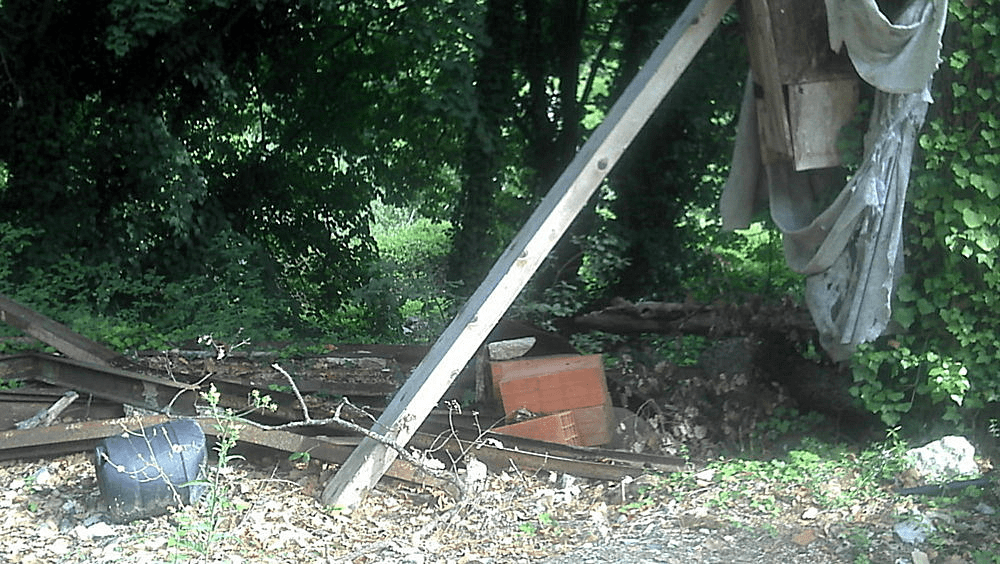
    Work site – hard hat compulsory

    Greenness, after all, isn’t just about the hue of the grass on the other side of the fence.

    The field – 2011

    Postscript 2025: The New Reality

    With Brexit long behind us and nationalism again on the rise across Europe and the United States, attitudes have hardened. Borders too. The easy mobility of the 1990s and early 2000s now feels like another age.

    After the Maastricht Treaty created EU citizenship in 1993, Brits enjoyed the freedom to live and work anywhere in the EU – a privilege that quietly rewrote thousands of midlife plans and retirement dreams. A Brit could pack up, drive south, and settle anywhere in France with little more than a ferry ticket, an address, and the conviction that they’d “made the leap”. Bureaucracy existed, but it was mostly local and surmountable.

    Today, it’s different. Since Brexit, British citizens are classed as third-country nationals – legally no different from Colombians or Belarusians when it comes to settling in France. Anyone wishing to move permanently must first obtain a long-stay visa before entering France, then apply for a residence permit. For those retiring or living on private means, the rules are tighter: proof of accommodation, comprehensive health insurance, and sufficient income – typically assessed around the net minimum wage  (≈ €1,400 per person per month) or equivalent savings.

    The easy cross-Channel drift for Brits post-1993 has vanished. Dreaming of Provence remains free; living there now comes with an administrative price tag. For many would-be émigrés, the grass may still look greener, but these days you need to prove you can afford to water it.

  • Take your pick – CouchSurfing, HelpX, WWOOFing. Different acronyms, same broad principle: a kind of barter network for the twenty-first century wanderer. Travellers exchange their labour, skills, or mere enthusiasm for food, lodging, and a taste of local life. No money changes hands – just goodwill, elbow grease, and a pinch of cultural curiosity.

    CouchSurfing always sounded vaguely disreputable, conjuring images of scruffy backpackers slumped in smoky lounges. In reality, it’s more often a polite, Airbnb-lite experience. Mostly urban. Mostly brief. And nowadays, largely sanitised.

    WWOOFers, meanwhile, tend to head for the hills – or at least for the nearest compost toilet. In return for shared meals and fresh air, they plough the permaculture furrow, dig ditches by moonlight, and discuss lunar planting cycles with soft-spoken eco-hosts and their dogs. Always dogs.

    HelpX falls somewhere in between. It casts a wider net – no requirement to know your nitrogen from your phosphorous, or to ferment your own vegan kimchi. If you’re willing to paint a wall, prune a vine, or just not leave toothpaste streaks in the bathroom, you’ll probably do fine.

    When I stumbled back home to France after one of my extended spells in Thailand, I started hosting. Sceptically, at first. But a year in, I had to admit – it worked. Mostly.

    There were hiccups. One Brit arrived oozing menace, told us he kept a gun in his lorry cab, and allegedly pulled a knife on his previous host over dinner. His stay here ended with Kathryn, a wonderful Yorkshire lass who returned for multiple stays, being thrown against a wall. After he left, he rang late at night to threaten us all. The usual pleasantries.

    Kathryn Barker, she fought to the end. RIP May 2022.

    Then came John – a wide-eyed Englishman with a time perception problem. You could send him to weed a remote patch of garden and find him an hour later in the same spot, mid-stare, seemingly locked in existential awe at two coupling gendarme beetles. Then cannabis plant began popping up instead of courgettes. Nina, our 90 kilo English Mastiff – who would sample anything remotely edible amongst the veg – ambled erratically poolside early evening, and fell in. It was a full moon, and she apparently discovered her inner lupus and began howling at the moon. John wrote later, asking if he could return. We declined.

    Another helper, a sweet but baffled French girl, was asked to turn over a flower bed. Half an hour later she returned, garden fork in hand, looking forlorn. “It doesn’t work,” she said. She hadn’t realised you needed to use your foot to push the fork into the earth. To her credit, she later became an expert at adorning the sunloungers.

    But there were gems. Retired Canadians who could tile a roof without complaint. Hungarians who cooked like angels and fixed broken water pumps. Germans who repointed walls with frightening efficiency. A couple of Irish lads who drank most of the pastis but rewired the entire barn. An entire New Zealand farming family who had taken a year off to tour Europe in a camper van, and stripped the brambles from steep slopes with hand-held scythes at speeds a Stihl brush cutter would struggle to match. And countless others, from early-twenties backpackers to seasoned nomads in their sixties, who left behind more laughter than mess.

    At the dinner table, stories were swapped about hosts. There was the swinger couple in the Dordogne, who preferred jacuzzi-based bonding to house renovation. The Dutch château owner who believed aliens lived at the Earth’s core and fed his helpers little more than lukewarm lentil soup. One HelpXer escaped on foot to the nearest village, with the host following in his car, accusing the poor guy of “ingratitude” through the open window.

    Of course, the system has its flaws. A minority of hosts exploit cheap labour; a minority of travellers exploit generous hosts. There are the overstayers, the under-washers, and the pathologically oblivious. But the same could be said of any extended family.

    What struck me most, though, was the sheer global sprawl of it all. There were host listings in Moldova, Fiji, El Salvador, even Jordan (spelled with an extra “n” on the site last I checked). South-East Asia was catching on too – Laos, Cambodia, Vietnam, Thailand, even parts of China.

    Would I recommend it? Without hesitation. If you’ve got a spare room, some half-finished projects, and an appetite for strangeness – yes. If you’re twenty and restless, and you don’t mind weeding courgettes in exchange for clean sheets and dinner – absolutely.

    It’s not Shangri-La. But it’s real. Human. Messy. And occasionally magnificent.